When festive fun can turn hazardous: the hidden dangers of adulterated henna Premium
The Hindu
Is all mehendi safe today? Learn about the risks of chemical-laced products and how to protect your skin.
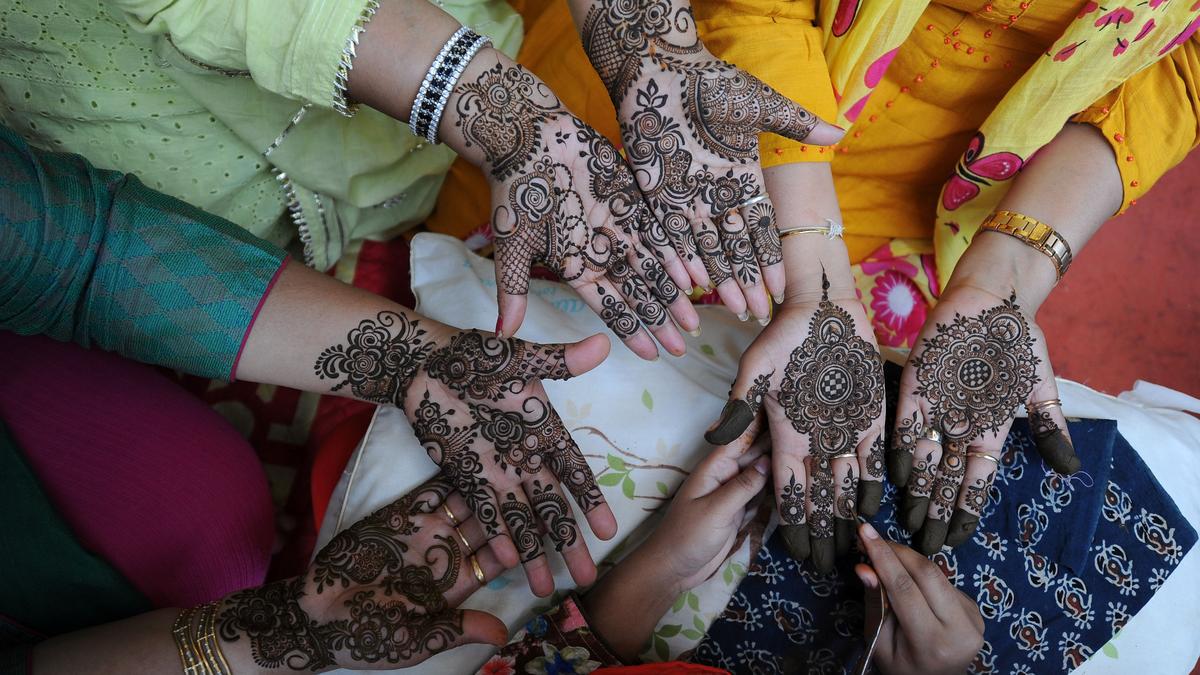
For centuries, mehendi has been an essential part of Indian celebrations, symbolising joy and auspicious beginnings at weddings and festivals. Traditionally made from the crushed leaves of the Lawsonia inermis plant, natural mehendi or henna, has been valued for its cooling properties and the gentle, reddish-brown stain it imparts. However, a growing body of reports about burns, allergic reactions, and even long-term skin damage after mehendi application has raised an important question: is all mehendi truly safe today?
To meet the rising demand for faster, darker stains, many commercially available mehendi products are now mixed with additives and chemicals. One such chemical is as para-phenylenediamine (PPD), a synthetic compound used to intensify and quicken colour development, producing a near-black stain within hours.
“Natural henna is generally safe and gives a brown to red color. But most commercially available mehendi is adulterated with PPD,” explains D. Dinesh Kumar, president of the Tamil Nadu branch of the Indian Association of Dermatologists, Venereologists and Leprologists (IADVL) and chief dermatologist at Dr. Dinesh Skin & Hair Clinic, Chennai. “PPD can cause severe allergic reactions, leading to burns, blisters, and long-term skin sensitisation. While permitted in controlled concentrations for use in hair dyes under international regulations, it is not approved for direct application on the skin. When mixed into mehendi, often without disclosure, it turns a traditionally safe cosmetic into a potential hazard.”
When adulterated mehendi containing PPD is applied to the skin, the chemical can rapidly penetrate the outer barrier and provoke a delayed hypersensitivity reaction — marked by a severe immune response. In susceptible individuals, this manifests as intense itching and burning within hours of application, swelling, redness, and inflammation along the design, formation of fluid-filled blisters or ulcers. In severe cases, permanent scarring and pigment changes can occur.
The risk is higher in people with pre-existing skin conditions like eczema, or those with repeated exposure to cosmetic allergens.
“Even someone who has used mehendi safely for years can suddenly develop an allergy if exposed to adulterated products,” says Dr. Dinesh.
This phenomenon, known as sensitisation, means the immune system becomes primed to overreact to the chemical after initial exposure. Once sensitised to PPD, individuals are at lifelong risk of reacting not only to henna but also to related chemicals in hair dyes, black clothing dyes, and even certain types of rubber or adhesives.


The government plans to amend the FCRA, introducing new regulations for NGO asset management and accountability for key functionaries.

The draft policy for “Responsible Digital Use Among Students”, released on Monday by the Department of Health and Family Welfare, has recommended that parents set structured routines with clear screen-time rules and prioritise privacy, safety, and open conversation with children on digital well-being.

Police Observer Sushant Kumar Saxena conducts surprise inspection at Shencottai police station, reviewing warrants and security arrangements ahead of elections.

Andhra Pradesh government to launch key projects in April, focusing on industrial growth and infrastructure development, says Nara Lokesh.

Lok Sabha refers the Corporate Laws (Amendment) Bill to a JPC amid opposition concerns over CSR provisions dilution.

SHG members in Kanniyakumari use snakes and ladders to raise election awareness and boost voter turnout.

Government accelerates consultations for early implementation of the Women’s Reservation Act to ensure women’s representation in 2029 elections.

CM A. Revanth Reddy distributes ₹1 crore insurance cheques to families of deceased Electricity department employees, enhancing financial security for workers.

The Bengaluru Traffic Police (BTP) registered 634 cases of drunk driving during a week-long special enforcement drive conducted across the city between March 16 and March 22.

GHMC intensifies action against property tax defaulters, seizing properties and offering a One Time Settlement scheme for payments.

CCB arrests three drug peddlers in Mangaluru, seizing ₹2.5 lakh worth of MDMA and other valuables.

TVK's 28 candidates in Puducherry include former BJP MLAs, a sitting Independent, and a retired police IG.

BRS submits notice on private member bill to Speaker