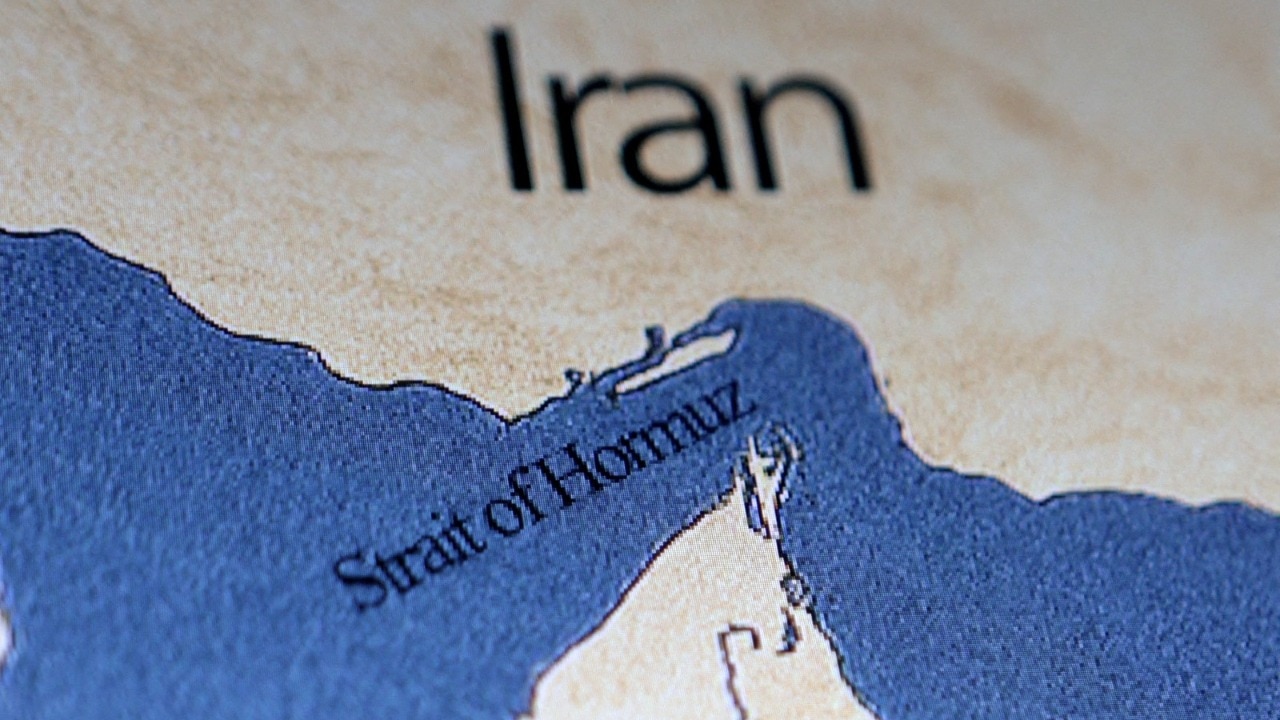
What do we know about the 'Indian' vessels crossing Hormuz?
India Today
Three vessels pass through the perilous Strait of Hormuz, but none are Indian-flagged. India Today uses maritime intel data to explain all about the Indian vessels stranded in the Strait.
Two “Indian-flagged” vessels, Pushpak and Parimal, took the spotlight on Thursday after media reports suggested they had safely crossed the Strait of Hormuz. However, while these ships are managed by Indian companies, they are neither owned by Indian entities nor registered under the Indian flag.
Media reports also suggested that Iran has now allowed Indian-flagged vessels to safely transit the Strait of Hormuz. But during a media briefing, MEA spokesperson Randhir Jaiswal neither confirmed nor denied these reports. He stated that, "External Affairs Minister S Jaishankar has spoken with his Iranian counterpart three times in recent days, with the most recent conversation focusing on the safety of shipping and India’s energy security. Beyond this, it will be premature for me to say anything."
With Shahed drones overhead, explosive unmanned surface vessels prowling the waters, and naval mines planted both on the seabed and tethered below the surface, Iran has effectively turned the strategic Strait of Hormuz into a maritime choke point. India Today has created a 3D digital animation to illustrate how this layered web of threats can strangle commercial shipping moving through the narrow waterway.
India Today’s Open-Source Intelligence(OSINT) team reconstructed the vessels’ full trajectories using maritime intelligence and AIS data, revealing how the ships carefully navigated the high-risk corridor through the Strait of Hormuz rather than being granted safe transit. Vessel trajectories of Pushpak and Parimal
The tanker Shenlong became the first Mumbai-bound crude carrier to safely transit the Strait of Hormuz since hostilities erupted late last month between the United States, Israel and Iran. Two other vessels, Pushpak and Parimal, have likewise navigated the volatile Persian Gulf corridor, successfully clearing the choke point into the Gulf of Oman amid heightened security risks. Vessel trajectory of Liberia-flagged Suezmax tanker Shenlong from UAE to Mumbai
Vessel-tracking data shows that the Liberia-flagged Suezmax tanker Shenlong began its recent voyage from Fujairah in the United Arab Emirates, where it was bunkered between February 19 and February 28. The tanker’s first port call followed days later at the Ju’aymah Oil Field Terminal near Ras Tanura in Saudi Arabia, where it loaded cargo between March 2 and March 3, according to maritime intelligence records.


The victim, identified as Naitik Kumar, allegedly rammed his speeding Bullet motorcycle into a scooter near Janeshwar Mishra Park in Lucknow, triggering a crash that left him dead and two others injured.

RJD MLA who skipped Bihar Rajya Sabha poll voting cites mother's illness

West Bengal Chief Minister Mamata Banerjee led a protest march in Kolkata against the alleged LPG shortage, accusing the PM Narendra Modi-led Centre of failing to ensure adequate supply.

Himayani Puri, daughter of Union Minister Hardeep Singh Puri, has moved the Delhi High Court over "false and malicious" reports linking her to convicted sex offender Jeffrey Epstein.

The family, a resident of Thyagaraju Street in Punganur town, had recently repaired the engine of their two-wheeler vehicle. A local mechanic advised the family to keep the engine running overnight to "set" the newly installed parts. However, this turned out to be fatal for the family.

The Supreme Court closed criminal proceedings against Ashoka University professor Ali Khan Mahmudabad after the Haryana government said it would not grant sanction to prosecute him over social media posts related to Operation Sindoor.

Three Congress MLAs in Bihar are reportedly out of contact as voting for five Rajya Sabha seats is underway, with the INDIA bloc and the BJP-led NDA locked in a tight contest for the fifth seat that could hinge on cross-voting.

Bunty Solanki stabbed his wife to death following a quarrel at their residence in Vadodara's Bakrawadi area. Rita died on the spot.

The girl's family members were angered over the friendship, and as a result, they called Jadhav last Saturday evening and allegedly beat him.

External Affairs Minister S Jaishankar has said that direct talks with Iran to restore shipping through the war-hit Strait of Hormuz have yielded results, stressing that direct engagement with Tehran is the most effective way to address the disruption.

This moment comes days after the Supreme Court allowed Harish Rana to die with dignity – a historic first court-ordered case of passive euthanasia in India. The court acknowledged the medical opinion that Rana will never recover and that the tubes that feed him and keep him alive are only prolonging his pain.


Ground videos from Shopian showed snow-draped pine trees as the weather brought joy for tourists. Speaking to reporters, a tourist from Bihar said she was unable to contain her happiness over the unexpected snowfall.