Whales near Antarctica face dire competitor for krill: industrial fishing Premium
The Hindu
The Southern Ocean faces threats from expanding krill fishing, endangering baleen whales' fragile recovery efforts.
The Southern Ocean encircling Antarctica is the world’s largest feeding ground for baleen whales – species like humpbacks that filter tiny organisms from seawater for food. In the 20th century, whalers killed roughly 2 million large whales in the Southern Ocean. Some populations, like the Antarctic blue whale, were reduced by more than 99% and have been struggling to recover, even though most nations ended commercial whaling in the mid-1980s.
Today a new threat is emerging: industrial fishing for Antarctic krill – tiny swimming crustaceans, roughly 6 cm long. In a newly published study, colleagues and I found that competition with this burgeoning fishery may impede whales’ recovery.
I first learned about this issue in early 2022, when a colleague working aboard a cruise ship told me that he had seen approximately 1,000 fin whales feeding on krill near the South Orkney Islands, just north of Antarctica. This was probably the largest aggregation of baleen whales seen since the 1930s, at the peak of industrial whaling.
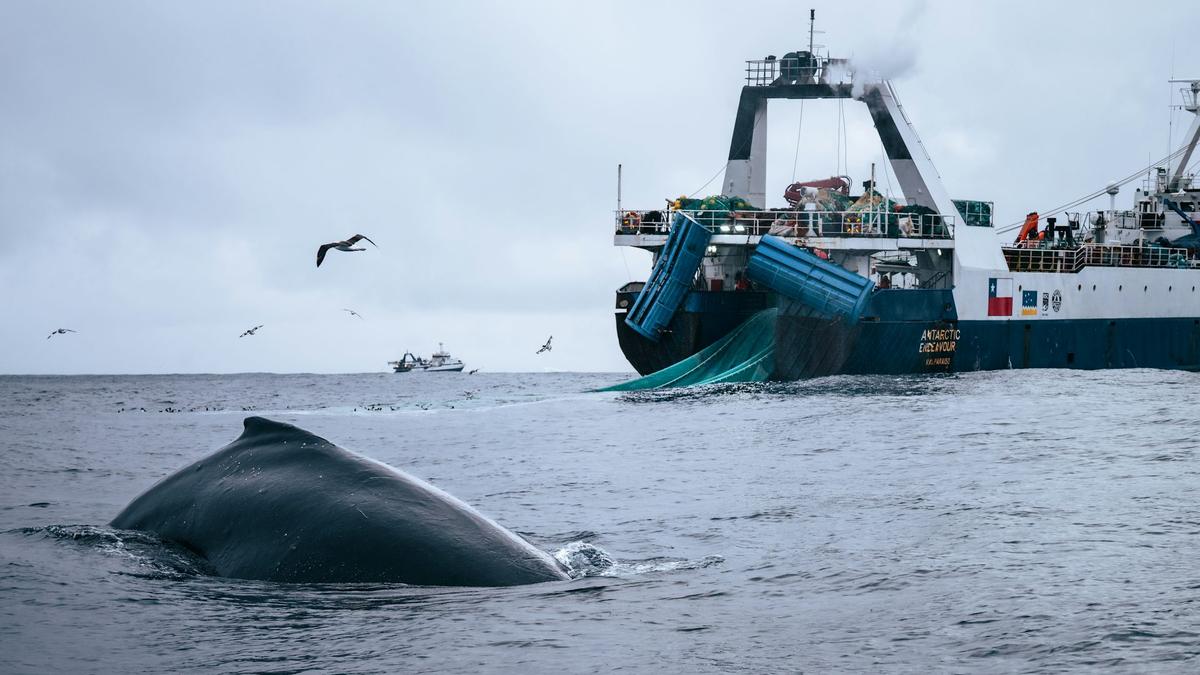
My friend also reported that four enormous fishing boats were weaving among the huge group of whales, with large nets deployed. Like the whales, they were fishing for Antarctic krill.
Because the Southern Ocean is so remote, few people realised that krill fishing was competing directly with whales. Together with colleagues from Stanford and the University of Washington, we wrote about this observation in 2023 to draw attention to the potential threat to recovering populations.
We were soon contacted by Sea Shepard Global, a non-profit organisation that works to protect marine wildlife and had been monitoring this situation for several years. They reported that direct overlap between foraging whales and active fishing operations was common.
Now, krill fishing is on the verge of expanding. Along the Antarctic Peninsula, the fishing industry has proposed increasing the catch limit fourfold, from 155,000 tons to 668,101 tons annually.


Day 1 of BioAsia 2026 sees a panel discussion on advanced therapies highlighting India’s evolving role as a global manufacturing backbone for next-generation biologics.

The BMW X3 30 xDrive M Sport Pro blends sporty performance with everyday luxury, powered by a 258 hp 2.0-litre TwinPower Turbo engine and BMW’s xDrive all-wheel-drive system. With bold M Sport styling, a high-tech Curved Display running Operating System 9, advanced driver assistance features, and genuine off-road capability, the latest X3 delivers a versatile premium SUV experience that excels on city roads, highways, and beyond.

Explore the concept of 'snowball earth' and recent findings on climate variability during this ancient icy period.

A riot of capes, corsets, and carefully crafted armour took centrestage as Chennai Comic Con wrapped up at the Chennai Trade Centre, with cosplay emerging as the undisputed showstopper. From anime icons and gaming legends to beloved Indian comic characters, over 500 fans transformed the venue into a living, breathing multiverse, showcasing how Chennai’s fandom culture has evolved, placing the city on India’s pop culture map.

Warmer oceans and depleting food have affected the ubiquitous loggerhead turtle’s reproductive and migratory patterns — and even its size.

Toyota Urban Cruiser Ebella review: Explore design, range, features, ride comfort and safety of Toyota’s new electric SUV for India. Expected price ₹14–18 lakh, with up to 500 km claimed range and practical urban usability.

Explore India's potential in bio-based chemicals and enzymes, highlighting industry leaders and challenges in sustainable manufacturing.

Astronomers discover an unusual planetary system with a rocky planet formed outside its gaseous neighbors, challenging existing formation theories.

Four new astronauts arrive at the ISS to replace a crew evacuated due to a serious health issue.

Neurobehavioural therapy can transform brain connectivity in functional neurological disorders, highlighting the link between cognition, emotion, and behavior.

The centuries-long quest for synthetic diamonds, also known as lab-grown diamonds or human-made diamonds, came to an end in 1954-55. On February 15, 1955, the creation of the first synthetic diamonds were announced, and it was quickly picked-up by newspapers around the world. A.S.Ganesh tells you more about these diamonds and the man who first made it happen…

Kadhambari S. Viswanathan highlights online education's evolution and its coexistence with traditional methods at The Hindu Tech Summit 2026.

The Hindu science quiz on Charles Darwin on February 13 2026