Want things done your way? Do better than us: DMK Minister's dare to Centre
India Today
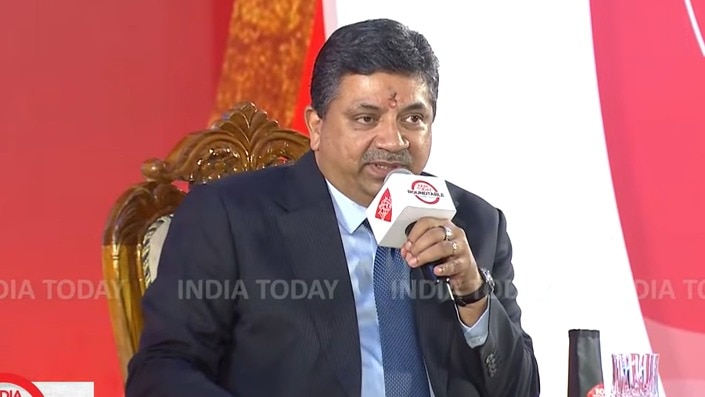
Speaking at India Today's Tamil Nadu Roundtable, Tamil Nadu IT Minister Palanivel Thiaga Rajan clarified that the DMK government is not opposed to Hindi as a language, but to what it calls its imposition through policy.
Tamil Nadu IT and Digital Services Minister Palanivel Thiaga Rajan on Wednesday mounted a sharp defence of the state’s language policy, daring the Centre to “do better” if it wants Tamil Nadu to reconsider its stand on the three-language formula under the National Education Policy (NEP). He made the remarks while speaking at India Today's Tamil Nadu Roundtable event.
When asked about the three-language formula, the Minister clarified that the DMK government is not opposed to Hindi as a language, but to what it calls its imposition through policy.
“We are anti-Hindi imposition, not anti-Hindi. We are anti NEET, and anti anybody trying to tell us what exam we should conduct to filter or select our applicants, who are our children, going to our colleges funded with our money, in a system which is by far the most superior health system than any state in India,” he said.
“If someone wants us to even contemplate listening to them, they have to do things better than us.
The Minister’s remarks come amid Tamil Nadu’s continued opposition to the three-language formula under the National Education Policy (NEP), which the state argues places a disproportionate burden on non-Hindi-speaking regions. The DMK has consistently maintained that its two-language policy — Tamil and English — has effectively served students and aligns with the state’s educational and cultural priorities.
Further in his remarks, Thiaga Rajan questioned why Tamil Nadu should alter its long-standing two-language policy to align with what he described as a system favouring Hindi-speaking states.


The NDA won all five Rajya Sabha seats from Bihar after four Opposition MLAs skipped voting, dealing a setback to the Mahagathbandhan. The alliance also secured two seats in Odisha amid cross-voting by Opposition MLAs during the biennial polls.

A 46,000-tonne LPG shipment aboard Shivalik reached Gujarat's Mundra Port, carrying around 32 lakh domestic cylinders, as authorities rushed supplies to ease shortages triggered by disruptions in the Strait of Hormuz.

India depends on imports to meet its demand for urea, one of the most widely-used fertilisers in India.

India Today's OSINT team identified at least 22 Indian-flagged vessels operating in the Gulf region, including seven LPG carriers, seven oil tankers, four container ships, two bulk carriers, one tug and one dredger.

India on Monday said it has not held bilateral talks with the United States on deploying naval vessels to secure merchant shipping in the Strait of Hormuz. The clarification came after US President Donald Trump urged countries to send warships to keep the strategic waterway open amid tensions with Iran.

After attacking his wife, Nafees attempted suicide by inflicting injuries on himself with the same scissors. Neighbours intervened after hearing the commotion and stopped him from taking his own life.

The victim, identified as Naitik Kumar, allegedly rammed his speeding Bullet motorcycle into a scooter near Janeshwar Mishra Park in Lucknow, triggering a crash that left him dead and two others injured.

RJD MLA who skipped Bihar Rajya Sabha poll voting cites mother's illness

West Bengal Chief Minister Mamata Banerjee led a protest march in Kolkata against the alleged LPG shortage, accusing the PM Narendra Modi-led Centre of failing to ensure adequate supply.

Himayani Puri, daughter of Union Minister Hardeep Singh Puri, has moved the Delhi High Court over "false and malicious" reports linking her to convicted sex offender Jeffrey Epstein.

The family, a resident of Thyagaraju Street in Punganur town, had recently repaired the engine of their two-wheeler vehicle. A local mechanic advised the family to keep the engine running overnight to "set" the newly installed parts. However, this turned out to be fatal for the family.

The Supreme Court closed criminal proceedings against Ashoka University professor Ali Khan Mahmudabad after the Haryana government said it would not grant sanction to prosecute him over social media posts related to Operation Sindoor.

Three Congress MLAs in Bihar are reportedly out of contact as voting for five Rajya Sabha seats is underway, with the INDIA bloc and the BJP-led NDA locked in a tight contest for the fifth seat that could hinge on cross-voting.