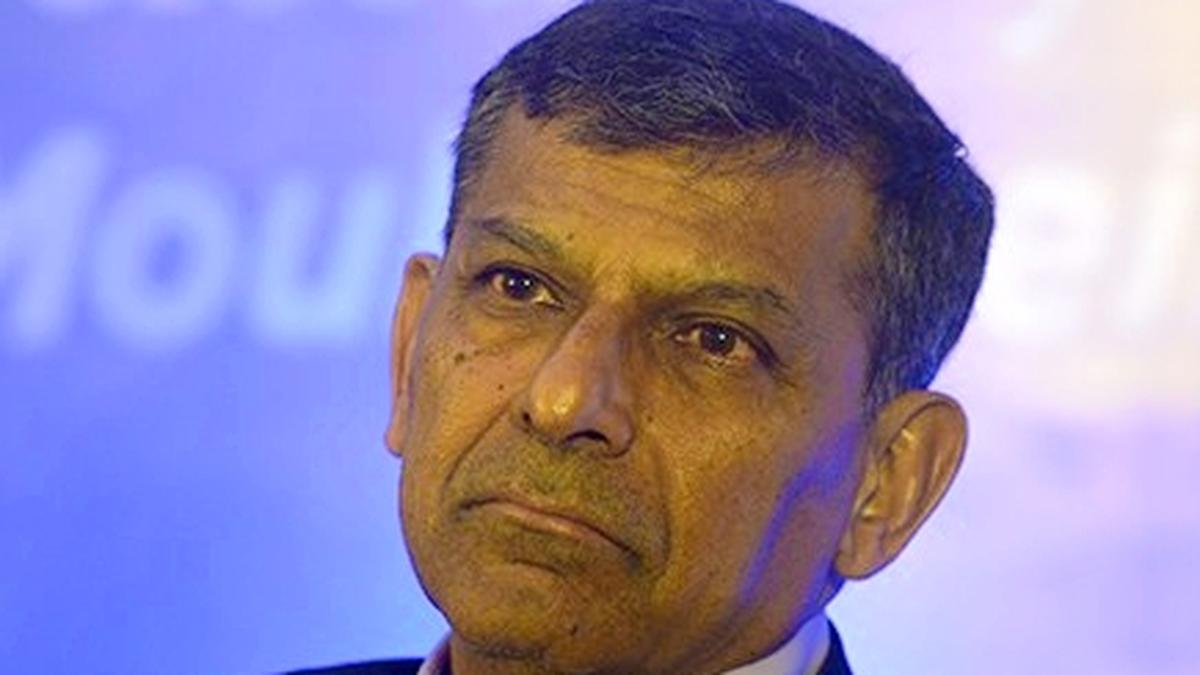
Union Budget 2026 needs to focus on long-term vision to make Indian economy more resilient: Raghuram Rajan
The Hindu
Raghuram Rajan advocates for a long-term vision in India's 2026 Union Budget to enhance economic resilience and independence.
Former Reserve Bank of India (RBI) Governor Raghuram Rajan on Wednesday (January 28, 2026) suggested that the upcoming Budget should be integrated with a longer-term vision to make the Indian economy more resilient and independent, while accelerating growth, as the world is passing through an 'extremely dangerous time'.
In an interview with PTI Videos, Mr. Rajan said that earlier, India had five-year plans, but even then, the country's Budget was not well integrated with them.
Parliament Budget Session 2026 LIVE: Govt succeeding in building a system free from corruption, says President Murmu
"I think it (Union Budget for 2026-27) should be integrated with a longer-term vision. How do we become more resilient, more independent as an economy, but also fast growing, so that everybody else wants to be friends with India, that requires a fair amount of work, and I am hopeful that Finance Minister Nirmala Sitharaman's next Budget will take us there," he said.
Ms. Sitharaman will present the Union Budget on February 1, 2026, expected to include reform measures to shore up economic growth amid a volatile geopolitical situation.
Mr. Rajan said this is an 'extremely dangerous time' for both the global and the Indian economy, even as 'we are seeing lots of positive opportunities from the tremendous investment in Artificial Intelligence (AI)'.


The booming market for artificial intelligence servers brought Taiwan's Foxconn a 24 percent jump in annual net profit, the company said

In a statement on its website, Adobe said it has in recent years streamlined its sign-up and cancellation processes and made them more transparent.

Stock markets recover as Sensex and Nifty bounce back following a three-day slump, driven by value-buying in blue-chip stocks.

U.S. President Donald Trump’s administration is set to receive a roughly $10 billion fee from investors in the recently completed deal to take control of TikTok’s U.S. business, the Wall Street Journal reported

Meta is planning sweeping layoffs that could affect 20% or more of the company, three sources familiar with the matter told Reuters

Learn how to choose the best personal loan lender by evaluating eligibility, interest rates, and borrowing experience.

Discover why pension planning is essential in modern India to ensure financial security and peace during retirement.

The U.S. has launched two investigations under Section 301 of the Trade Act of 1974 against India and other economies to examine practices that may be ‘unreasonable or discriminatory and burden or restrict U.S. commerce’. One probe examines whether countries, including India, are using excess manufacturing capacity to export to the U.S. in a manner that hurts American businesses, while another looks at whether countries have taken ‘sufficient steps’ to prohibit imports of goods produced with forced labour.

NHAI raises annual pass fee to ₹3,075 from April 1, 2026, streamlining toll payments for FASTag users.

The U.S. probes forced labour in global supply chains, scrutinizing China and India's exports, warns the Global Trade Research Initiative.

The Hindu collection of images of the LPG crisis: War lights a kitchen fire

The company, which launched its IPO in 2020, is now listed on the National Stock Exchange as well as the Bombay Stock Exchange.

Explore the Essential Commodities Act's role in addressing India's gas crisis and its impact on various sectors.