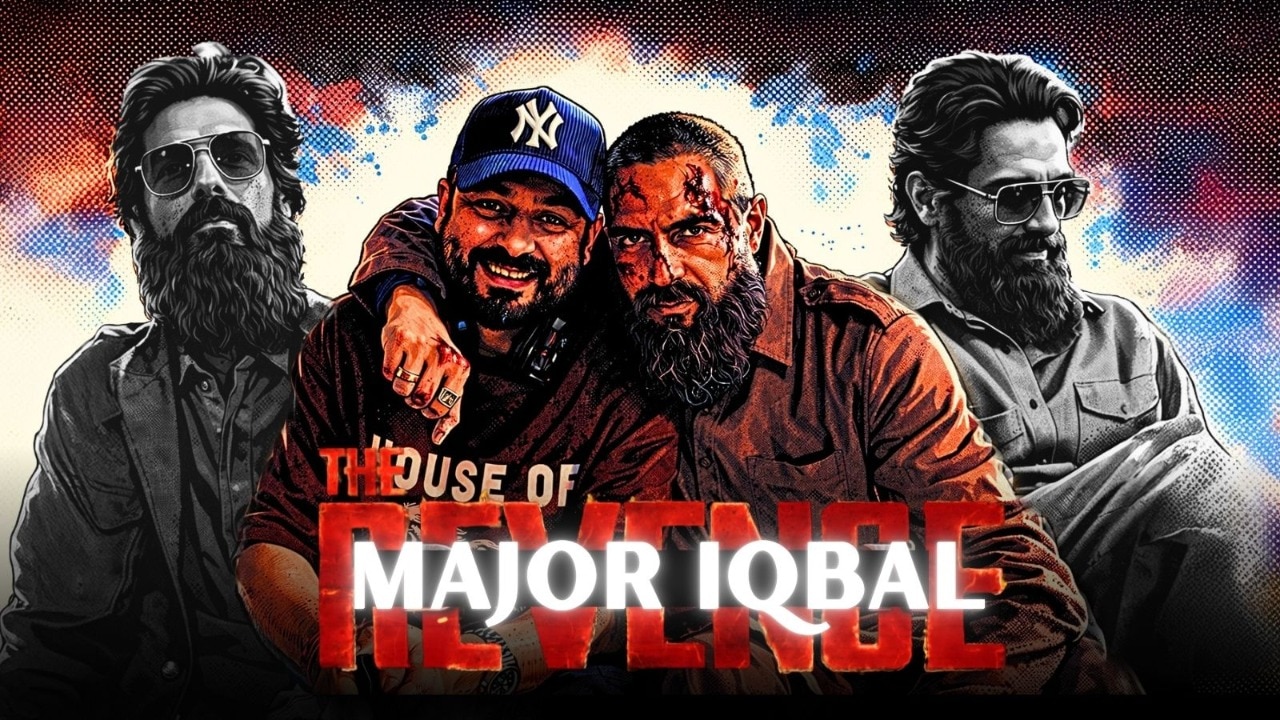
Understanding Major Iqbal: Why Dhurandhar's chilling villain loses edge by climax
India Today
Arjun Rampal's Major Iqbal is equal parts menacing and vulnerable. Aditya Dhar's Dhurandhar: The Revenge gives him the kind of arc that breaks the usual Bollywood template of a villain, and yet just when it reaches a high, the film does something unthinkable.
The first image Dhurandhar gives you of Major Iqbal is not a grand entrance. It is a man making precise incisions into someone's skin while calmly explaining his ideology. The opening of the Part 1 trailer belongs entirely to him - a childhood memory of a radio broadcast, Zia-ul-Haq's words, and a promise to "bleed India with a thousand cuts." It is one of the most chilling villain introductions in recent Hindi cinema, controlled, ideological, and deeply unsettling.
In fact, it is the audience's very first glimpse into the world of Dhurandhar. Bollywood has often given us villains who are violent, gruesome, and driven purely by rage, but Major Iqbal is not just another angry antagonist. He carries layers, ideology, and internal conflict - much like the world of Dhurandhar itself.
The first instalment largely lives up to that introduction. Even though he is not positioned as the central antagonist, Major Iqbal operates with authority. By the time Part 2 arrives, the expectation is clear: this is the man Hamza is ultimately moving towards, the force that needs to be brought down.
And on paper, the character absolutely supports that expectation.
Spoilert alert: Not your regular villain


Thaai Kizhavi crosses Rs 75 crore worldwide in 25 days, as Radhika Sarathkumar's film wins praise for blending humour with meaningful social themes

Chuck Norris, legendary martial artist and pop culture icon, passed away at 86, leaving behind a larger-than-life legacy shaped as much by his films as by the global phenomenon of "Chuck Norris facts."

The trailer for Netflix's Dabba Cartel unveils a gripping crime drama about five women whose dabba business unexpectedly plunges them into the dangerous world of a drug cartel.

Aahana Kumra praised Danish Pandor's performance in Dhurandhar: The Revenge. In an emotional post, she expressed pride over Danish's "magical" success journey.

A real-life video of Chaudhary Aslam from Operation Lyari has resurfaced online, coinciding with the buzz around the film Dhurandhar 2 where Sanjay Dutt portrays him.

A haunting teaser sets the tone for Pallichattambi, as Tovino Thomas leads a gripping tale of resistance against oppression in Kerala's 1950s high ranges.

Dhurandhar: The Revenge is only a weekend old, and it has already shattered the biggest records set by the previous Hindi blockbusters like Jawan, Pathaan and Animal. Here's a detailed look at its records, and the comparison with other biggies.

In Dhurandhar 2, actor Udaybir Sandhu plays the role of Jaskirat Singh, aka Ranveer Singh's on-screen childhood friend Pinda. Here's everything you need to know about the actor's journey from being a national-level hockey player to Bollywood.

Arjun Rampal, who plays Major Iqbal in Dhurandhar 2, said he is still processing the response to the film. The actor credited the film's team for shaping his villainous role of ISI chief.

Actor Arjun Rampal revealed that Dhurandhar was his way of channelising his angst and taking his "revenge" for everything that he had to endure during the 26/11 Mumbai terror attacks.

Dhurandhar: The Revenge uses popular old Bollywood songs and reworks them with modern EDM and hip-hop sounds to suit today's audience. By placing these tracks in action-heavy scenes, the film turns familiar melodies into storytelling tools.

Haryana Police has taken down 857 social media links linked to Badshah's controversial song Tateeree amid growing legal heat. The crackdown comes as authorities warn of strict action and the controversy deepens.

Kajal Aggarwal called Ranveer Singh a 'legend of our times' while reviewing Dhurandhar The Revenge. The actor also praised Aditya Dhar's direction, the cast's performances, and the music as the film dominates the box office.