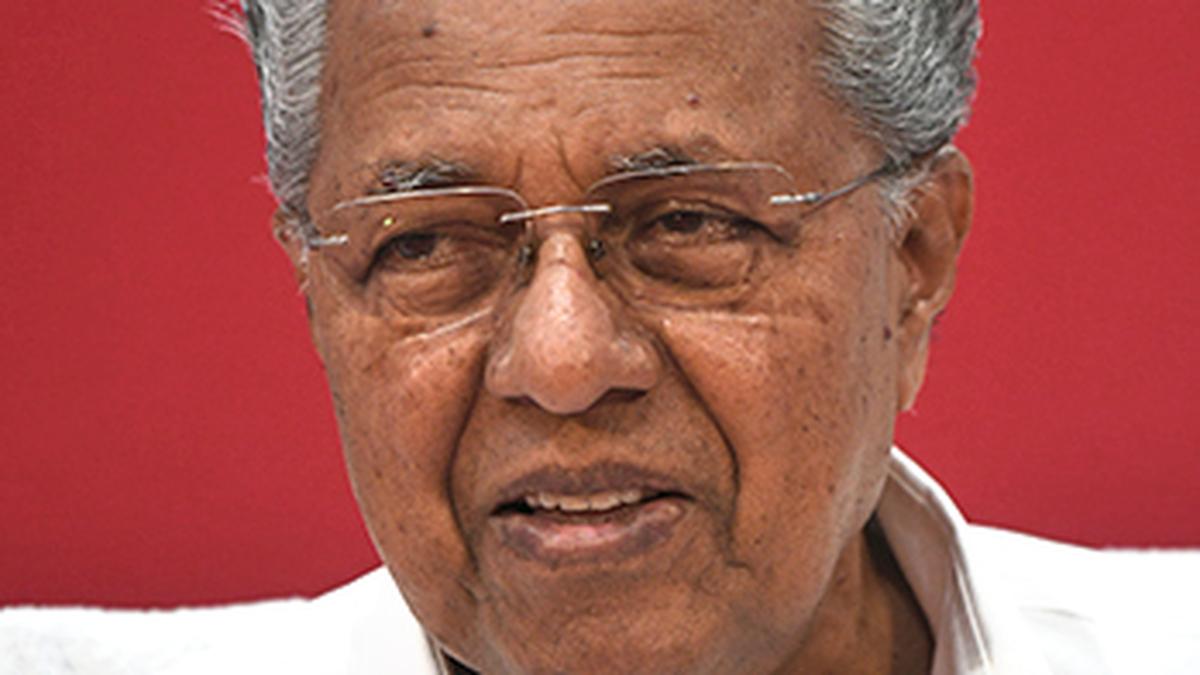
Tribal hamlets soon to have Internet connectivity for digital learning: Kerala CM Pinarayi Vijayan
The Hindu
“Work is under way on a war-footing for establishing Internet connectivity in all tribal hamlets by the end of this year for ensuring digital learning,” Chief Minister Pinarayi Vijayan said.
“Work is under way on a war-footing for establishing Internet connectivity in all tribal hamlets by the end of this year for ensuring digital learning,” Chief Minister Pinarayi Vijayan said.
He was delivering the inaugural address at the launch of the social solidarity observation being organised by the Scheduled Tribe and Scheduled Caste Development Department in Kochi on October 2.
Internet connectivity had been established in 1,083 hamlets out of the 1,284 tribal hamlets which didn’t have connectivity before. The State government had spent ₹4.31 crore on Internet connectivity in Edamalakkudy alone. Education, livelihood and empowerment remain the three foundations based on which projects meant for the comprehensive development and welfare of the scheduled communities were being implemented in the State.
A first of its kind project, A.B.C.D, anywhere in India was being implemented for making available all basic documents to scheduled tribe families in the State and for the safe digitisation of those documents. The project, which had already been implemented in Wayanad and Palakkad districts, was nearing completion in the rest of the State.
All projects of the Scheduled Tribe, Scheduled Caste Development Department were being implemented under a single umbrella named Unnathi. The Kerala Empowerment Society set by the State for the skill development and livelihood access of the scheduled communities thus helping the educated youngsters among the communities to turn entrepreneurs had become a model for the rest of the country. Training for career excellence project was also being implemented under various departments for the skill development, vocational training and work experience of the educated among the scheduled class communities. Both these projects had helped the marginalised communities access to better opportunities.
Five hundred scheduled tribe members had been appointed as beat forest officers through a special recruitment drive. Steps were under way to appoint 100 scheduled tribe members as excise guards.
A foreign educational programme was also being implemented for making available global opportunities to the scheduled tribe and scheduled class communities. So far, 422 students from these communities had been able to study in foreign universities. Students were being granted scholarship ranging from ₹10 lakh to ₹25 lakh.


MLC Kishore Kumar Puttur criticizes the State for poor implementation of the Centre's health scheme for senior citizens.

Karnataka's Health Minister announces redeployment of specialists to taluk hospitals to reduce neonatal mortality rates effectively.

Celebrate IPL's start and Polly Umrigar's legacy, reflecting on cricket's evolution and the enduring impact of its pioneers.

BJP accuses Congress and Rahul Gandhi of endorsing an ‘anti-India’ USCIRF report undermining India's global image.

Education Ministry proposes UGC-like funding under Shiksha Adhishthan, raising concerns about centralization and public university financing.

Shivraj Singh Chouhan defends the new rural jobs Act, dismissing opposition protests as ineffective and highlighting increased funding and worker protections.

Supreme Court questions why heirs can't access unclaimed funds of deceased depositors, urging government to develop a disclosure policy.

Karnataka High Court demands LPG supply details amid state restrictions, threatening Bengaluru's restaurants and livelihoods.

Shorts News:UN body investigating deadly strike on Iranian girls school

Moodbidri police inspector suspended pending inquiry over allegations of misbehaviour and inappropriate conduct towards women.

The State currently hosts more than 880 GCCs, up from around 500 GCCs in 2021.

Transgender and intersex activists march to Lok Bhavan, protesting the regressive Transgender Persons Bill and demanding its withdrawal.

Hyderabad's LGBTQIA+ community opposes the Transgender Amendment Bill, stressing dignity over identity verification and highlighting economic and medical concerns.