Travelling long to get inked in the Assembly Elections
The Hindu
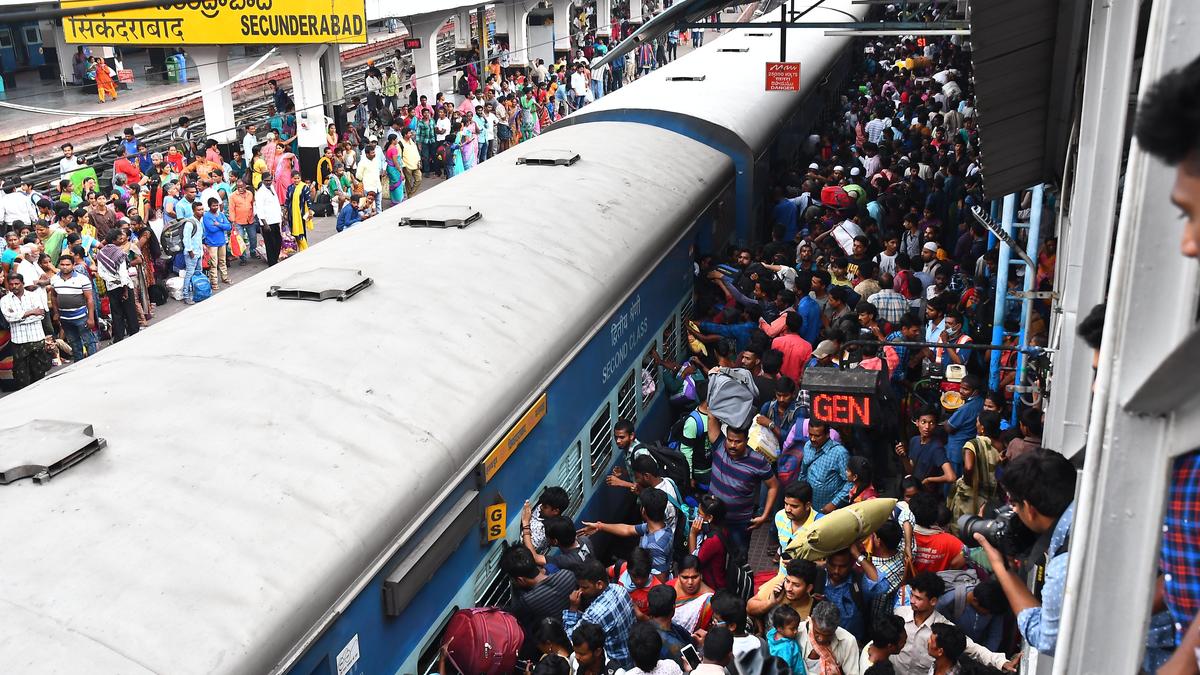
Over the last two to three weeks, migrant workers in Chennai have been etching travel plans to vote in their hometowns. Associations representing them are seeking additional trains to ensure their long journey to the voting booth is smooth
When election dates were announced on March 15, Kottivakkam resident and general secretary of Confederation of Tamilnadu Malayalee Associations Anwar M.P. was furiously scrolling down IRCTC website to book four train tickets to his hometown in Kannur district of Kerala. A resident of Chennai for the last three decades, the businessman makes travel plans to his native place every election season (that includes panchayat elections) sufficiently ahead of time.
Kerala goes to the hustings on April 9, as do Assam and Puducherry. Further down the “poll procession” are Tamil Nadu (April 23) and West Bengal (April 23 and 29).
Travel plans are being meticulously etched by residents of Chennai with their votes parked in other states. And associations representing the interests of those from these states who have “pitched tent” in Chennai for work and business note that with intervention by the Tamil Nadu government and Southern Railway, these travel plans need not be as stressful as they currently are.
The Confederation of Tamilnadu Malayalee Associations has made a representation to the State Government to run additional trains to clear the rush of migrants wanting to vote in their hometowns. “This year, we made the representation more than two months ago so that there is ample time to press more trains into service,” says Anwar.
While Southern Railway does operate special trains during festivals and election season, many say the announcement on additional trains is made at the eleventh hour, which detracts from the usefulness of this exercise.
As Easter, Assembly Polls and Vishu come in quick succession, Anwar says there’s demand for bus and train tickets to Kerala.


Delhi government reports controlled gas supply as PNG connections rise, launching a control room to combat black marketing and hoarding.

CBSE’s recent curriculum not academic reform but calculated attempt at linguistic imposition: Stalin
M.K. Stalin criticizes CBSE's curriculum as a linguistic imposition favoring Hindi, undermining India's diverse languages and regional identities.

Defence Minister Rajnath Singh inaugurates a Large Cavitation Tunnel in Visakhapatnam to enhance India's naval research and testing capabilities.

MITE students win national award for innovative "Multi-Crops Dehusker" project at e-Yantra Innovation Challenge 2025–26.

Stalin rebuffs Palaniswami's comments on his father, asserting DMK's strength and AIADMK's electoral failure in Tamil Nadu.

Family of Indian seafarer killed in missile strike petitions Bombay HC for expedited return of his mortal remains.

The decade from 2016 to 2026 has marked a period of rapid and unprecedented economic development in the State of Kerala

Tragic accident in Nashik: nine family members, including six children, die when their car plunges into a well.

Follow The Hindu LIVE for the latest updates on the 2026 Assembly elections in Tamil Nadu, Kerala, West Bengal, Assam and Puducherry

Andhra University’s centenary celebrations unite diverse cultures, showcasing international student contributions through food, performances, and global exchanges.

TMC demands removal of Bhabanipur RO, citing bias due to ties with BJP's Suvendu Adhikari amid ongoing electoral concerns.

The Hindu Morning Digest gives a select list of stories to start the day. Read the top news today on April 4, 2026

Mirwaiz Umar Farooq warns that multiple security agencies are instilling fear among Kashmir employees through intimidation and arrests.