CBSE’s recent curriculum not academic reform but calculated attempt at linguistic imposition: Stalin
The Hindu
M.K. Stalin criticizes CBSE's curriculum as a linguistic imposition favoring Hindi, undermining India's diverse languages and regional identities.
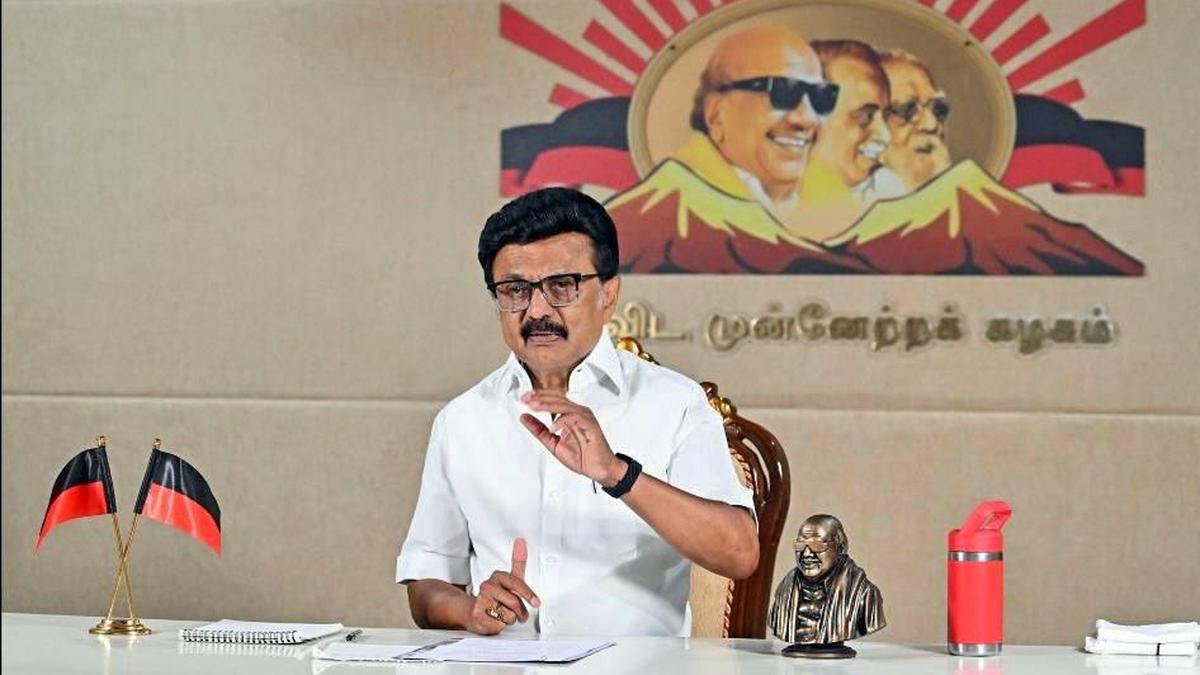
Tamil Nadu Chief Minister M.K. Stalin on Saturday (April 4, 2026) said the recently unveiled curriculum framework by the Central Board of Secondary Education (CBSE), aligned with the National Education Policy 2020, is not an innocent academic reform, but a calculated and deeply concerning attempt at linguistic imposition that vindicates long-standing apprehensions.
In a post on X, Mr. Stalin said under the guise of promoting “Indian languages,” the BJP-led NDA government is aggressively advancing a centralising agenda that privileges Hindi while systematically marginalising India’s rich and diverse linguistic heritage. The so-called three-language formula is, in reality, a covert mechanism to expand Hindi into non-Hindi speaking regions.
“For students in southern States, this framework effectively translates into compulsory Hindi learning. Yet, where is the reciprocity? Will students in Hindi-speaking states be mandated to learn Tamil, Telugu, Kannada, Malayalam—or even languages like Bengali and Marathi? The complete absence of such clarity exposes the one-sided and discriminatory nature of this policy,” Mr. Stalin said.
“The irony is stark and unacceptable. The same Union government that has failed to make Tamil a mandatory language in Kendriya Vidyalaya Sangathan schools—and has consistently failed to appoint adequate Tamil teachers — now seeks to lecture States on promoting Indian languages. This is not commitment; this is rank hypocrisy,” he said.
“Does the Union government have any understanding of ground realities — of teacher availability, training capacity, and infrastructure? Where are the qualified teachers to implement this sweeping exercise? And crucially, where is the funding to support this enormous burden on the education system? This appears to be yet another ill-conceived policy announced without planning, resources, or accountability,” Mr. Stalin said.
The DMK president also said this is not merely a question of language, but a question of fairness, federalism, and equal opportunity. By structurally privileging Hindi-speaking students, this policy risks creating entrenched advantages in higher education and employment, further widening regional disparities.


Stalin rebuffs Palaniswami's comments on his father, asserting DMK's strength and AIADMK's electoral failure in Tamil Nadu.

Family of Indian seafarer killed in missile strike petitions Bombay HC for expedited return of his mortal remains.

The decade from 2016 to 2026 has marked a period of rapid and unprecedented economic development in the State of Kerala

Tragic accident in Nashik: nine family members, including six children, die when their car plunges into a well.

Follow The Hindu LIVE for the latest updates on the 2026 Assembly elections in Tamil Nadu, Kerala, West Bengal, Assam and Puducherry

Andhra University’s centenary celebrations unite diverse cultures, showcasing international student contributions through food, performances, and global exchanges.

TMC demands removal of Bhabanipur RO, citing bias due to ties with BJP's Suvendu Adhikari amid ongoing electoral concerns.

The Hindu Morning Digest gives a select list of stories to start the day. Read the top news today on April 4, 2026

Mirwaiz Umar Farooq warns that multiple security agencies are instilling fear among Kashmir employees through intimidation and arrests.

Sunetra Pawar to file nomination on April 6 for Baramati bypolls, with a high-profile contest testing MVA's unity.

Yogi Adityanath promotes U.P. model for managing riots and infiltrators in Assam during an election rally for BJP.

Centre’s ban on Chinese internet-enabled CCTV cameras disrupts Hyderabad’s market, hitting supply, raising prices and slowing sales at key hubs.

RCB's Jitesh Sharma emphasises building a lasting legacy after last season's title, ready to embrace new challenges ahead.