‘The Rings of Power’ interview: Sam Hazeldine on playing Adar, learning Black Speech and the Sauron problem
The Hindu
Sam Hazeldine discusses playing Adar in 'The Rings of Power,' delving into character depth, Black Speech, and Sauron's return.
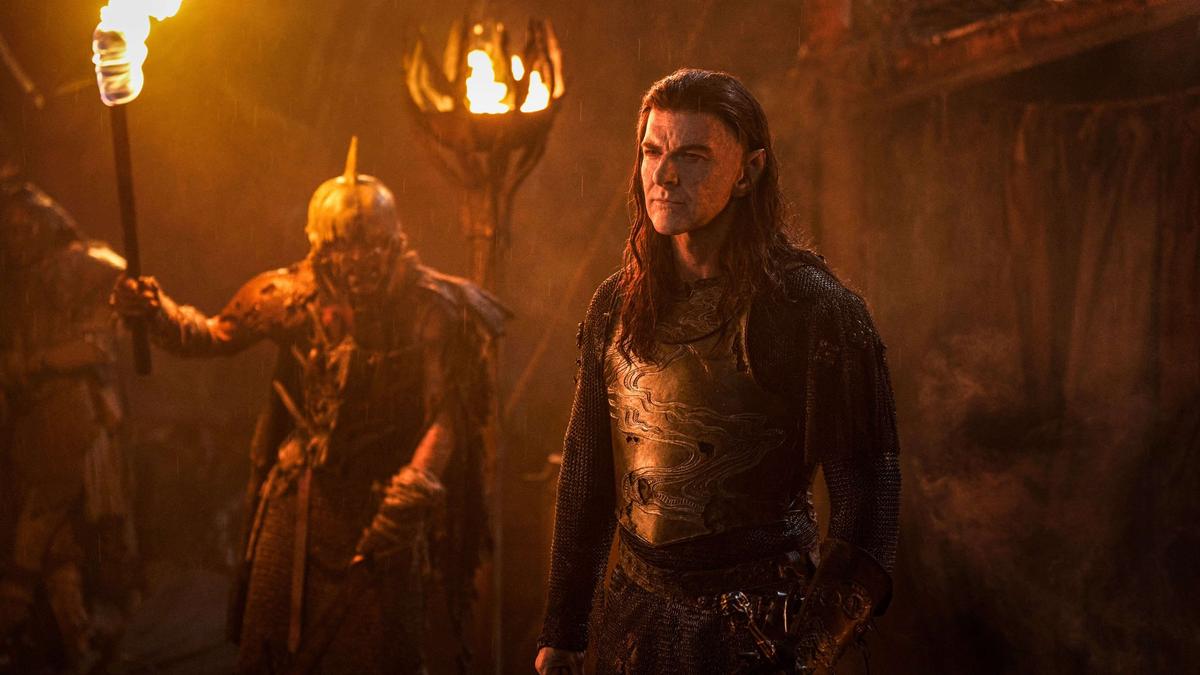
Sam Hazeldine is an actor with orcish commitment to his craft. Having inherited the mantle of Adar from Joseph Mawle, the 52-year-old Englishman has stepped into the role of the layered antagonist in Amazon’s colossal fantasy prequel series, The Lord of the Rings: The Rings of Power. In its much-anticipated second season, Hazeldine not only fans the flames of Adar’s zealous resolve, but also deepens his story with a concoction of paternal instincts and ruthless determination — a feat that proves once more that the lines between good and evil are seldom clear-cut in Middle Earth.
When I ask him how he sees Adar, Sam is quick to deflect any rudimentary labels. “I don’t see him as a villain at all, really,” he says. “He’s just trying to make life happen, to give the Uruk a life, really, which he has succeeded in doing at the end of the first season by creating Mordor, and they can live there, hopefully — we’ll see.”
It’s the “hopefully” that stands out. There’s a sense of unfinished business, of a job half done. In Tolkien’s world Adar occupies a fascinating grey space. “For Adar, it’s about a singleness of purpose,” Sam explains. “He has to make absolutely sure that he fulfils his promise to them, really, of protecting them and saving them either from the darkness of Sauron or from the elves who apparently want to wipe out the race of the Uruk once and for all.”
This singleness of purpose, as Sam puts it, makes Adar a character that resists easy classification. He’s not a mad tyrant or a power-hungry despot — he’s more of a father figure, albeit one with a very large, very dysfunctional (and often cannibalistic) family. The actor is quick to point out the parallels between Adar and the marginalised. “There’s a kind of entitlement there,” he says, referring to the elves. “It’s a bit like a master race thing.” Adar, on the other hand, is simply seeking a home for his people. “He just wants to be left alone.”
The Uruk, in Sam’s interpretation, are his children, and his ruthlessness comes not from malice but from a paternal instinct to protect and provide. “I think his ruthlessness is just about collateral damage,” he says. “He’s not trying to be ruthless, he just has this role he takes very seriously.”
This focus, this singular purpose, is what sets Adar apart from the pantheon of Tolkien villains. Saruman had a deepening lust for power, Azog his bloodthirsty vengeance, but Adar’s motivations are rooted in a kind of dark altruism. Adar is not out to conquer the world — he’s just trying to carve out a small corner of it for his own. “There’s honour there,” Sam adds thoughtfully. “A responsibility that he is beholden to and has to honour.”
But as much as Adar might want to play the role of protector, there’s the small matter of Sauron, the looming shadow that Adar thought he had banished. Season 2 sees Adar coming to grips with the realisation that Sauron is not as dead as he might have hoped. “I think Adar thinks his work is done, really,” Sam muses. “Until Halbrand arrives in Mordor and talks about this sorcerer returning… Sauron is something that he didn’t imagine was going to be a problem, having killed him already.”


Actor-director Amol Palekar will receive META's Lifetime Achievement award for 2026 on March 25 in New Delhi.

India's artists unite against rising censorship, advocating for creative freedom and support for marginalized voices in the arts.

Written and directed by Kunal, the film also stars Sparsh Shrivastava and Vanshika Dhir

This year, Bharatnatyam artistes will present the Tyagaraja Aradhane as a dance performance

This year, Bharatnatyam artistes will present the Tyagaraja Aradhane as a dance performance

The actor, along with director Sushant Shah, speak about their upcoming series ‘Chiraiya’, Divya’s process of working on the dialect, Sushant’s approach to telling a story about women, and more

An independent video, ‘Feel the Spark’ by Raleigh Rajan with vocals by Ciera Dumas that celebrates Tamil literary giants, garnered 1.4 million views in less than 36 hours.

In ‘Jack Ryan: Ghost War’, John Krasinski is back as the savvy CIA analyst, diving headfirst into a high-stakes mission that unravels a deadly conspiracy and pits him against a rogue black-ops unit

Shriram Bharatiya Kala Kendra’s Shankarlal festival showcased rare ragas, radiant artistry, and inclusive performances, from Pt Madhup Mudgal’s serene morning ragas to Ramana Balachandran’s Saraswati veena.

Explore "Threads that Bind: The Kantha Project," an exhibition in Delhi reimagining kantha as a medium of repair and renewal.

Sean Penn skips the Oscars to meet Ukraine's Zelenskyy, who praises him as a "true friend" amid the war.

The teaser of Tamil star Suriya’s much-awaited film with director Venky Atluri, titled Vishwanath and Sons, was unveiled by the makers on Monday

A 'Golden' moment for a K-pop track at the Oscars.