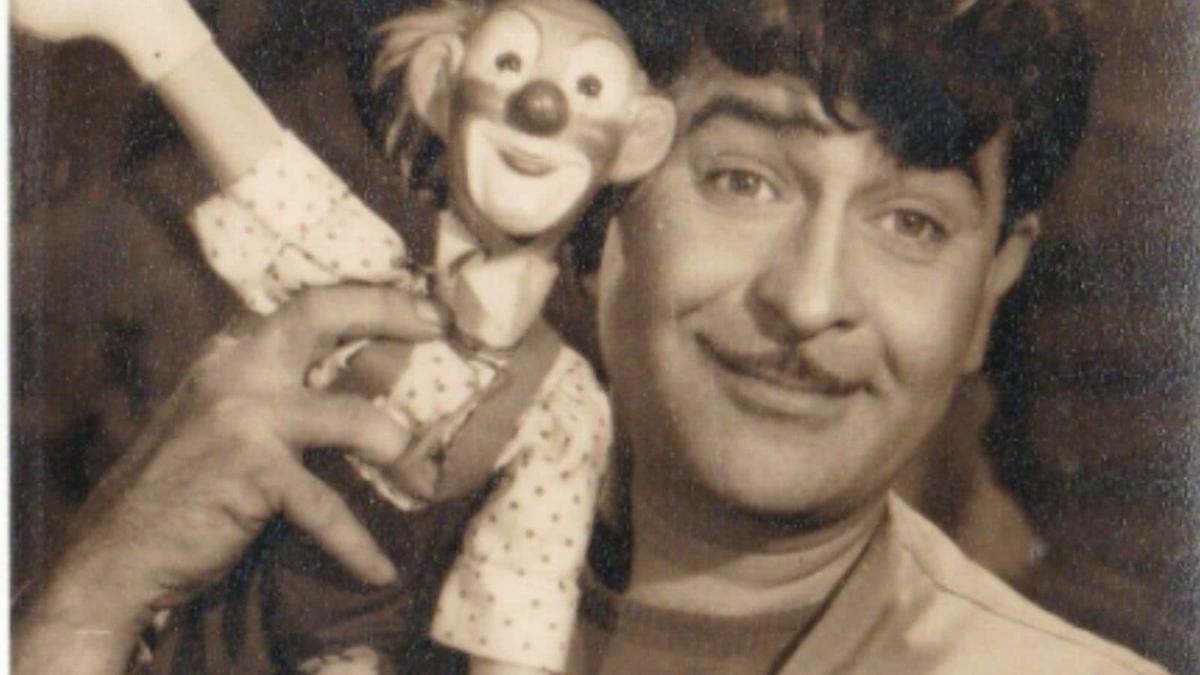
The music and motifs in Raj Kapoor’s cinema
The Hindu
Raj Kapoor was a complete filmmaker
At the just-concluded International Film Festival of India, Ranbir Kapoor revealed that the first song he made his daughter Raha listen to was ‘Kisi ki muskuraahaton pe ho nisar’from his grandfather Raj Kapoor’s Anari (1959). For cinephiles, this piece of trivia cascaded into a string of songs that the showman helped create on-screen to truthfully express the most intricate of emotions with a touch of innocence.
On the cusp of Raj Kapoor’s centenary year, while much is being written about the man, his creative process remains unexplored. In his mindscape, melodic strands of sound preceded the mise-en-scene. The entire film was like an opera for him, where the plot pivoted around music. Instead of technical jugglery, he would tie the whole experience into one sur (pitch/tone)and establish a rhythmic bond with the audience.
Film critic Jaiprakash Choukase, who was close to the Kapoor family, narrates an incident in his book on the filmmaker’s creative process. After Jaagte Raho (1956) tanked at the box office and Nargis moved on in her life, RK Films was going through a rough phase. In such times, when Raj Kapoor decided to mount Jis Desh Main Ganga Behti Hai (1960), his trusted collaborators Shankar Jaikshan, Shailendra and Mukesh were shocked that in a low phase, the director picked the story of dacoit reform, a subject they felt had little scope for melody. When Raj narrated the story with 11 song situations, they were dumbfounded. When the dacoits ask Raju to introduce himself, he sings ‘Mera naam Raju’, which has ubiquitous yet unique sounds that define his village. Shailendra posits his belief with ‘Kaviraj kahe Na yeh taj rahe Na yeh raaj rahe Na yeh raaj gharana.’
In another popular song from the film, ‘Hum bhi hain, tum bhi ho, dono hain aamne samne’, Pran, who plays a dreaded dacoit, lip syncs a stanza ‘Hai aag hamare seene mein, hum aag se khelte aaye hain’ expressing the emotional turmoil of the character.
Inspired by a segment in Ramcharitmanas where a boatman tells Lord Ram that people are soiling his Ganga by washing off their sins in her waters, Raj recorded all the songs of Ram Teri GangaMaili (1985) even before the screenplay was complete. At a wedding in Delhi, Raj heard Ravindra Jain singing a song where he delineated the difference in the love of Radha and Meera towards Lord Krishna. Touched, he turned the thought into the base of his story. No wonder music composer Pyarelal once said that Raj Kapoor would have been a brilliant music composer had he chosen to become one.
Raj imbibed a love for folk songs from his mother Rasrani Devi. He had a short stint with classical music. When his father Prithviraj Kapoor worked with New Theatres, he regularly visited its music room and developed an interest in Rabindra Sangeet. Traditional tunes such as ‘Ho bhaiyya teri nav main hai toofan’ (Awaara, 1951) marked his storytelling.
Raj Kapoor chose his boatmen with care, and Khwaja Ahmad Abbas and Shailendra propelled the ideological boat of Raj’s vision with the oars of their social realism. Though he had seen life from close quarters, Raj had little formal education. While Mukesh lent his Chaplinesque tramp a voice for the screen, Raj Kapoor used to say that Abbas and Shailendra provided a base for his socialist ideas to blossom. The duo would speak of Raj’s knack for touching the core of their thought and wrapping it in a glamorous cover with his showmanship. Starting with Awaara and Shree 420 (1955), the duality of society was a running theme in his films.


Supreme Court quashes copyright case against filmmaker Sujoy Ghosh over 'Kahaani 2,' overturning previous court rulings.

G. Sudhakaran announces his campaign against Minister R. Prasad in Cherthala, citing unwarranted remarks and party value erosion.

Union Minister Jayant Chaudhary received a death threat from an unknown caller, leading to a police investigation and security review.

Villivakkam faces civic challenges despite infrastructure improvements, with residents demanding better healthcare, transport, and green spaces ahead of elections.

Explore the struggles of Konaseema women lured by Gulf job promises, facing exploitation and seeking safe repatriation.

CM Stalin accuses the Opposition in Tamil Nadu of being controlled by Delhi, stressing the need for state autonomy in upcoming elections.

BRS legislators protest Telangana's unfulfilled Congress promises before the 2026-27 budget presentation, demanding accountability for the Six Guarantees.

Join the Irular community in Mamallapuram to celebrate Masi Magam, reconnecting with their culture and traditions on the seashore.

Women in India face stigma, delayed diagnosis, financial barriers, and discrimination throughout their tuberculosis journey.

CPI(M) leader in Kerala faces charges for alleged sexual relations under false marriage promise, leading to woman's suicide attempt.

Chennai-based Harry MacLure has started a petition to help take his latest film, Calcutta, I’m Sorry, showcasing the talent of the Anglo-Indian community to a global audience

Legendary director Mani Ratnam is teaming up with Vijay Sethupathi and Sai Pallavi for his next film. The movie is produced by the filmmaker’s own Madras Talkies and Lyca Productions

Humayun Kabir claims a Muslim Chief Minister or Deputy CM is possible in West Bengal's upcoming elections, shaping political dynamics.