The more things change in Iran, the more they remain the same Premium
The Hindu
As war and uncertainty grip Iran, three books — each from a different moment in the country’s history — revisit the Shah’s fall, the rise of the Islamic Republic, and the women-led uprising that challenged power in Tehran.
In September 1941, a 22-year-old Mohammad Reza Pahlavi ascended the throne of Iran while his father, Reza Shah, was sent into an honourable exile to Johannesburg by the British. Becoming a monarch at such a young age, the Shah tried his best to emulate his father. Towards the end of his reign, he even invoked his larger-than-life father’s authority till the Iranian revolution of 1979 forced him to flee.
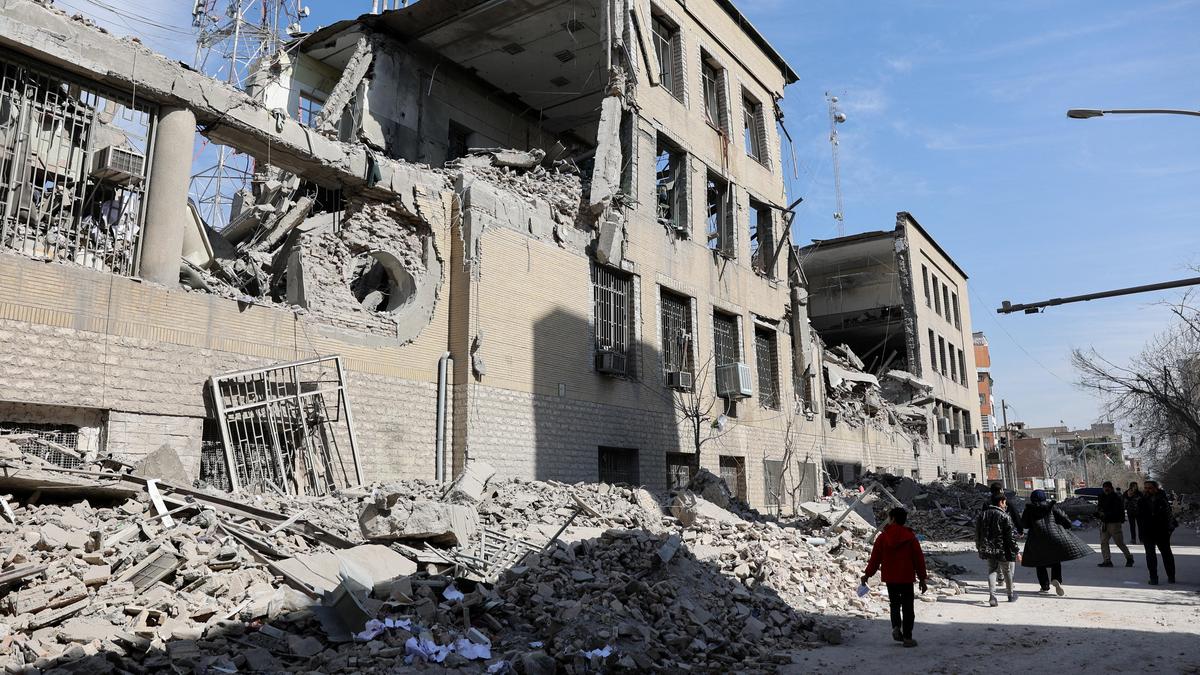
Cut to the present. Amid a deepening economic crisis, Iran has been bombed by Israel and the United States. Its Supreme Leader, Ayatollah Ali Khamenei, has been assassinated and more than 780 people have been killed in the country so far. Iran has struck back, and the war has plunged the entire West Asian region into turmoil. Shah’s son Reza Pahlavi, who has lived in the U.S. since 1979, has declared that he is ready to return to Iran “as soon as possible”.
While there has been a clamour in some quarters in Iran to have the crown prince back, he has a complex legacy — his father’s era is seen as a time when Iran had closer ties to the West, but it was also a time when there was censorship, human rights abuses, and a Savak secret police, which suppressed dissent with impunity.
In this backdrop, reading Polish journalist and writer Ryszard Kapuściński’sShah of Shahs, which traces the last days of the Shah before the Iranian revolution, is an eye-opener. Kapuściński’s book was first published in 1982 and was translated into English by William R. Brand and Katarzyna Mroczkowska-Brand. The book gives a sense that the more things change in Iran, the more they remain the same. At present, instead of Savak, for instance, there are units of the Revolutionary Guard, keeping a fierce eye on dissenters, sending them to prison and, in many cases, to their death.
The Shah, says Kapuściński, made a sweeping claim, betting on oil, that “Iran will leap forward and build a Great Civilization.” The only magic wand the Shah held in his hand and with which he thought of transforming Iran in just 10 years was oil. As Kapuściński writes: “Oil kindles extraordinary emotions and hopes, since oil is above all a great temptation. It is the temptation of ease, wealth, strength, fortune, and power. It is a filthy, foul-smelling liquid that squirts obligingly up into the air and falls back to earth as a rustling shower of money.” With oil, the Shah used to say, “I will create a second America in a generation!” He never did, but this vanity ended up being one of the reasons for his downfall.
What was strikingly absent in the Shah’s grand idea of Iran was the well-being of its people. His notorious intelligence agency, Savak, was the Shah’s eyes and ears. Savak eavesdropped on everyone who dared to speak out against the Shah. Books and films by Iran’s best writers and filmmakers were banned. As for the intellectuals, their thoughts were stifled and they were condemned to silence.


Explore how U.S.-Israel actions against Iran could disrupt livelihoods and remittances for millions of Indian migrant workers in the Gulf.

Maharashtra transport operators plan a statewide strike, demanding the rollback of the e-challan system amid unresolved grievances.

Nurses in Thiruvananthapuram continue their strike for higher pay and better working conditions, demanding government action on wage issues.

Dalit Ministers seek consensus on internal reservation ahead of Karnataka Cabinet meeting amid division among Scheduled Castes.

Chennai Metro Rail introduces portable ramps for wheelchair users, enhancing accessibility at all platforms this month.

Edwin Lutyens ultimately secured near-exclusive credit for New Delhi’s design not just because he was talented, but because he was an exceptional public-relations strategist

Green Climate Team promotes water access for birds and animals, arranging clay pots to support wildlife during summer.

Palaniswami meets AIADMK district secretaries in Chennai to discuss election preparations and seat-sharing arrangements with the BJP.

The DMK and Congress finalize a crucial seat-sharing deal thanks to key negotiations by Kharge, Chidambaram, Kanimozhi, and Karti.

Justice Swaminathan allows time for the Thirupparankundram temple trustees to respond to his suggestion regarding Karthigai Deepam prayers.

New Zealand secures a dominant T20 World Cup final spot, led by Finn Allen's explosive century against South Africa.

Central government allocates ₹64 crore for PM Ekta Mall project in Puducherry, promoting local artisans and crafts.

Farmers demand NAFED procurement of maize to secure Minimum Support Price amid declining market rates.