Chronic traffic noise exposes kinks in India’s urban regulations Premium
The Hindu
Chronic traffic noise in India poses serious health risks, highlighting weaknesses in urban regulations and public awareness.
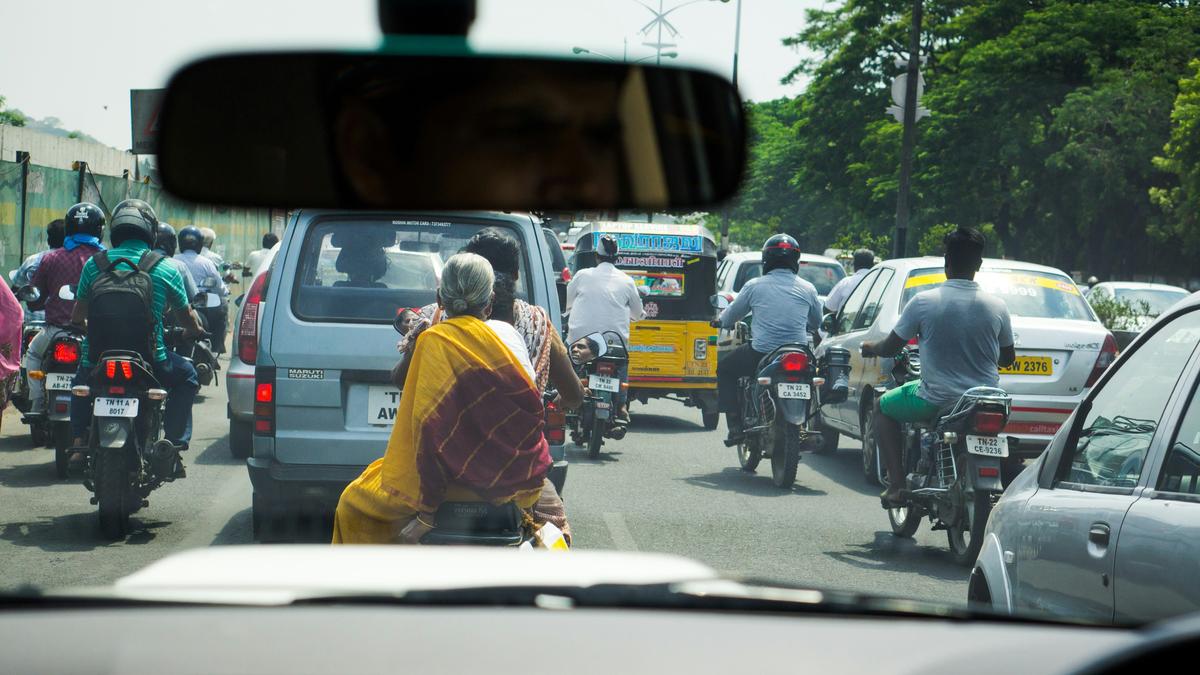
In India, urban noise is relentless yet it is largely under-recognised as a public health concern. The average Indian urban traffic reportedly routinely reaches 80-100 dB, exceeding the World Health Organization’s recommended 70 dB limit, creating a recognised risk of hearing loss.
Noise-induced hearing loss (NIHL) has long been viewed as an occupational disease of factories and mines. Scientific evidence challenges this assumption. Chronic exposure to environmental noise, particularly road traffic, can cause clinically measurable damage even in the absence of industrial hazards.
Scientific evidence suggests what cities dismiss as background noise may in fact be producing measurable biological injury.
CSIR-National Environmental Engineering Research Institute senior technical officer Satish K. Lokhande said NIHL typically first appears around 4 kHz. In a 2022 study on firecracker noise, Dr. Lokhande documented how repeated exposure to intense sound peaks, often exceeding 85 dB, “accumulates auditory stress,” initially causing a temporary threshold shift that becomes permanent with sustained exposure.
In another 2023 study of road tunnels that he co-authored, Dr. Lokhande found sound levels between 78.9 and 86.5 dB(A) with peak energy again concentrated at 4 kHz. Urban road traffic contributes a continuous, moderately elevated noise environment, often punctuated by horns and construction activity.
(dB(A) is short for A-weighted decibels, a sound level in decibels that has been adjusted to reflect how sensitive human hearing is at a certain frequency.)


Explore how U.S.-Israel actions against Iran could disrupt livelihoods and remittances for millions of Indian migrant workers in the Gulf.

Maharashtra transport operators plan a statewide strike, demanding the rollback of the e-challan system amid unresolved grievances.

Nurses in Thiruvananthapuram continue their strike for higher pay and better working conditions, demanding government action on wage issues.

Dalit Ministers seek consensus on internal reservation ahead of Karnataka Cabinet meeting amid division among Scheduled Castes.

Chennai Metro Rail introduces portable ramps for wheelchair users, enhancing accessibility at all platforms this month.

Edwin Lutyens ultimately secured near-exclusive credit for New Delhi’s design not just because he was talented, but because he was an exceptional public-relations strategist

Green Climate Team promotes water access for birds and animals, arranging clay pots to support wildlife during summer.

Palaniswami meets AIADMK district secretaries in Chennai to discuss election preparations and seat-sharing arrangements with the BJP.

The DMK and Congress finalize a crucial seat-sharing deal thanks to key negotiations by Kharge, Chidambaram, Kanimozhi, and Karti.

Justice Swaminathan allows time for the Thirupparankundram temple trustees to respond to his suggestion regarding Karthigai Deepam prayers.

New Zealand secures a dominant T20 World Cup final spot, led by Finn Allen's explosive century against South Africa.

Central government allocates ₹64 crore for PM Ekta Mall project in Puducherry, promoting local artisans and crafts.

Farmers demand NAFED procurement of maize to secure Minimum Support Price amid declining market rates.