Ahead in health, but a new set of challenges awaits Tamil Nadu Premium
The Hindu
At the heart of Tamil Nadu’s successes in healthcare lies a dedicated public health system — a wide, well-distributed network of primary health centres
Empirically, anecdotally, and historically, Tamil Nadu is among the top performers in the healthcare sector in the country, perhaps second only to Kerala, in terms of rankings on development indicators. With a robust public health system that brings quality and state-of-the-art services to all, irrespective of the ability to pay, and bolstered by a large private healthcare set-up that has spread itself across the cost and quality spectrum, Tamil Nadu has achieved a set of healthcare indicators far better than, and often exceeding, the national average.
This is quite clear if you look at the healthcare indicators: according to data released by the Health Management Information System, Tamil Nadu’s Infant Mortality Rate (IMR) dropped from 13 per 1,000 live births in 2020 to 8.2 per 1,000 live births in the period April-December 2023. The State’s Crude Birth Rate — a fundamental demographic indicator, calculated as the number of live births per 1,000 people in a population over a year — is 14.2, compared with the national mark of 19.7, as per the National Family Health Survey 5 (NFHS) findings. Read along with the declining Total Fertility Rate at 1.4/1.5, much below the replacement level of 2.1, it indicates a mature society in which the demographic transition has begun, though this is likely to bring its own set of challenges in the future. Tamil Nadu boasts 100% institutional deliveries, as against 94.5% nationally.
According to the Special Bulletin on Maternal Mortality in India 2021-2023, Tamil Nadu now has the second-lowest Maternal Mortality Rate (at 35 maternal deaths for every 1,00,000 live births) in the country, behind Kerala and Andhra Pradesh, both at 30. As per the NFHS 5 data, Tamil Nadu’s neonatal mortality rate dropped to 10 in 2018 (from 26.2 in 2005). Again, going by this data set, the stillbirth rate had dropped to 4 in 2018, among the lowest figures in the country. Tamil Nadu has consistently achieved high immunisation coverage, consistently exceeding 90% to 95% for many key vaccines such as diphtheria, tetanus, and pertussis (DPT), polio, and BCG (against tuberculosis). It has also, since 2008, remained a leader in the cadaver transplantation programme in the country.
The data makes it clear that in the field of maternal and child health, Tamil Nadu’s performance currently makes it an exemplar. How was this achieved?
Focus on public heath
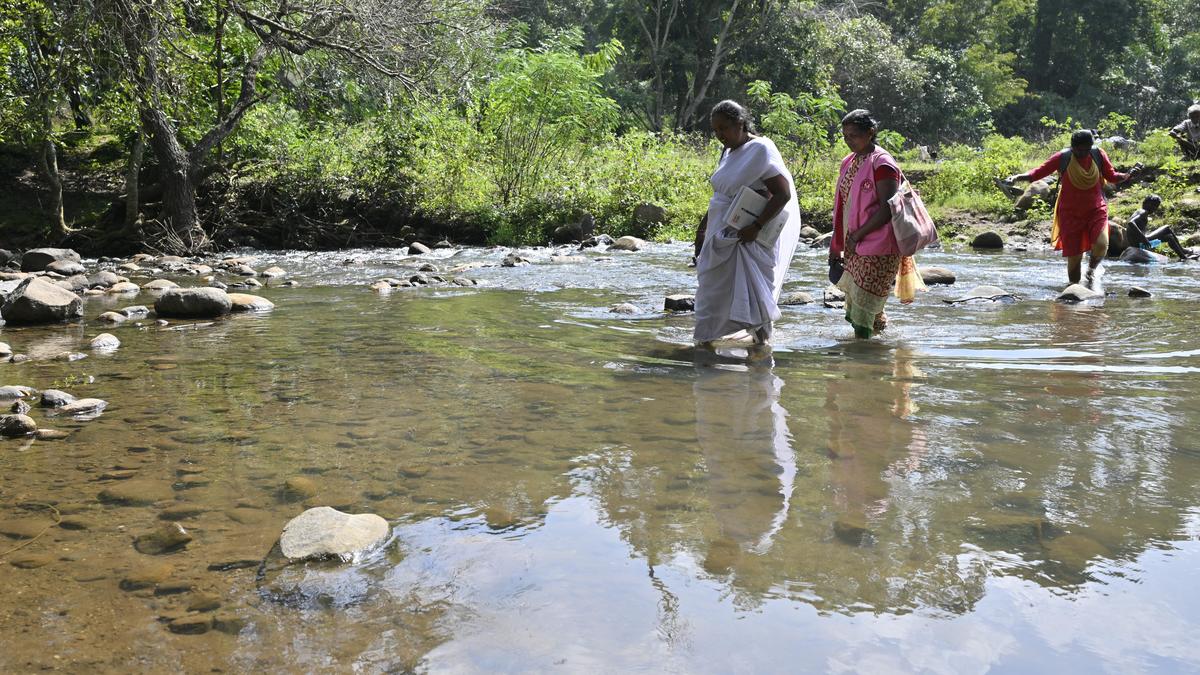
At the heart of Tamil Nadu’s successes in healthcare lies a dedicated public health system — a wide, well-distributed network of primary health centres, ably supported by community health workers who remain integral influencers in the communities they frequent, being the first point of care, enforcing immunisation, and spreading the message of prevention. This is bolstered by a dedicated public health cadre of trained specialists who oversee and run operations under a special Directorate of Public Health in the State. This lower-level network branches into taluk, district headquarters, and medical college hospitals that deliver secondary and tertiary care services.


At the heart of Tamil Nadu’s successes in healthcare lies a dedicated public health system — a wide, well-distributed network of primary health centres

Kochi Comic Con's inaugural event unites over 100 cosplayers, showcasing vibrant pop culture with 20,000 enthusiastic attendees.

Arsenal tightens Premier League lead as Chelsea thrives and Man United faces defeat; top-five race intensifies.

As war and uncertainty grip Iran, three books — each from a different moment in the country’s history — revisit the Shah’s fall, the rise of the Islamic Republic, and the women-led uprising that challenged power in Tehran.

Explore how AI in classrooms risks undermining true learning and critical thinking, advocating for better teaching over policing.

Discover how the women of the Mughal empire shaped Purani Dilli's architecture and heritage, reclaiming their pivotal roles in history.

Chronic traffic noise in India poses serious health risks, highlighting weaknesses in urban regulations and public awareness.

Explore how U.S.-Israel actions against Iran could disrupt livelihoods and remittances for millions of Indian migrant workers in the Gulf.

Maharashtra transport operators plan a statewide strike, demanding the rollback of the e-challan system amid unresolved grievances.

Nurses in Thiruvananthapuram continue their strike for higher pay and better working conditions, demanding government action on wage issues.

Dalit Ministers seek consensus on internal reservation ahead of Karnataka Cabinet meeting amid division among Scheduled Castes.

Chennai Metro Rail introduces portable ramps for wheelchair users, enhancing accessibility at all platforms this month.

Edwin Lutyens ultimately secured near-exclusive credit for New Delhi’s design not just because he was talented, but because he was an exceptional public-relations strategist