The many tales of Connemara Public Library in Chennai
The Hindu
The many tales of Connemara Public Library in Chennai
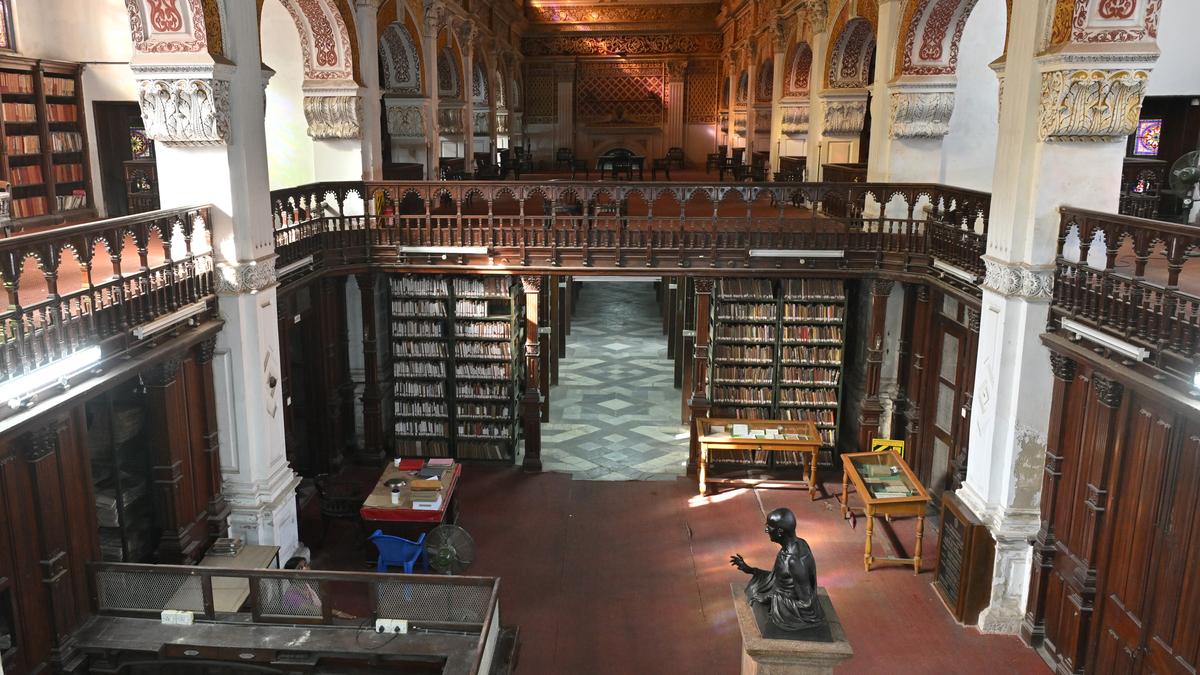
On a rather breezy Friday evening, students were pouring in and out of the Connemara Public Library on the Government Museum campus in Egmore: some in large groups, others in focused solitude, with many staying the whole day. Thankfully, the structure, which houses over 9.8 lakh books, is not one of those forgotten places in the city.
And there is a reason for that.
One cannot ignore the library’s layers of history. When the former Governor of the Madras Presidency, Lord Connemara, recognised the need for a public library in the city, he laid its foundation stone on 22 March 1890. By 1896, the library was officially opened to the public. Since then, it has grown into a landmark of Chennai, with many prominent figures, including C.N. Annadurai, Rajagopalachari, R. Venkataraman, C. Subramaniam, and writer Sujatha, having been active members.
Fast forward to today, the library has been witnessing a significant increase in footfall from civil service aspirants like never before. “At least 600-700 students use the library every day, including a large section of civil service aspirants. Around 10% of them bring their own books, but space for that is limited,” says a senior librarian. While older readers still flip through newspapers and magazines in peace, it is the younger crowd that is most often seen in and around the library.
Ilamathi T., a UPSC aspirant from Salem, collected her bag from the library reception after a long day. “This library is like my second home. I also sit under the campus trees to study; it is peaceful, but at the same time, I am never alone, as many students are preparing for the exams alongside me,” said Ms. Ilamathi. “The archives of old newspapers and the stacks of competitive exam books especially come in handy,” she added.
What many may not know is that the heritage wing of the Connemara Library is the true jewel in its crown. It opens to the public only once a year, on April 18, when rare books from the 18th and 19th centuries come out to shine, such as The Revolt in Hindustan by Sir Evelyn Wood, Centamil published in 1822, and many more. But the spaces that hum with daily activity are the textbook section, followed by the general books, reference section, Indian language books, and periodicals.
The library management has been coming up with book exhibitions, student activity programmes, children’s books area, cultural programmes, and so on to increase the footfall on the literary fiction side, which has taken a dip. Meanwhile, the Public Works department has also been working on a conference room and STEM zone inside the library.


Lorry owners in Andhra Pradesh reject government proposal to reduce vehicle fitness test fees by up to 50%.

Watch the thrilling trailer for 'Dune: Part Three,' showcasing epic battles and Paul Atreides' struggle with power and resistance.

TMC announces candidates for 2026 Bengal Assembly elections, contesting 291 seats; BGPM to handle three Darjeeling hill seats.

DMK finalizes a seat-sharing deal with CPI for Tamil Nadu elections, allotting five seats amid ongoing discussions with CPI(M).

Parliament Budget Session LIVE: Follow The Hindu's latest updates on the Parliament Budget Session on March 18, 2026.

Severe storms cause over 1,100 flight cancellations and 7,300 delays across the U.S., exacerbating travel chaos amid a government shutdown.

Three MBBS students tragically died in a scooter accident in Kozhikode, Kerala, early Wednesday morning.

Microsoft said on Tuesday it is reorganising its Copilot teams by unifying its commercial and consumer versions, as the tech giant rushes to improve its artificial intelligence assistant to drive better adoption.

Poco has launched the new X8 Pro series smartphones in India, consisting three phones: the Poco X8 Pro Max, Poco X8 Pro, and the special edition Poco X8 Pro Iron Man Edition

Morocco is crowned African football champion after Senegal forfeits the final due to a controversial walk-off protest.

Israeli tank fire reportedly hit a U.N. base in Lebanon, wounding Ghanaian peacekeepers amid rising tensions with Hezbollah.

LPG shortages in India force schools to revert to firewood, increasing burdens on women workers in mid-day meal schemes.

Discover the dramatic history and significance behind Tamil Nadu's name change from Madras on January 14, 1969.