The long walk Premium
The Hindu
Protests surge in India against the Transgender Persons Bill, threatening the right to gender self-identification for trans communities.
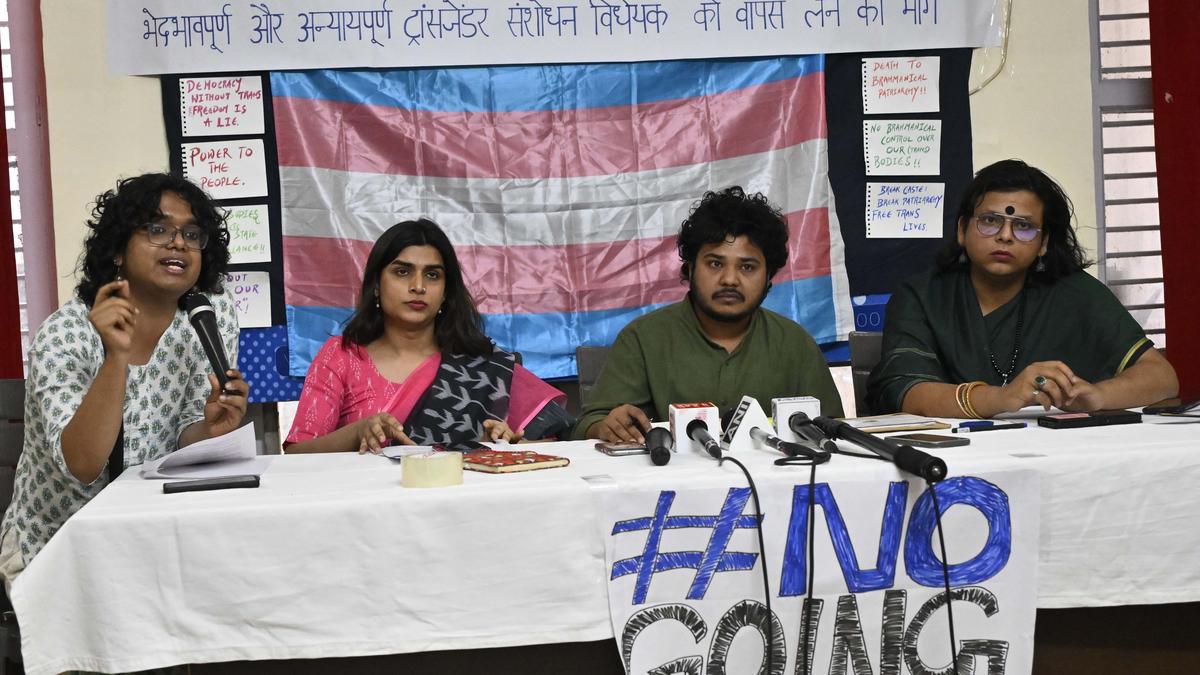
Kabir, 34, is seated at the centre of the panel in Delhi’s Indian Women’s Press Corps (IWPC), where he speaks about his journey. He wants to become a teacher to sensitise children to gender identities and give them the support he wishes he had. Kabir, a trans man, speaks about the multitude of obstacles he’s faced on his way to accepting and expressing his gender, from adolescence through adulthood.
Now, there is another threat to his identity: On March 13, the Transgender Persons (Protection of Rights) Amendment Bill, 2026 was tabled in the Lok Sabha by India’s Social Justice Minister.
Almost immediately, the Bill drew shock and condemnation. Trans communities across India sensed the looming threat of an existential crisis. Tens of thousands spontaneously mobilised, both online and offline, in cities and towns across the country. Posters at protests read: “Trans lives are not for the state to redefine”, “Identity is not a certificate”, and “#RejectTransBill”. The problem with the Bill, they reiterate, lies in the proposal to shift from self-identification to state identification of gender.
At the IWPC, the panel Kabir is speaking on comprises transmen, transwomen, and non-binary people across professions, who have come together to call for the withdrawal of the Bill. “The day after my name appeared on a list for a teaching position (in Uttarakhand), I learnt about this Bill and I thought, if they see it, they will strike my name off.”
Kabir, who is Dalit, says that gender and caste-identity-related harassment has set him back at least 10 years. He says, “Now, when I look back, I realise that if I had a teacher in school who was sensitive and could guide me, maybe I would not have lost all those years.”
At the teacher eligibility test in Delhi, he says he was singled out and questioned invasively. “I cited the Act and the Rules to explain that it was my right to be there,” he says, softly but sternly. While he was taking his test, his friends were celebrating their identity at the Pride Parade, a kilometre away. Inside, there was gender antagonism; on the streets, there was celebration. “I realised the importance of that day,” he says.


Women in India face stigma, delayed diagnosis, financial barriers, and discrimination throughout their tuberculosis journey.

CPI(M) leader in Kerala faces charges for alleged sexual relations under false marriage promise, leading to woman's suicide attempt.

Chennai-based Harry MacLure has started a petition to help take his latest film, Calcutta, I’m Sorry, showcasing the talent of the Anglo-Indian community to a global audience

Legendary director Mani Ratnam is teaming up with Vijay Sethupathi and Sai Pallavi for his next film. The movie is produced by the filmmaker’s own Madras Talkies and Lyca Productions

Humayun Kabir claims a Muslim Chief Minister or Deputy CM is possible in West Bengal's upcoming elections, shaping political dynamics.

Tech giants Apple and Samsung oppose the Indian government's proposal to preload the Aadhaar app on smartphones due to security concerns.

Edappadi Palaniswami announces finalization of seat-sharing for Tamil Nadu Assembly elections 2026 and AIADMK manifesto release.

Uttarakhand CM Pushkar Singh Dhami expands his cabinet, inducting five MLAs to reach the maximum strength of 12 ministers.

Congress and Raijor Dal finalize their alliance for the Assam Assembly polls, sharing 11 seats and aiming to defeat the BJP.

BJP announces 112 candidates for West Bengal Assembly polls, including former MPs, lawyers, but excludes Abhaya’s mother’s candidature.

A man dies after a bar brawl in Alappuzha, Kerala; police detain five suspects for investigation.

Trainee veterinary officer dies from hippopotamus attack at Shivamogga safari during health check, prompting investigation into safety protocols.

The Voice of Hind Rajab, a film about a Gaza war tragedy, faces an oral ban in India by CBFC.