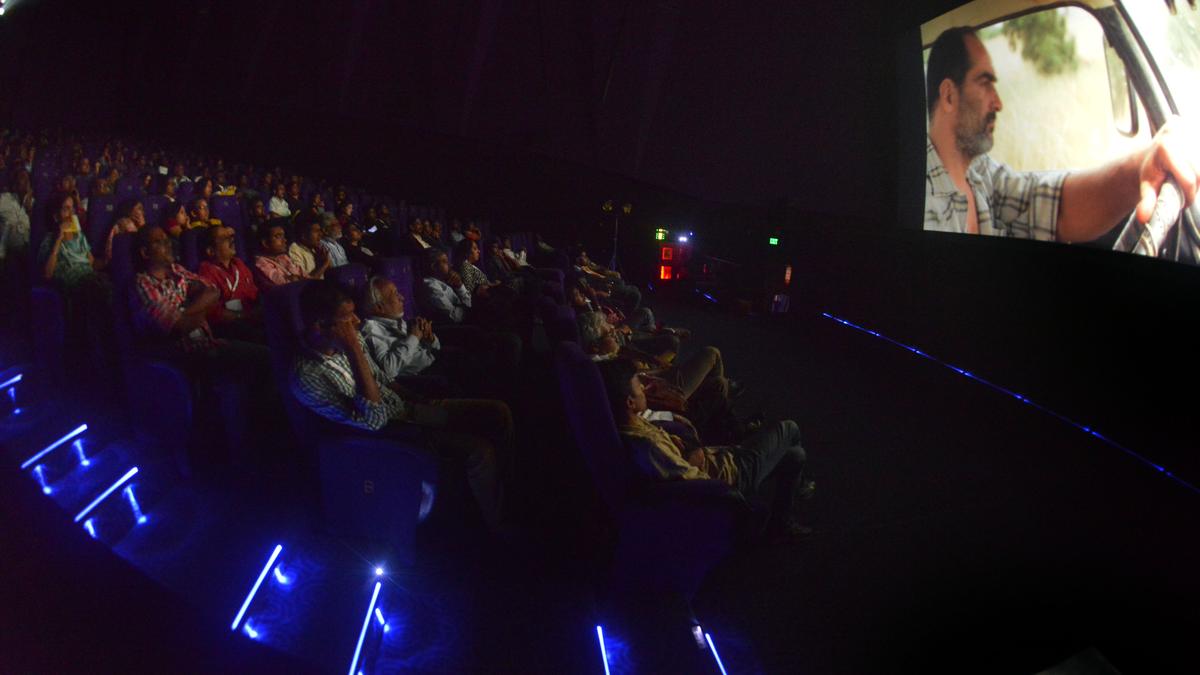
The big cost of watching a film on the large screen in Bengaluru
The Hindu
Harish Mallya discusses the decline in theatre visits post-pandemic, highlighting the impact of high ticket prices on movie-goers.
Harish Mallya, an ardent film buff from Bengaluru, concedes that his theatre visits have come down post the COVID-19 pandemic period. An engineer and a curator of world cinema for the Bengaluru International Film Festival (BIFFes), Harish had the habit of watching a film every Friday without fail for decades.
In the current situation, he highlights a development that reflects the falling demand for theatre viewing. “Earlier, I would book my seat in advance, thanks to the mad rush for tickets for marquee movies in the opening weekend. However, in the last couple of years, I have been able to get tickets at the box office of multiplexes even for the highly anticipated films across languages,” he says.
There is no denying that theatres are facing their biggest test today. Factors such as the advent of streaming platforms and high-priced tickets have changed the viewing habits of the average movie-goer. In 2024, PVR Inox Ltd. shut down 85 underperforming screens. The following year, the multiplex chain decided to close 70 more properties. Similarly, single screens continue to suffer, with the total count in Karnataka coming down to 500 active screens post pandemic from 650 earlier.
Bollywood star Aamir Khan delved into the issue at the recently held World Audio Visual and Entertainment Summit (WAVES) in Mumbai. Aamir, one of the canniest box-office minds, suffered a failure with his previous film Laal Singh Chaddha (2022). As he awaits his next, Sitaare Zameen Par, the actor sounded alarmed about the prospect of theatrical releases in the coming days.
“For the size of the country and the number of people living here, we have few theatres. I think we have 10,000 screens. Only 2% of the nation’s population watches movies in theatres. In the U.S., which has one-third of India’s population, there are 40,000 screens. China is ahead with 90,000 screens. There are districts and vast areas in India which don’t have single-screen theatres. Whatever issues we have faced over the decades are about having more screens. According to me, this is what we should be investing in,” Aamir said at the event.
Movie-watching, especially in multiplexes, is a costly experience. Bengaluru has remained infamous for the high-priced tickets. In this context, the State government’s proposal to cap the film ticket price at ₹200 came as a ray of hope for film buffs. The March 7, 2025, announcement reminded people of a similar call from Chief Minister Siddaramaiah in his previous term, in 2017. The Multiplex Association of India (MAI) appealed against the government’s decision in court and brought a stay on the order at the time.
The government seems to have kept the issue in “suspended animation”, says author and film critic S. Shyam Prasad. “The Chief Minister has aligned with the public sentiment, but I don’t think market forces will allow him to implement the price cap. He has just made a populist statement,” he says.


Bengaluru's M. Chinnaswamy Stadium conducts readiness drill ahead of IPL 2026, ensuring upgrades and technical preparations are complete.

First-level randomisation of EVMs completed in Nagapattinam for upcoming elections, ensuring transparency and security.

A district-level committee in Krishnagiri has been formed to assess and verify seizure claims of goods and cash.

Minister Anam Ramanarayana Reddy pledges government support for local fishermen and farmers facing challenges in Andhra Pradesh.

MP M. Sribharat urges collective efforts to revive Visakhapatnam Steel Plant, highlighting key reforms for crucial recovery and growth.

141 candidates have filed nominations for Kozhikode's Assembly elections, with scrutiny on March 24 and campaigning intensifying.

BJP's Vijayendra accuses Congress of using money to influence Bagalkot bypolls, urging voters to reject their tactics.

First randomization of electronic voting machines completed in Tirunelveli and Tenkasi districts for upcoming Assembly elections.

RPF seizes 10.12 kg of unclaimed cannabis worth ₹5.06 lakh from a train in Mangaluru.

Kolar's groundwater levels rise to 50-100 ft due to the K.C. Valley project, ensuring clean water and improved health outcomes.

Three smugglers arrested in Sangareddy with 574 kg of ganja valued at ₹2.87 crore during a police operation.

Mysuru MP urges a 'flex-free Mysuru' by discouraging birthday banners, promoting responsible celebrations to preserve the city's heritage.

Farmers of Kalakudi demand payment for paddy bags procured at DPC