The air power use discourse and Operation Sindoor Premium
The Hindu
Operation Sindoor may well have redrawn the contours of India’s unwritten national security strategy
Whenever nations embark on reconfiguring their security strategies, they must invariably review the use of the various instruments of force that are available for exploitation. India’s journey down that road has been evolutionary rather than transformational. From a rather diffident power soon after Independence, that perceived the instrument of force as an ‘avoidable necessity’, to more assertive expressions of national power over the last five decades, that commenced with the 1971 war with Pakistan, Indian statecraft stands at the crossroads of a new era.
Operation Sindoor (May 7-10) may well have redrawn the contours of India’s unwritten national security strategy. Here, at its centre, is a more assertive and proactive strategy that is now willing to explore ‘prevention, pre-emption and punishment’ as the new normal against Pakistan, should it continue to support terrorism against India as an instrument of the Pakistani state. However, what will hopefully remain as the inviolable edifice of this strategy will be the continuation of ‘responsibility and restraint’ (the hallmark of any response that the Indian state has offered whenever faced with a national security crisis).
In the past, an excessively continental mindset, a preoccupation with attrition warfare along long and contested borders, and the linkages between conventional operations and territory as a currency of military effectiveness, ensured that land forces, both military and paramilitary, occupied pole position in India’s national security calculus. The widespread prevalence of internal armed conflict added to the inescapable necessity for this orientation.
The reemergence of the maritime domain and its attractiveness to double-bank as an instrument of force and diplomacy lifted the blinkers off centuries of sea-blindness and offered options other than a continental mindset to India’s national security planners. However, all was not well when it came to understanding the competitive advantage that air power offered apex policymakers when confronting the dilemmas of climbing the escalation ladder vis-à-vis unpredictable adversaries such as Pakistan and matching the capabilities of China (which now appears to have significantly widened the conventional gap with India in all realms of military power, especially air power).
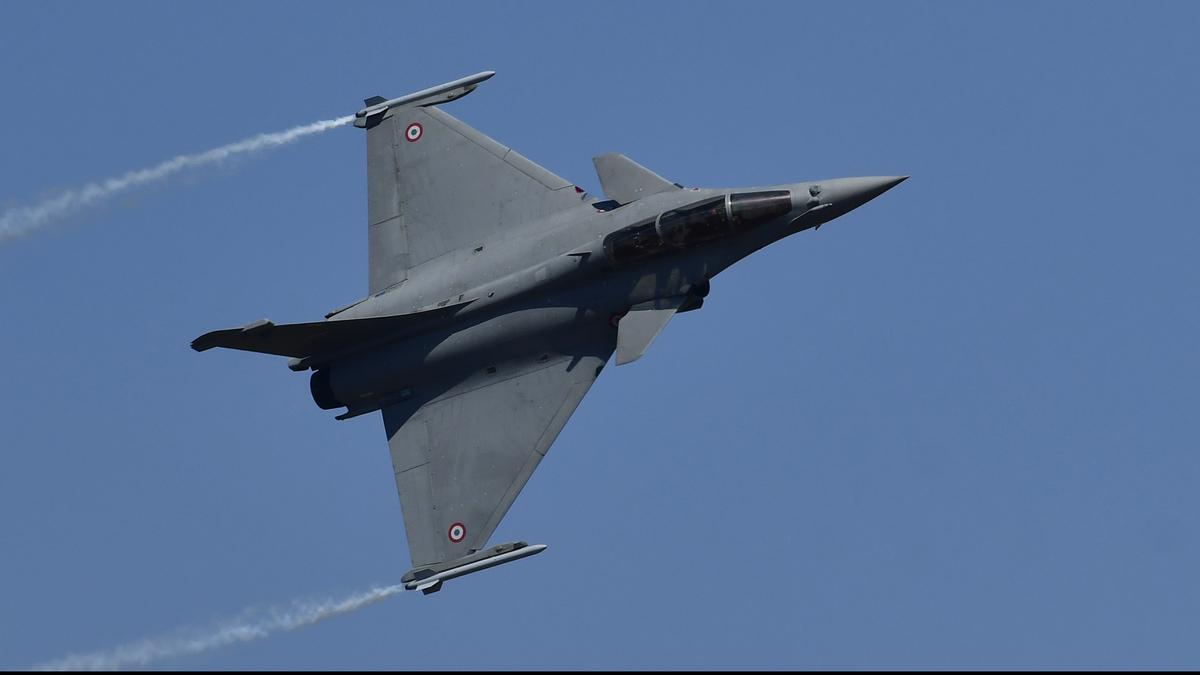
It is in this context that the recent offensive-defensive employment of air power in Operation Sindoor paves the way for a more nuanced understanding of the importance of military air power in the national security calculus. For over a decade now, the non-kinetic capability of the Indian Air Force (IAF) has matched the best in the world in areas such as tactical and strategic airlift, and Humanitarian Assistance and Disaster Relief (HADR) operations. It is in the offensive realm that the IAF, over the last decade or so, has been attempting to impress upon the strategic establishment that it has the capabilities and the will to act as the first responder and cause significant attrition to an adversary in several new configurations of warfare that are proliferating across the globe.
Until Operation Sindoor, offensive air power was considered by a conservative and diffident strategic establishment in India as an escalatory instrument that fitted only into the calculus of conventional military operations. Even though the IAF doctrine of 2012 articulated the mission requirements of sub-conventional conflict that include counter-terrorist operations, it mainly remained in the realm of discussion in war colleges till the Narendra Modi government decided to use offensive air power at Balakot (in 2019). The IAF, however, remained doctrinally persistent when it continued to push for greater involvement in limited conflict and no-war-no-peace situations in its latest doctrine.
In an era of a serious budgetary squeeze, the past few years have seen fierce competition between the three services (the Indian Army, Indian Navy and IAF) for a share of the defence budget, a situation that has also resulted in dissonance in crafting the optimal military strategy against collusive adversaries with the available instruments. In this milieu, the IAF has been a laggard in educating and convincing policymakers that offensive air power offers immense potential in waging non-contact warfare and can impose serious costs on adversaries in several contingencies without needlessly committing boots on ground.


Four Assam police commandos injured in an extremist attack during a gunfight in Tinsukia district, officials report.

Campaigning intensifies in Ernakulam district as candidates engage voters ahead of the crucial Assembly polls.

Lord Rama rides Hanumantha Vahanam on sixth day of Brahmotsavams in Tirupati

Nagapattinam faces underdevelopment and resource challenges, impacting its rich heritage and the livelihoods of its fishing community.

Governor Arlekar emphasizes that justice must embody human values, fairness, and accessibility for all citizens at VIT conference.

Motorists on Valparai Road are warned of increased wild animal activity this summer, particularly elephants seeking water.

In a surprising turn of events, Urvashi theatre, one of Bengaluru’s iconic single screens, has re-opened, with the much-talked-about Dhurandhar: The Revenge running to a full house in the theatre. After the expiry of the 45-year lease, it seemed like curtains would come down on the king-size theatre but for now, it’s good news for fans.

First tranche of Rythu Bharosa released by CM Revanth

Collectors in Kanniyakumari and Thoothukudi inspect polling stations to ensure election preparedness ahead of Tamil Nadu's assembly elections.

The Vice-Chancellor of Rajiv Gandhi University of Health Sciences (RGUHS) B. C. Bhagavan said on Sunday that the university will soon open a research centre on Yoga and Naturopathy on 60-acre land in Bengaluru.

Parliamentary committee urges swift action to fully operationalise Lokpal's inquiry and prosecution wings amid rising corruption complaints.

Hyderabad paediatrician Dr. Sivaranjani Santosh faces legal action from pharma firms over her remarks on ORS labelling reforms.

Palla urges NDA leaders to unite for grassroots outreach, enhancing public trust through balanced welfare and development initiatives.