Tesla invests $2 billion in Musk's xAI and reiterates Cybercab production starts this year
The Hindu
Tesla said on Wednesday it will invest $2 billion in CEO Elon Musk’s artificial-intelligence company xAI - and that production plans for its Cybercab robotaxi were on track for this year.
Tesla said on Wednesday it will invest $2 billion in CEO Elon Musk’s artificial-intelligence company xAI and that production plans for its Cybercab robotaxi were on track for this year.
The news supported Musk’s plan to pivot Tesla from an electric vehicle maker to an AI company, which is key to the company’s roughly $1.5 trillion valuation, while reassurance of production plans is critical for investor confidence as Tesla has repeatedly fallen short of promises made by Musk. But Musk’s plan to build Cybercabs as well as humanoid robots, along with Semi trucks and Roadster sports cars, will mean a series of factory investments that will take capital expenditures above $20 billion this year, Chief Financial Officer Vaibhav Taneja said. That is more than twice the $8.5 billion in 2025. Shares rose about 3.5% in after-hours trading, but pared gains following the capex details to trade up 1.8%.
Tesla is “entering a transition phase” where it is asking investors to underwrite potential revenue from self-driving software in its cars and robotaxi business before auto sales recover, said Thomas Monteiro, senior analyst at Investing.com.
“(That) makes rollout metrics - not deliveries - the most important leading indicator from here,” Monteiro said.
Musk, who has made a number of inaccurate forecasts about robotaxi rollout, said he expected to have fully autonomous vehicles in a quarter to half of the United States by the end of this year. He had said robotaxis would reach half of the U.S. population by the end of 2025, before later narrowing that goal to deployment in the top eight to 10 metropolitan areas. The company has since missed those targets with a limited robotaxi service in Austin, Texas. Tesla’s core EV business, which still accounts for most of the company’s current revenue, has been under strain as rivals roll out newer models, often at lower prices. A U.S. tax incentive for electric vehicles has also ended, and Musk’s far-right political rhetoric has alienated some customers.
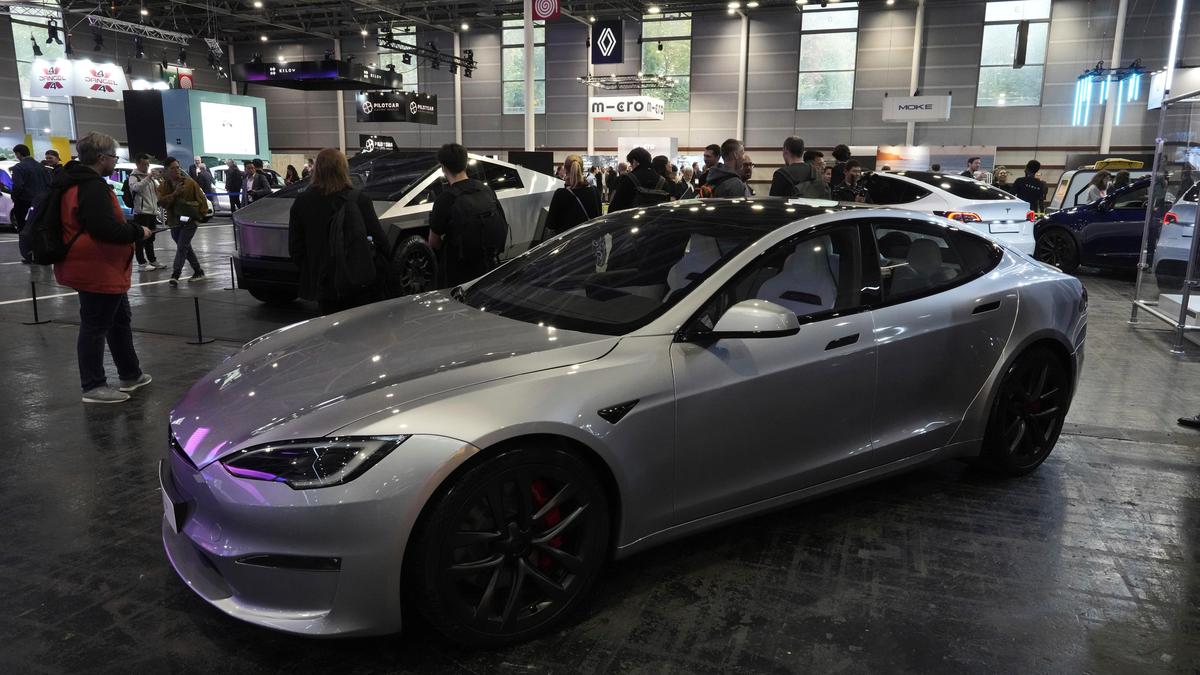
On Wednesday, Musk told analysts on a conference call that Tesla would stop selling its Model S sedans and Model X SUVs; flagship vehicles that once established the company as a leader in the EV market but have since dwindled to account for a small fraction of revenue. The factory space will be used to build robots.


Discover why pension planning is essential in modern India to ensure financial security and peace during retirement.

The U.S. has launched two investigations under Section 301 of the Trade Act of 1974 against India and other economies to examine practices that may be ‘unreasonable or discriminatory and burden or restrict U.S. commerce’. One probe examines whether countries, including India, are using excess manufacturing capacity to export to the U.S. in a manner that hurts American businesses, while another looks at whether countries have taken ‘sufficient steps’ to prohibit imports of goods produced with forced labour.

NHAI raises annual pass fee to ₹3,075 from April 1, 2026, streamlining toll payments for FASTag users.

The U.S. probes forced labour in global supply chains, scrutinizing China and India's exports, warns the Global Trade Research Initiative.

The Hindu collection of images of the LPG crisis: War lights a kitchen fire

The company, which launched its IPO in 2020, is now listed on the National Stock Exchange as well as the Bombay Stock Exchange.

Explore the Essential Commodities Act's role in addressing India's gas crisis and its impact on various sectors.

Star Health Insurance plans to boost AI-driven claim settlements from 20% to 50% within two years, investing heavily in technology.

The iron ore production has increased by nearly two-thirds since 2015

Benchmark indices fell 2% as high crude oil prices and FII selling pressures impacted market sentiment on March 14, 2026.

Follow The Hindu LIVE for updates on LPG crisis and crude oil prices due to the escalating Iran-Israel war in West Asia.

ICRA projects integrated sugar mills will see 5-8% revenue growth in FY26 due to improved cane supply and stable prices.

Benchmark indices fell 2% as high crude oil prices and FII selling pressures impacted market sentiment on March 14, 2026.