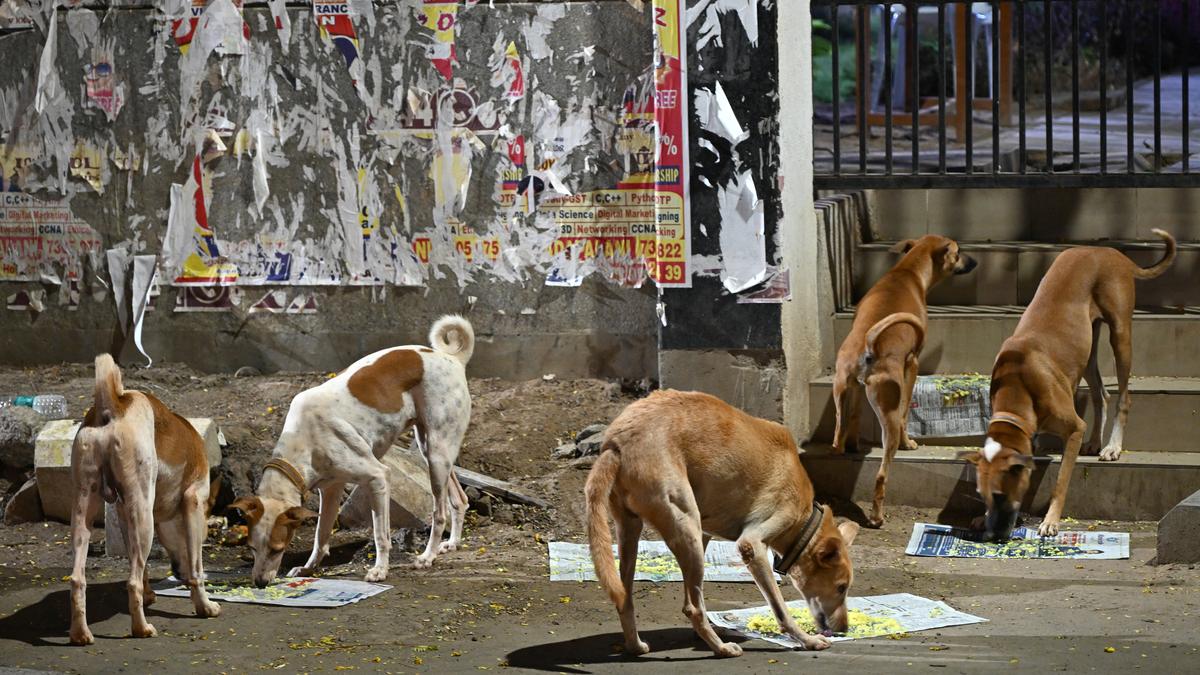
T.N. drafts policy framework for management of street dog population
The Hindu
The Tamil Nadu State Planning Commission (SPC) has come out with a comprehensive draft policy framework for community dog management and regulation, aimed at addressing the challenges posed by the growing dog population in the State and ensuring public health and safety.
The Tamil Nadu State Planning Commission (SPC) has come out with a comprehensive draft policy framework for community dog management and regulation, aimed at addressing the challenges posed by the growing dog population in the State and ensuring public health and safety.
With a vision for “a rabies-free Tamil Nadu with a scientifically managed and gradually moderating dog population,” the policy outlines a strategic approach to manage the dog population in a humane, effective, and sustainable manner. Community dogs, referred to as stray dogs, thrive among large human populations and are considered to be free-roaming pets.
One of the key aspects highlighted was the public health risks. It said that the presence of community or unvaccinated dogs raises significant concerns regarding the potential spread of diseases, with rabies posing a notable public health risk. Similar to the pulse polio vaccination drive, an anti-rabies mass vaccination drive should be conducted on dedicated days to combat rabies in community dogs.
Local authorities may collaborate with NGOs and animal welfare groups for the same. Vaccinated animals can be easily identified by marking them with collars to ensure that there is no duplication or omission. For identification, suggestions like colour marking, number tagging, micro-chipping, utilising Radio-Frequency Identification Devices, and ear notching were mentioned in the draft policy.
The SPC also noted that the veterinary hospitals of the Department of Animal Husbandry and Veterinary Services of the Tamil Nadu government, which include 48 veterinary hospitals, are equipped with modern theatre facilities. These facilities can be effectively utilised for the implementation of animal birth control programmes, in addition to animal birth control centres established by city corporations and other local bodies across the State.
It also suggested that establishment of mobile operation facilities is essential to ensure that even local bodies in distant places can access periodic animal birth control programmes, along with vaccination campaigns. These mobile units are designed to provide doorstep treatment, addressing various concerns and promoting public awareness.
The report also pointed out the importance of a skilled workforce. “Skilled personnel are crucial for the successful implementation of animal birth control programmes. Training opportunities should be extended to animal attenders from NGOs and animal welfare organisations,” it said.


Civil society urges Amit Shah to direct police vigilance against open threats of communal violence in Uttam Nagar, Delhi.

PMK leader Anbumani blames alcohol and drug abuse for rising suicides in Tamil Nadu, criticising government inaction.

Bifurcation of Dindigul district is a key election issue, promising focused development and administrative improvements.

Election awareness campaigns gather momentum

Pylontech Advances Southeast Asia Strategy with 150MWh Energy Storage Agreement in Vietnam

BJP announces second list of 111 candidates for West Bengal Assembly polls, including Priyanka Tiberewal and Sumana Sarkar.

Traders urge Election Commission to raise the ₹50,000 cash limit, citing inflation and practical challenges during Tamil Nadu elections.

Kerala CM Pinarayi Vijayan to file nomination from Dharmadam, seeking third term amid tough competition in 2026 polls.

Water level in Mullaperiyar dam was 114.05 feet

PM Modi discussed West Asia peace, condemned Oman's sovereignty violation, and emphasized safe navigation through the Strait of Hormuz.

Contact details of election observers in The Nilgiris released for submitting poll-related complaints during Assembly elections.

Collector directs return of seized cash upon valid document verification amid voter enrollment and election preparations in Erode district.

Telangana Deputy CM Bhatti Vikramarka to present 2026-27 budget on March 20, 2026 , likely to balance welfare, development amid huge fiscal and revenue deficits in the State.