Suspension of the Indus Waters Treaty: What are the implications for India and Pakistan? Premium
The Hindu
For over six decades, the treaty has stood as a rare testament to the resilience of rules-based diplomacy in South Asia. However, amid escalating tensions between New Delhi and Islamabad, the future of the pact now appears more precarious than ever
Debashree Mukherjee, India’s Secretary of Water Resources, on Thursday (April 24, 2025) wrote to her Pakistani counterpart, Syed Ali Murtaza, that India was keeping the 1960 Indus Waters Treaty (IWT) in abeyance with “immediate effect” following the terror attack in Pahalgam, which claimed the lives of 26 civilians. In response, the Pakistan Prime Minister’s office condemned the move as an “act of war” and announced a series of retaliatory diplomatic measures, including the suspension of the 1972 Simla Agreement.
For over six decades, the treaty has stood as a rare testament to the resilience of rules-based diplomacy in South Asia. However, amid escalating tensions between New Delhi and Islamabad, the future of the pact now appears more precarious than ever.
The origins of the IWT can be traced to the Partition of India in August 1947, which marked the end of British colonial rule and the emergence of India and Pakistan as two sovereign nations. Both countries, home to a combined population of over 1.6 billion, are critically dependent on the waters of the rivers flowing from the Himalayas. Given their shared reliance on these river systems for agriculture and irrigation, an urgent need arose to negotiate an equitable sharing of water resources.
After nearly a decade of negotiations brokered by the World Bank, former Indian Prime Minister Jawaharlal Nehru and former Pakistani President Ayub Khan signed the treaty in September 1960.
Under the treaty, India was granted unrestricted rights over the three eastern rivers — Ravi, Beas, and Sutlej, while Pakistan was given exclusive control over the three western rivers — Indus, Jhelum, and Chenab, which collectively comprise the lion’s share of the basin’s water reserves. Although the western rivers are allocated to Pakistan, India retains limited rights to use their waters for “non-consumptive” purposes, including domestic use, irrigation, and hydroelectric power generation.
The treaty also establishes a robust institutional framework for cooperation and dispute resolution. Disputes are resolved through a three-tiered process: first, before the Permanent Indus Commission (PIC), comprising a delegation of water experts from both countries; then a World Bank-appointed neutral expert; and eventually, a forum of arbitrators.
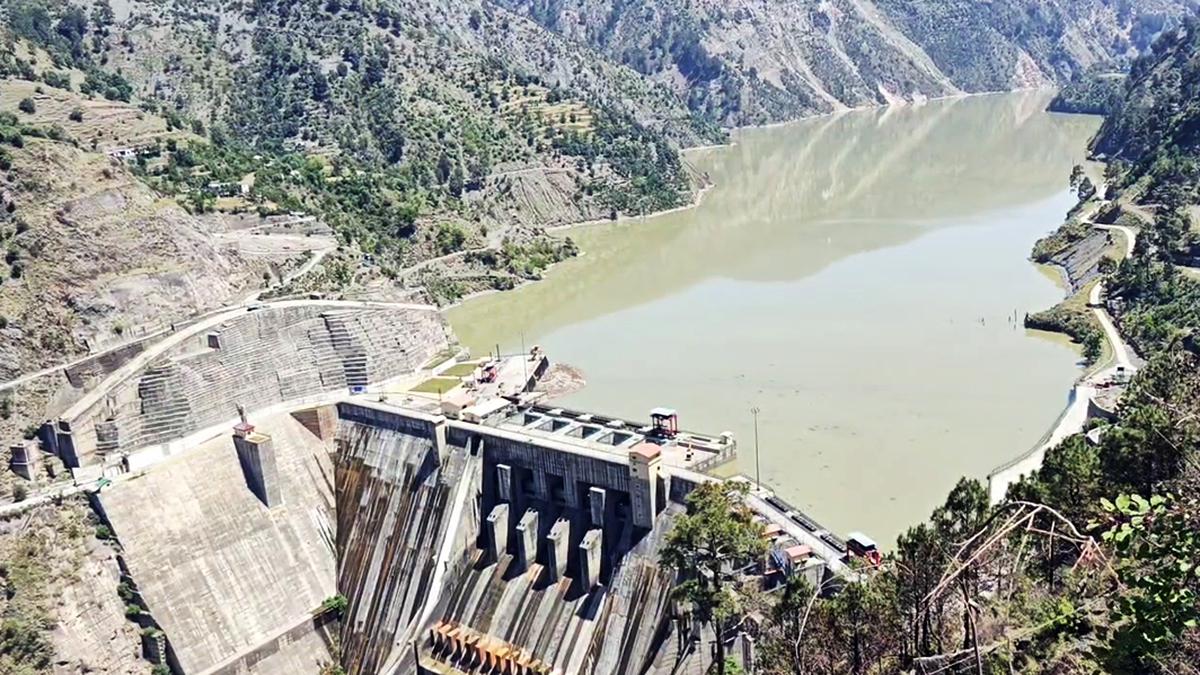
The design parameters of the Kishenganga and Ratle hydropower projects in Jammu and Kashmir — the former already a commissioned project — have been a bone of contention between the two countries for years now. While Pakistan contends that the design of these structures allows India greater control over the shared water resources, India maintains that the projects adhere to the treaty’s provisions on equitable water use.


Perundurai's industrial growth faces challenges of pollution, water scarcity, and healthcare, impacting residents ahead of the 2026 elections.

The Travancore Devaswom Board asserts that courts should respect community beliefs in its Supreme Court submission on Sabarimala's entry issue.

Karnataka cancels Deendayal Upadhyay event at KSOU due to protocol violations, citing inconsistency with university objectives.

Illegal pickle unit busted in Hyderabad, one arrested; unhygienic stock worth ₹3 lakh seized

Karnataka has entered a state of demographic transition where a large working-age population will no longer be enough to drive economic growth, and future gains will depend on how productively people are employed, the ‘State of Working India 2026’ report said.

Key demands in Sulur Assembly constituency include reviving the powerloom sector, addressing farmers' needs, and protecting River Noyyal.

Kodihalli urges Karnataka CM to allocate ₹10,000 crore revolving fund for seamless procurement of farm products under MSP scheme.

Kerala's political parties continue to marginalize women candidates, highlighting a troubling disconnect between gender demographics and representation.

The High Court of Karnataka on Tuesday ordered the issue of a notice to the State government on a PIL petition, which had complained about disturbances caused to people residing in the localities around the National Public School situated in Rajajinagar 5th block due to use of loudspeakers with high volume in the school and parking of school buses in residential areas.

China is extensively mapping ocean floors to enhance submarine warfare capabilities against the U.S. and allies across key oceans.

AIADMK's 2026 manifesto promises free rations, women's benefits, education reforms, and economic growth initiatives for Tamil Nadu.

The vehicle towing drive will soon resume in the city to ease traffic congestion. The Bengaluru Traffic Police (BTP), in coordination with the Greater Bengaluru Authority (GBA), is set to relaunch the vehicle towing drive across the city shortly to tackle traffic congestion and illegal parking.

Panic buying, not shortage, is leading to long queues at Hyderabad petrol pumps.