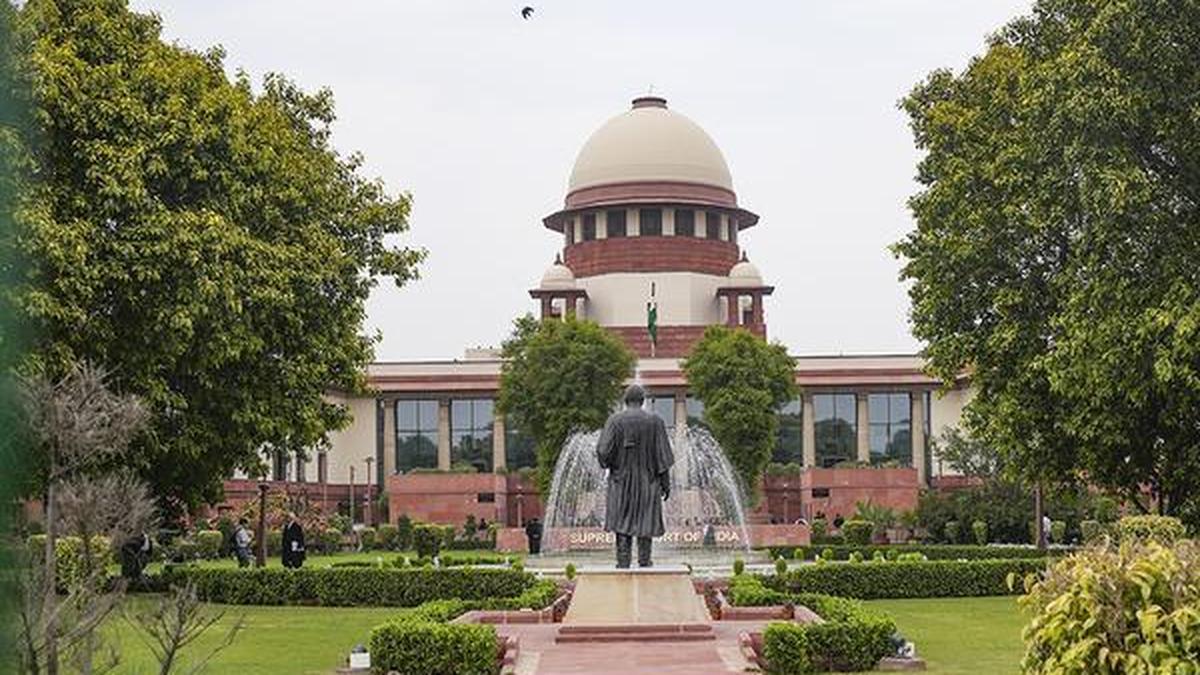
Supreme Court says stakeholder consultation needed, reluctant to alter duration of five-year law courses
The Hindu
Supreme Court emphasizes stakeholder consultation for legal education reforms, hesitant to change five-year law course duration.
The Supreme Court on Monday (March 16, 2026) expressed reluctance to endorse any change in the duration of five-year integrated LL.B. programmes across the country. The court said that such policy matters do not warrant judicial intervention, even as it acknowledged the need for reforms to strengthen the quality of legal education.
A Bench comprising Chief Justice of India (CJI) Surya Kant and Justice Joymalya Bagchi observed that while reforming legal education was necessary, decisions concerning the structure and duration of professional programmes require broader consultation with academic institutions, regulatory bodies and other stakeholders.
“On the issue of legal education, the judiciary is just one stakeholder. There are many others who also have a say in it. Academicians, jurists, the Bar, social and policy researchers are there. There should be deliberation with them. We cannot thrust our views,” the Bench said.
The top court was hearing a Public Interest Litigation (PIL) petition filed by advocate Ashwini Upadhyay seeking the establishment of a Legal Education Commission comprising jurists and legal experts to examine the regulatory framework governing legal education in India, including the syllabi and duration of law programmes. Challenging the existing five-year integrated law courses, the petition argued that most professional programmes in India are structured for four years and that the longer duration may discourage meritorious students from pursuing a career in law.
While mentioning the plea for urgent listing, Mr. Upadhyay told the Bench that the existing law degree programmes were failing to attract the best talent. “This is a PIL seeking the constitution of a Legal Education Commission of eminent jurists to frame the syllabus. Most professional courses like CA and B.Tech are for four years, whereas law is five years. It is failing to attract the best talent,” he submitted.
While acknowledging that reforms in legal education are a necessity, the Chief Justice remarked that it may not be appropriate for courts to determine the duration of professional courses. He also referred to the origins of the five-year law programme in India, noting that the model existed even before the National Law School system was established.


Indian Navy warships escort merchant vessels in the Gulf of Oman, ensuring safe passage amid regional tensions under Operation Sankalp.

A rare crab species exhibiting both male and female traits was discovered in Silent Valley, revealing unique biological characteristics.

Gujarat court convicts five in 2016 Una flogging case; punishment announcement scheduled for March 17, 2026.

The Greater Bengaluru Authority (GBA) has extended the deadline for citizens to submit claims and objections to the revised draft voters’ list for the upcoming elections to five city corporations under its jurisdiction until March 20.

SSC Public Examinations-2026 commenced peacefully, with a 98.90% attendance across 3,415 centres and rigorous monitoring in place.

Flying Squad Team seizes whistles, ‘manjappai’ bearing TVK name in Thoothukudi

Thousands gathered for a Ramzan prayer meet, promoting spiritual renewal and civic responsibility amidst calls for peace and justice.

Players get double bill horror as Resident Evil returns with Grace, a new series character, and other fan favourites in their latest edition

TGCSB introduces an anti-piracy disclaimer and SOP to combat film piracy and protect the Telugu film industry.

M.P. Divya appointed as new Deputy Commissioner of Police for Madurai City, succeeding Rajeshwari.

H.M. Pernal is chosen for the Sahitya Akademi Award 2025 for his literary criticism work in Konkani.

Chennai resident Varun Krishnan's journey reveals the fragility of travel amid geopolitical tensions after being stranded in Doha.

Candidate who availed free IAS training in Coimbatore city succeeds in UPSC civil services exam