Supreme Court allows passive euthanasia for Harish Rana in historic verdict
India Today
The court ruled that clinically assisted nutrition qualifies as medical treatment and can be withdrawn if medical boards recommend it, reiterating that the key test is whether continuing treatment serves the patient's best interest.
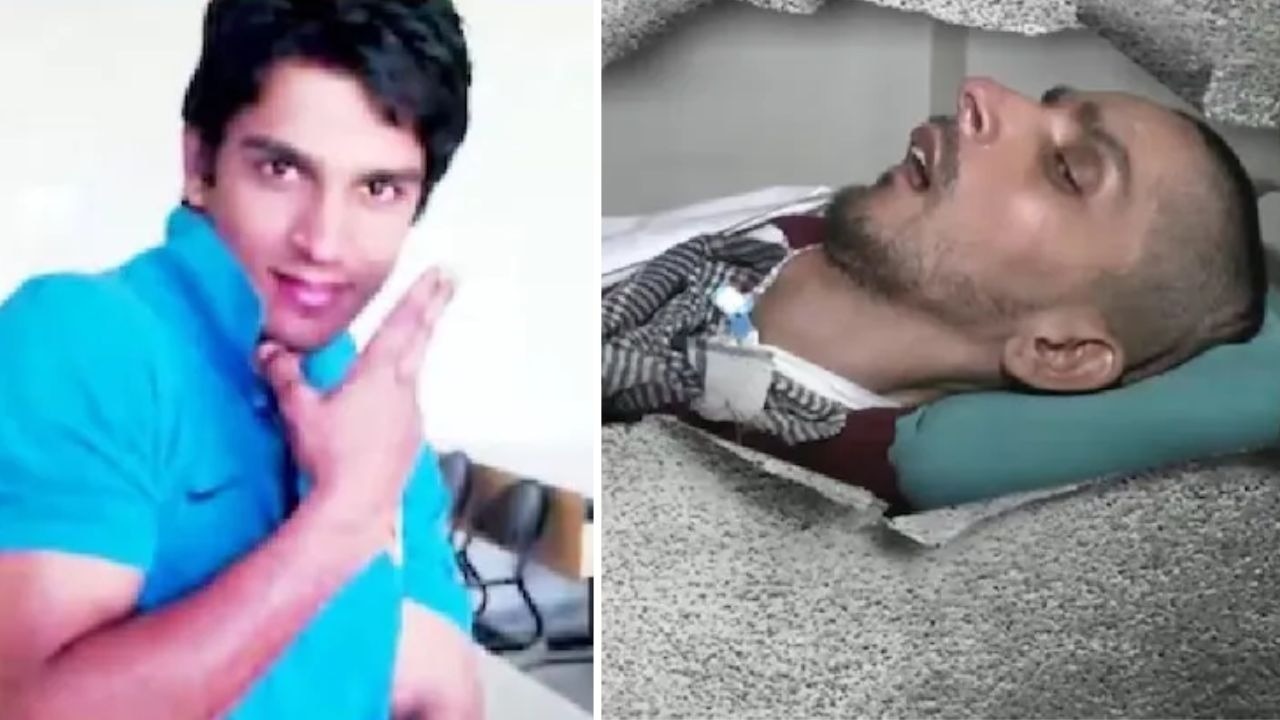
32-year-old Harish Rana, who has been in a coma ever since a fall 13 years ago left him with severe brain injuries, has been allowed to die by the Supreme Court. This marks the first-ever case of a court-ordered passive euthanasia in the country. The verdict, which clarified several aspects of a 2018 Supreme Court judgment that recognised the legality of passive euthanasia, was delivered by an emotional bench of Justices JB Pardiwala and KV Viswanathan.
The bench permitted Rana’s parents to withdraw medical support, holding that the key question in such cases is not whether death is in a patient’s best interest, but whether continuing life-sustaining treatment serves the patient’s best interest.
The court also clarified that clinically administered nutrition qualifies as a form of medical treatment. It said such treatment can be withdrawn if medical boards examining the patient conclude that there is no meaningful prospect of recovery and recommend withdrawal of support.
Reading out the judgment, the bench noted that Rana was once “a bright young boy” pursuing his studies when a fall led to catastrophic brain injuries that left him in a persistent vegetative state. Medical reports placed before the court showed no improvement in his condition over the past 13 years, and he remains entirely dependent on others for survival.
The ruling relied on the legal principles laid down in the Common Cause vs Union of India, which recognised the right to die with dignity as part of the fundamental right to life under the Constitution.
The court observed that two key conditions must be satisfied before life-sustaining treatment can be withdrawn: the intervention must qualify as medical treatment, and the decision must be guided by the patient’s best interests. It added that clinically assisted nutrition involves complex medical and ethical considerations and therefore requires careful evaluation by medical experts before withdrawal.


The victim, identified as Naitik Kumar, allegedly rammed his speeding Bullet motorcycle into a scooter near Janeshwar Mishra Park in Lucknow, triggering a crash that left him dead and two others injured.

RJD MLA who skipped Bihar Rajya Sabha poll voting cites mother's illness

West Bengal Chief Minister Mamata Banerjee led a protest march in Kolkata against the alleged LPG shortage, accusing the PM Narendra Modi-led Centre of failing to ensure adequate supply.

Himayani Puri, daughter of Union Minister Hardeep Singh Puri, has moved the Delhi High Court over "false and malicious" reports linking her to convicted sex offender Jeffrey Epstein.

The family, a resident of Thyagaraju Street in Punganur town, had recently repaired the engine of their two-wheeler vehicle. A local mechanic advised the family to keep the engine running overnight to "set" the newly installed parts. However, this turned out to be fatal for the family.

The Supreme Court closed criminal proceedings against Ashoka University professor Ali Khan Mahmudabad after the Haryana government said it would not grant sanction to prosecute him over social media posts related to Operation Sindoor.

Three Congress MLAs in Bihar are reportedly out of contact as voting for five Rajya Sabha seats is underway, with the INDIA bloc and the BJP-led NDA locked in a tight contest for the fifth seat that could hinge on cross-voting.

Bunty Solanki stabbed his wife to death following a quarrel at their residence in Vadodara's Bakrawadi area. Rita died on the spot.

The girl's family members were angered over the friendship, and as a result, they called Jadhav last Saturday evening and allegedly beat him.

External Affairs Minister S Jaishankar has said that direct talks with Iran to restore shipping through the war-hit Strait of Hormuz have yielded results, stressing that direct engagement with Tehran is the most effective way to address the disruption.

This moment comes days after the Supreme Court allowed Harish Rana to die with dignity – a historic first court-ordered case of passive euthanasia in India. The court acknowledged the medical opinion that Rana will never recover and that the tubes that feed him and keep him alive are only prolonging his pain.


Ground videos from Shopian showed snow-draped pine trees as the weather brought joy for tourists. Speaking to reporters, a tourist from Bihar said she was unable to contain her happiness over the unexpected snowfall.