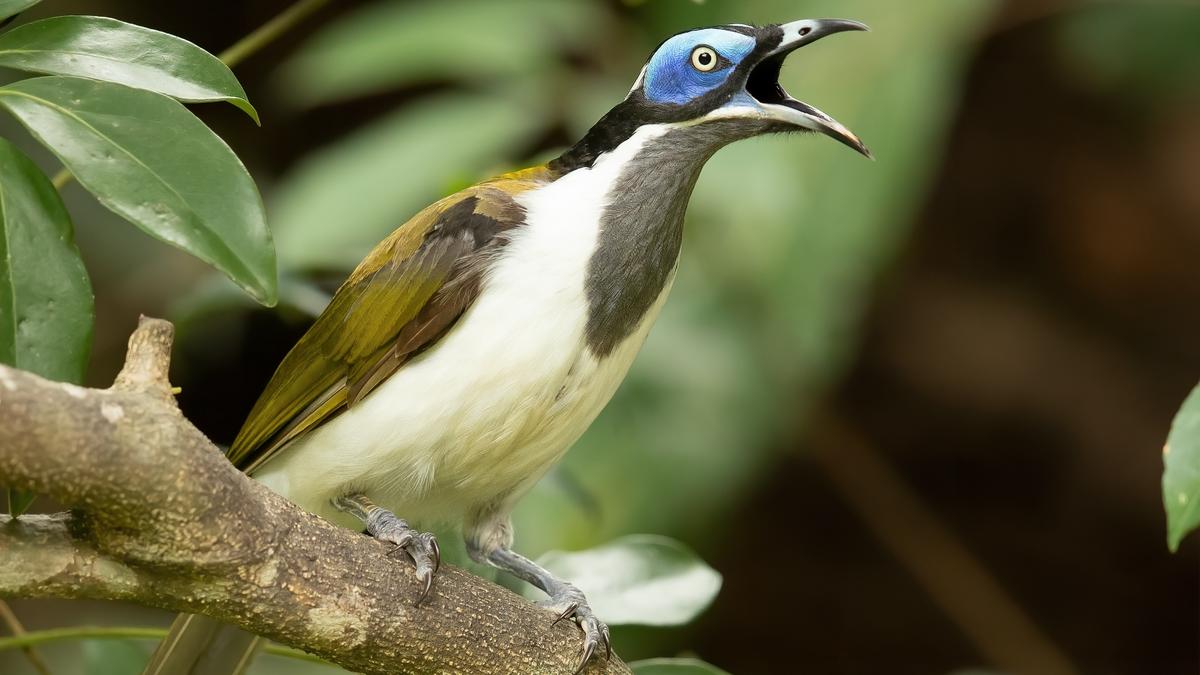
Successful urban birds sport different colours from unsuccessful ones Premium
The Hindu
Global study reveals colorful urban birds thrive, challenging long-held assumptions in urban ecology, with implications for biodiversity conservation.
In 2016, when Juan Diego Ibáñez-Álamo at the University of Granada in Spain met Kaspar Delhey, an expert in bird coloration at the Max Planck Institute for Biological Intelligence, a new collaboration was born.
“He suggested we study whether urbanisation is associated with differences in bird coloration,” Delhey said.
Many studies have investigated how urban noise has been changing the way city birds talk to each other. But scientists know little about what urbanisation is doing to the way birds look.
The collaboration soon blossomed into the world’s first large-scale, global study of how urban environments can control which birds — and which colours — can thrive in cities.
In a new study, Delhey, Ibáñez-Álamo, and their colleagues reported what they found when they analysed colour data from nearly all bird species around the world alongside a reference database.
The results were unexpected.
“Contrary to expectations, bird species that do well in cities tend to be quite colourful,” Delhey said. “Some of the least successful species were largely brown, colours that we humans often consider dull or cryptic.”


The government plans to amend the FCRA, introducing new regulations for NGO asset management and accountability for key functionaries.

The draft policy for “Responsible Digital Use Among Students”, released on Monday by the Department of Health and Family Welfare, has recommended that parents set structured routines with clear screen-time rules and prioritise privacy, safety, and open conversation with children on digital well-being.

Police Observer Sushant Kumar Saxena conducts surprise inspection at Shencottai police station, reviewing warrants and security arrangements ahead of elections.

Andhra Pradesh government to launch key projects in April, focusing on industrial growth and infrastructure development, says Nara Lokesh.

Lok Sabha refers the Corporate Laws (Amendment) Bill to a JPC amid opposition concerns over CSR provisions dilution.

SHG members in Kanniyakumari use snakes and ladders to raise election awareness and boost voter turnout.

Government accelerates consultations for early implementation of the Women’s Reservation Act to ensure women’s representation in 2029 elections.

CM A. Revanth Reddy distributes ₹1 crore insurance cheques to families of deceased Electricity department employees, enhancing financial security for workers.

The Bengaluru Traffic Police (BTP) registered 634 cases of drunk driving during a week-long special enforcement drive conducted across the city between March 16 and March 22.

GHMC intensifies action against property tax defaulters, seizing properties and offering a One Time Settlement scheme for payments.

CCB arrests three drug peddlers in Mangaluru, seizing ₹2.5 lakh worth of MDMA and other valuables.

TVK's 28 candidates in Puducherry include former BJP MLAs, a sitting Independent, and a retired police IG.

BRS submits notice on private member bill to Speaker