Stalin government steps into fifth year, focuses on inclusive and equitable development
The Hindu
M.K. Stalin-led Tamil Nadu government marks fifth year with focus on inclusive development and equitable growth ahead of elections.
The M.K. Stalin-led government, which assumed office in Tamil Nadu on May 7, 2021, at the height of the intense second wave of the COVID-19 pandemic, is entering its fifth year on Wednesday with a continued emphasis on promoting inclusive and equitable development ahead of next year’s Assembly election.
Recalling his journey as Chief Minister, Mr. Stalin on Tuesday said: “On the one hand, we inherited a decade of misrule by the previous regime. On the other, the country was reeling under regressive ideologies such as communalism. Yet another challenge was the Union government’s consistent refusal to cooperate with Tamil Nadu. In the face of all this, we have managed to run a successful administration. My sole aim was to bring Tamil Nadu back onto the path of progress. We set the right goals, moved towards them with determination, and this four-year journey of the Dravidian model stands testimony to our success.”
At his first-ever meeting with editors, senior journalists, and proprietors of various media organisations in Chennai — attended by several Ministers, senior civil servants, and police officers — Mr. Stalin said his government had excelled in policy-and service-based governance without wavering from its principles or faltering in its commitment to the people, despite the crises faced over the past four years and the “extent of slander that was spread.”
“Our land of Tamil Nadu is built on principles of equality, social justice, equity, fraternity, secularism, linguistic pride, ethnic rights, State autonomy, and federalism. We are journeying toward these ideals,” is how the Chief Minister summed it up.
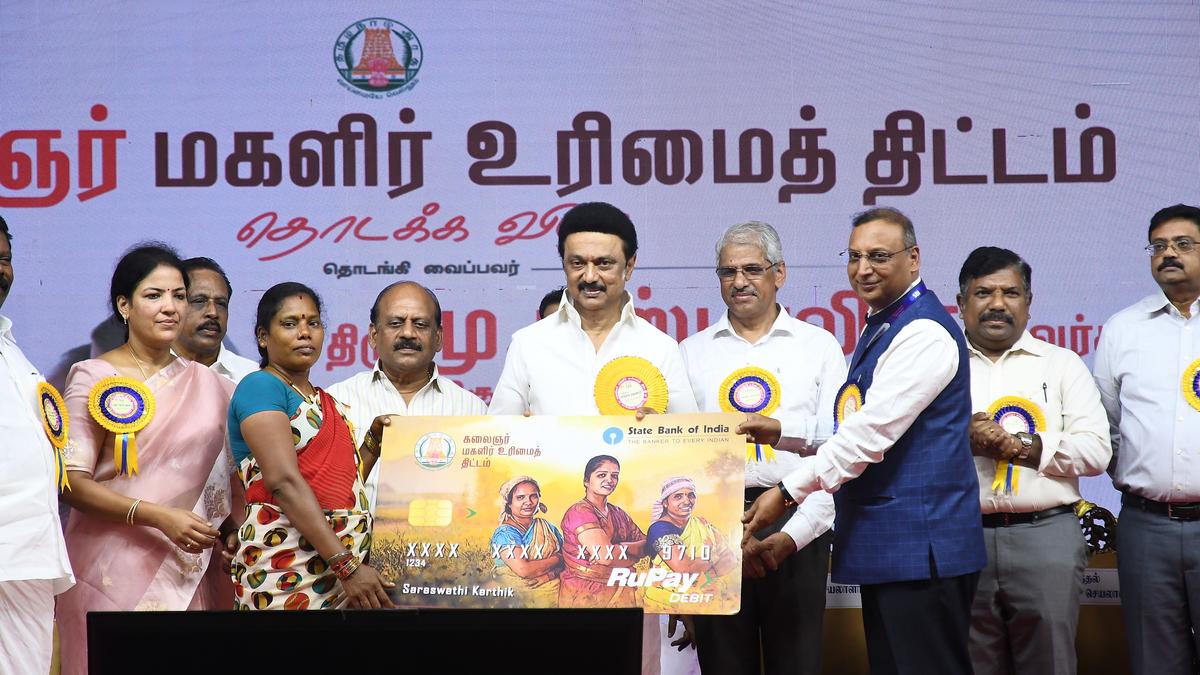
He highlighted his government’s flagship schemes — Kalaignar Magalir Urimai Thogai (women’s monthly rights grant); Vidiyal Payanam (costless bus travel for women); Chief Minister’s Breakfast Scheme, Pudhumai Penn and Tamil Pudhalvan (monthly grant for select girls and boys pursuing higher education); and the Naan Mudhalvan initiative — as evidence of effective governance.
Deputy Chief Minister Udhayanidhi Stalin, Ministers Thangam Thennarasu (Finance), T.R.B. Rajaa (Industries), Palanivel Thiaga Rajan (Information Technology), Anbil Mahesh Poyyamozhi (School Education), and M.P. Saminathan (Information and Publicity) and senior IAS officers, led by Chief Secretary N. Muruganandam, made presentations highlighting the inclusive and equitable growth achieved over the past four years in their respective departments.
The government has recorded consistent year-on-year progress across multiple sectors, including economic growth (Gross State Domestic Product at constant prices), merchandise and electronic goods exports, employment generation, and social indicators such as the Gross Enrolment Ratio. To ensure balanced regional development, it has taken steps to establish TIDEL NEO Parks in semi-urban areas and to set up 30 SIPCOT industrial parks across various districts, while securing major industrial projects in locations such as Perambalur and Thoothukudi.


The government plans to amend the FCRA, introducing new regulations for NGO asset management and accountability for key functionaries.

The draft policy for “Responsible Digital Use Among Students”, released on Monday by the Department of Health and Family Welfare, has recommended that parents set structured routines with clear screen-time rules and prioritise privacy, safety, and open conversation with children on digital well-being.

Police Observer Sushant Kumar Saxena conducts surprise inspection at Shencottai police station, reviewing warrants and security arrangements ahead of elections.

Andhra Pradesh government to launch key projects in April, focusing on industrial growth and infrastructure development, says Nara Lokesh.

Lok Sabha refers the Corporate Laws (Amendment) Bill to a JPC amid opposition concerns over CSR provisions dilution.

SHG members in Kanniyakumari use snakes and ladders to raise election awareness and boost voter turnout.

Government accelerates consultations for early implementation of the Women’s Reservation Act to ensure women’s representation in 2029 elections.

CM A. Revanth Reddy distributes ₹1 crore insurance cheques to families of deceased Electricity department employees, enhancing financial security for workers.

The Bengaluru Traffic Police (BTP) registered 634 cases of drunk driving during a week-long special enforcement drive conducted across the city between March 16 and March 22.

GHMC intensifies action against property tax defaulters, seizing properties and offering a One Time Settlement scheme for payments.

CCB arrests three drug peddlers in Mangaluru, seizing ₹2.5 lakh worth of MDMA and other valuables.

TVK's 28 candidates in Puducherry include former BJP MLAs, a sitting Independent, and a retired police IG.

BRS submits notice on private member bill to Speaker