Scientists have found a cricket evolving rapidly to beat a new threat Premium
The Hindu
Pacific field crickets in Hawaii evolved quieter songs to evade invasive flies, but flies adapted, illustrating a rapid evolutionary arms race driven by climate change.
Climate change is reshaping the world — and perhaps nowhere more so than in the wild. As ecosystems change, species are forced to move to new locations in search of the resources they need to live. Unlike some human-made borders that are visible as fences and walls, the wild at large has numerous borders invisible to humans crisscrossing each other. When climate change causes an animal to migrate, it may cross one of these borders — and there new challenges await.
Some newcomers quietly adapt to their new environs. Others go rogue and become invasive, throwing the lives of native species in chaos. These invasions are becoming more common, which means more and more native species are being forced to make a choice: evolve to survive or perish.
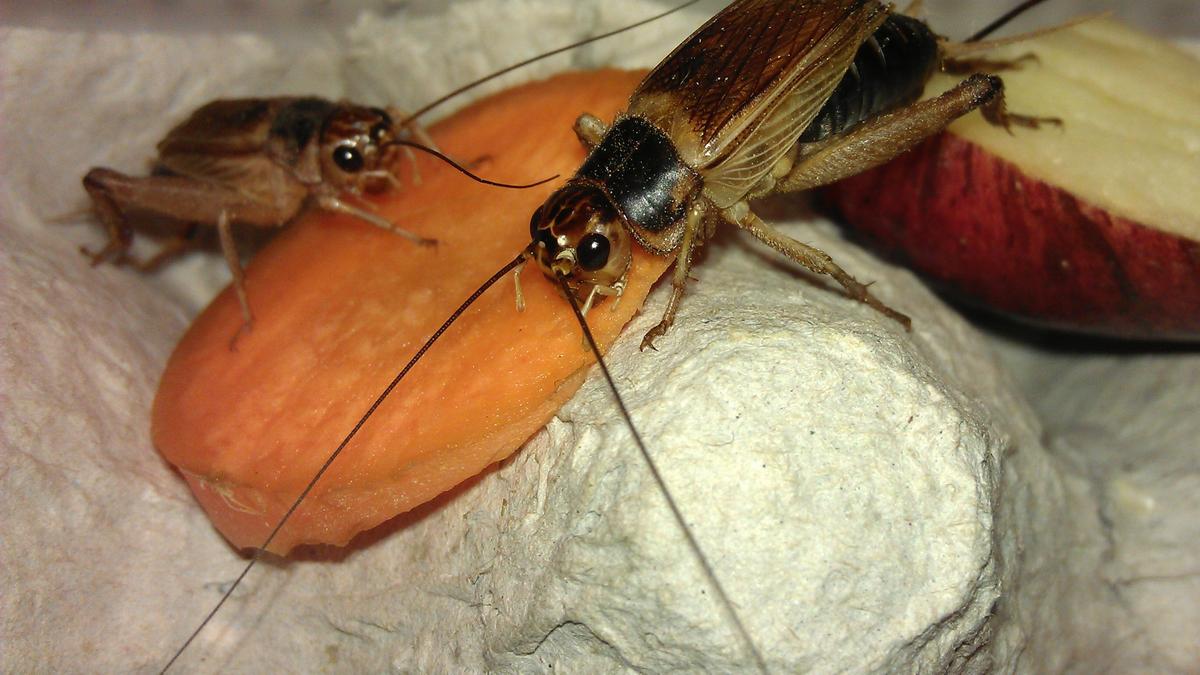
On the Hawaiian islands, Pacific field crickets (Teleogryllus oceanicus) evolved — and how. To avoid being hunted by an invasive parasitoid fly called Ormia ochracea, they have started remixing the songs they’ve been using to find mates. But according to a study published recently in Current Biology, these escape plans might not be foolproof, at least not yet.
About 30 years ago, as O. ochracea flies flew into Hawaii from tropical America, the sound of Pacific field crickets’ love songs vanished from the islands. Using their acute sense of hearing, the flies were able to zero in on male crickets as they sang and laid their eggs inside the crickets’ bodies. When the larvae hatched, they fed on the nutrients around them and eventually burrowed out, killing the crickets.
“About 20 years ago, we discovered a population on Kauai [in Hawaii] that had gone completely silent because a mutation on their wing erased the sound-producing structures in these crickets,” University of Denver professor Robin Tinghitella said. “Males still rubbed their wings together but no sound came out. It was a pretty wild discovery. The mutation swept through the island because it protected crickets from flies.”
Recently, however, Tinghitella’s group discovered populations of Pacific field crickets that still sang — but the music was somewhat different: it contained some additional subdued purrs and rattles. It differed in both frequency and amplitude from the original music. The researchers found that it was still loud enough to attract females but quiet enough to evade O. ochracea flies.
To Tinghitella, the crickets’ new adaptation signalled a “rapid pace of evolutionary change”.


Paddy on 300 acres wilting as no water released in Third, Fourth Reaches of Manimuthar Dam, farmers complain

The Asian Waterbird Census 2026 reveals a 60% increase in Kollam's waterbird count, but also troubling ecological trends.

Senior BJP member and former Minister S. Suresh Kumar on Friday demanded that the report of the Special Investigation Team (SIT) that probed the alleged mass burial case at Dharmasthala be tabled in the Legislative Assembly.

A 23-year-old criminal, Mohammad Moin Qureshi, arrested after a shootout in Delhi, confessed to murdering a man in a cafe.

TVK challenges Tamil Nadu's SOP for political rallies in Madras High Court, alleging unconstitutional restrictions on political activities.

Congress MP Manickam Tagore demands action against DMK's Thalapathi, asserting Congress's strength ahead of upcoming elections in Madurai.

AIADMK launches a data-driven campaign to regain missing votes, combining booth-level analysis with a cost-of-living outreach initiative.

Karnataka Governor Thawar Chand Gehlot emphasizes role of education in fostering morality and social responsibility at convocation of Davangere University.

Karnataka government allocates ₹40 lakh for 20 Kambalas in Dakshina Kannada and Udupi districts to support traditional events.

Praful Patel confirms no opposition to Sunetra Pawar's leadership in NCP, pending family consent for key appointments.

On World Cancer Day, a cancer survivor examines how treating the mind alongside the tumour is finally becoming a critical pillar of oncology in India

Bengaluru university hosts programme on Gandhi, music, and civilizational plurality, urging students to embrace Gandhian ideals and constitutional values.

Wings India 2026 captivates Hyderabad as families and aviation enthusiasts flock to Begumpet Airport for a festive aviation experience.