‘Scarcity of brides’ hits Old Mysore region Premium
The Hindu
Rural youth in Karnataka face bride scarcity crisis, leading to extreme measures and social initiatives for marriage solutions.
About a month ago, residents of Maduvanahalli in Kollegal taluk of Chamarajanagar district witnessed the bizarre sight of a youth perched on the higher reaches of a metal structure supporting the overhead high-tension cables passing through the village.
Notwithstanding the cries of his mother and pleas by other villagers, who had gathered beneath, cautioning him against taking any extreme step, the youth, identified as Masanashetty, 27, waved at the people and held the high-tension electric wire with his hands to be instantaneously electrocuted.
Though rumours abound about his failed love life, his suicide has been attributed by the family to their search for a suitable life partner yielding no result, a pattern that has become common in the rural hinterland of the Old Mysore region. Masanashetty had lapsed into depression following the futile search for a bride.
“It has become really difficult to find brides nowadays in the villages,” said Nataraj, a journalist with a vernacular daily in Kollegal, who has also been searching for an alliance for his son for the last two years, but in vain.
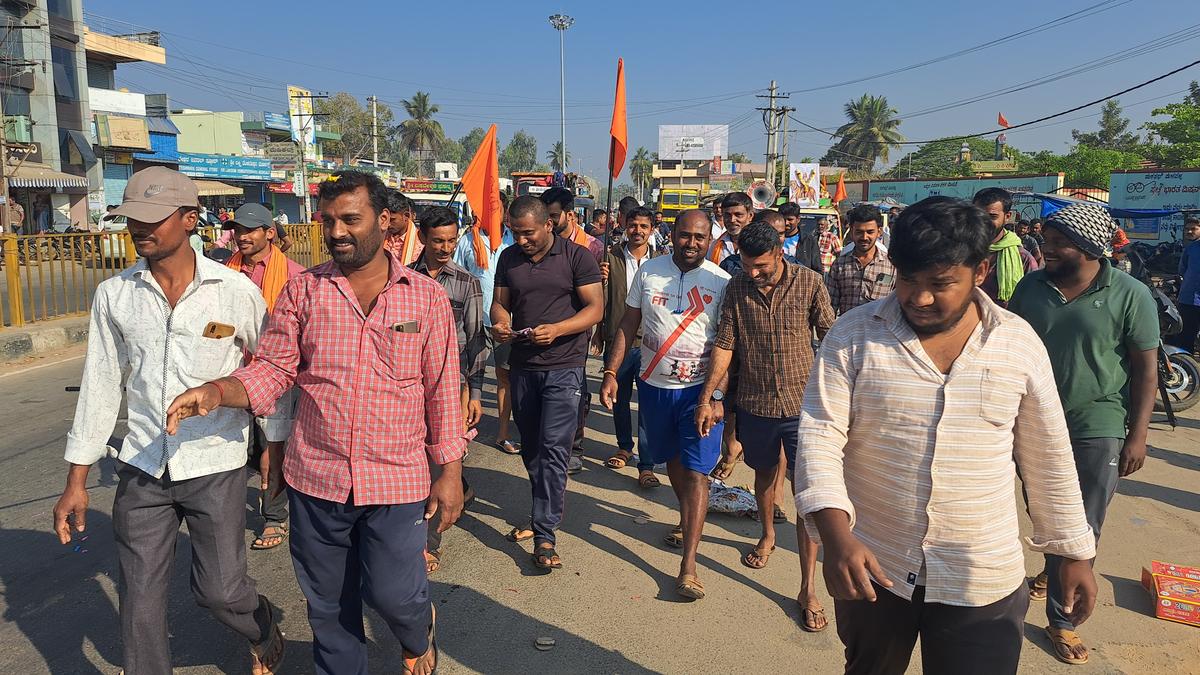
Given the scarcity of brides, particularly for youth engaged in farming activities, young men from different villages across Mandya district have been taking out padayatras to religious shrines in Malai Mahadeshwara (MM) Hills situated in Hanur taluk of Chamarajanagar district for the last few years.
One such padayatra was taken out in March this year by a group of 50 young men from Averahalli in Mandya district to M.M. Hills. One of the youths, who was part of the more than 110-km-long padayatra, said seeking “divine intervention” in their quest for a life partner was one of the main reasons for their march.
“We will pray for good rains and a good harvest also. But, we will be seeking the blessings of the Almighty to help us get brides,” said the youth while expressing disappointment over the girls and their parents spurning matrimonial alliances from young men engaged in farming activities in rural parts of the State.


Community Health Officers in Vijayawada protest for reduced workload and continued incentives amid growing dissatisfaction over salary changes.

Telangana faces 13,929 healthcare vacancies, primarily in doctors and nurses, as recruitment efforts aim to address the shortage.

For most patients with TB who are severely underweight, nutritional support is an essential and not optional part of treatment

Family of custodial death victims demands harsh punishment for nine convicted policemen to prevent future abuses of power.

Rajinikanth refutes TVK leader's claims about DMK threats preventing his political entry, expressing gratitude to supportive political figures.

CM announces Cabinet Sub-Committee on Musi rejuvenation; rehabilitation for all displaced

Ramanathapuram identifies 145 polling stations as sensitive, ensuring security with paramilitary forces ahead of assembly elections, says DEO.

BJP Puducherry president V. P Ramalingam files nomination for Raj Bhavan, joined by Union Minister Mandaviya and Khushbu Sundar.

History-sheeter 'Thoppai' Ganesh shot dead by police in Chennai after attacking officers during attempted escape.

The government plans to amend the FCRA, introducing new regulations for NGO asset management and accountability for key functionaries.

The draft policy for “Responsible Digital Use Among Students”, released on Monday by the Department of Health and Family Welfare, has recommended that parents set structured routines with clear screen-time rules and prioritise privacy, safety, and open conversation with children on digital well-being.

Police Observer Sushant Kumar Saxena conducts surprise inspection at Shencottai police station, reviewing warrants and security arrangements ahead of elections.

Andhra Pradesh government to launch key projects in April, focusing on industrial growth and infrastructure development, says Nara Lokesh.