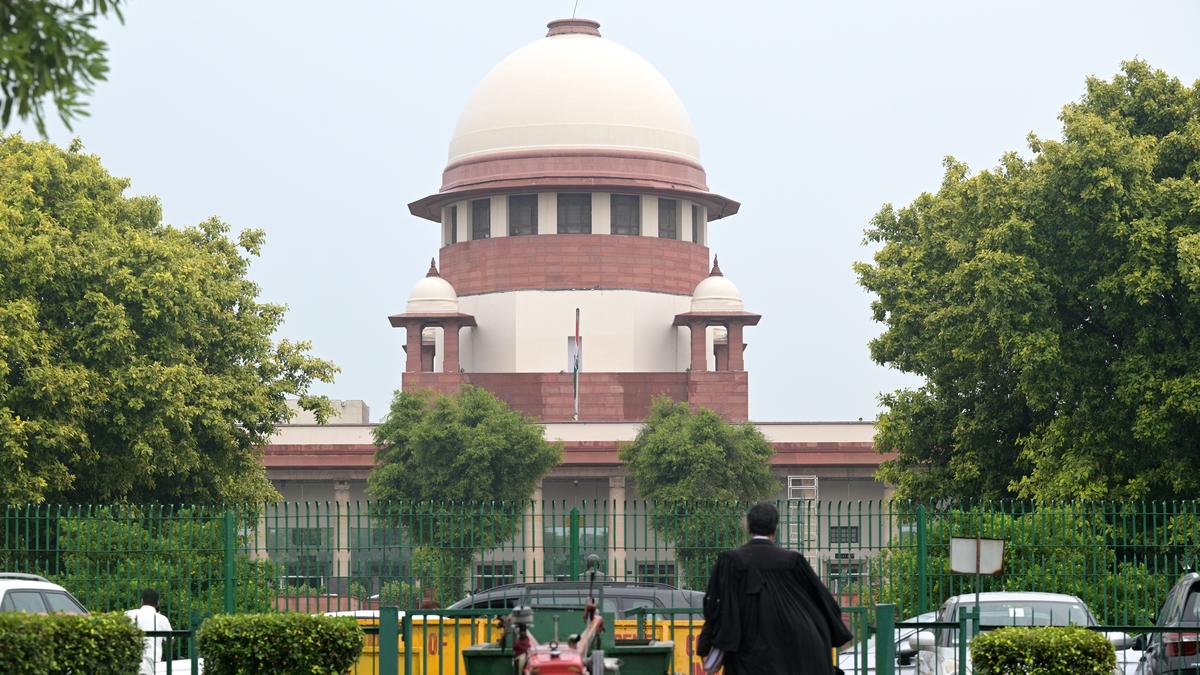
SC refuses to permit euthanasia for aged couple’s comatose son
The Hindu
Supreme Court denies plea for passive euthanasia for comatose man, explores alternative care options for aged parents.
The Supreme Court on Tuesday refused to grant an aged couple’s plea to allow “passive euthanasia” for their 30-year-old son, who has been lying comatose at home for 11 years after a fall from the fourth floor of a building.
A Bench headed by Chief Justice of India D.Y. Chandrachud was visibly moved by the plight of the parents, who said they had exhausted both their savings and willpower taking care of their son.
“This is a very, very hard case,” Chief Justice Chandrachud said.
The Chief Justice said that the man, Harish Rana, who had sustained extensive head injuries in the fall in 2013, was not on a ventilator or any kind of life support. He was still taking in nutrition through a food pipe. Letting him go would not amount to passive euthanasia, as he was not dependent on any external device to stay alive.
Passive euthanasia is the intentional act of letting a patient die by withholding or withdrawing life support or treatment necessary for maintaining life.
“In this case, it would amount to active euthanasia, which is not legal,” the Bench told the parents’ counsel.
The couple had moved the top court after the Delhi High Court had refused to constitute a medical board to consider their plea for euthanising their son.


Three doctors were arrested by the Mico Layout traffic police on Monday (March 23) after a video allegedly showing them triple-riding without helmets with one of the pillion riders seen drinking from a bottle went viral on social media.

Assembly protest ends in arrests as BJP targets Government over guarantees

Andhra Pradesh accelerates city gas distribution with streamlined approvals, enhancing access to cleaner energy and supporting sustainable urban development.

Sattankulam father-son custodial deaths case: Trial court convicts all nine accused police personnel
Nine police personnel convicted in Sattankulam custodial deaths; sentencing to be announced on March 30.

Minister Laxmi Hebbalkar supports local protests against a solid waste management plant in Turmuri, addressing residents' concerns.

Sattankulam father-son custodial deaths case: Trial court convicts all nine accused police personnel
Nine police personnel convicted in Sattankulam custodial deaths; sentencing to be announced on March 30.

Erode district conducts first EVM randomisation for April 23 Assembly elections, ensuring transparency and fairness in allocation.

TNCC conducts public consultation in Erode to gather community input for its upcoming election manifesto.

CID to investigate sexual assault allegations against suspended Moodbidri Police Inspector P.G. Sandesh, reveals Home Minister Parameshwara.

A 50-year-old woman was found dead in southwest Bengaluru’s Kengeri in the early hours of Monday, the police said.

Papanasam dam's water level reaches 66.15 feet, with inflow at 76 cusecs and discharge at 300 cusecs.

Development without impact: Coastal residents of Kanniyakumari and Nagercoil constituencies voice discontent

Rampant encroachments in Tiruchi threaten pedestrian safety and traffic flow, undermining smart pavement initiatives and exacerbating congestion.