Samyukt Kisan Morcha demands Goyal’s resignation, asks PM to refrain from signing deal with U.S.
The Hindu
Samyukt Kisan Morcha demands Piyush Goyal's resignation and protests against the U.S.-India trade deal's impact on farmers.
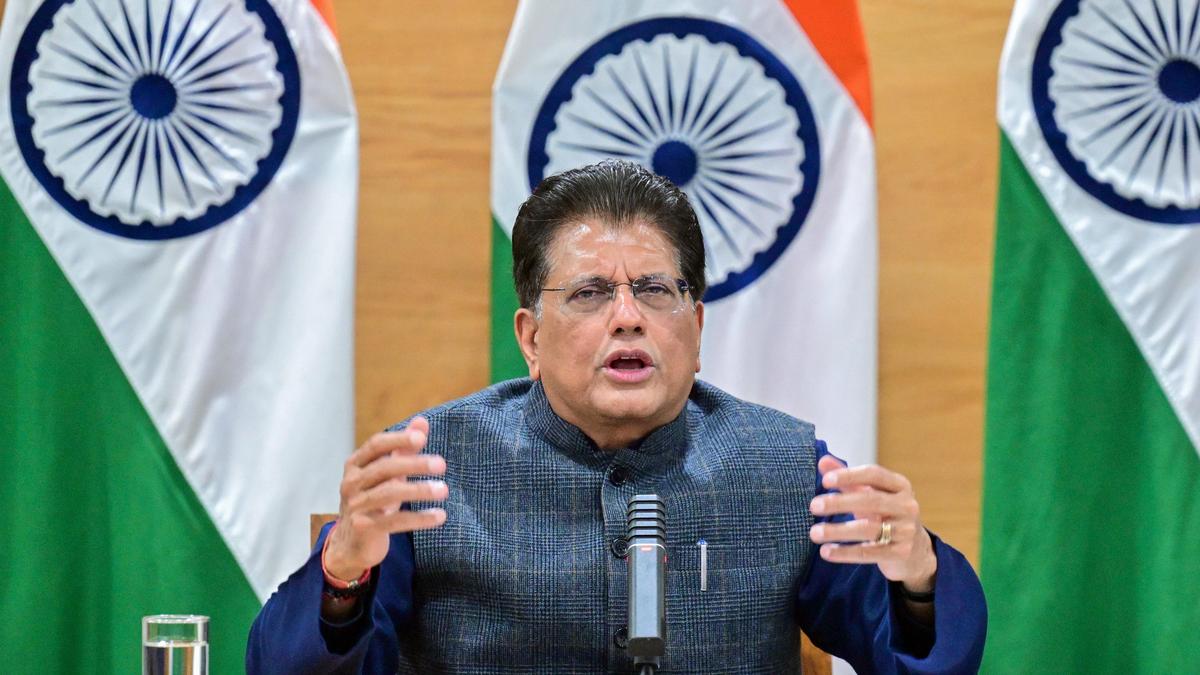
As soon as Commerce Minister Piyush Goyal explained the details of the India-United States bilateral trade agreement, the Samyukt Kisan Morcha (SKM) demanded his immediate resignation. Leaders of apple and cotton growers said any relaxation to the import of cotton will be disastrous for States such as Jammu and Kashmir, Himachal Pradesh, Maharashtra and Gujarat.
Talking to reporters at a press conference on Saturday (February 7, 2026), the leaders of SKM said the framework for the interim agreement on U.S.-India trade is a total surrender before the multinational giants of U.S. agriculture sector. Particularly citing the inclusion of dried distillers’ grains (DDGs), red sorghum for animal feed, tree nuts, fresh and processed fruit, soybean oil, wine and spirits, and additional products in the joint statement, the SKM leaders said control of the animal feed market will be completely monopolised by U.S. companies.
Follow the India-U.S. trade deal updates
SKM leaders urged farmers to join protest demonstrations on February 12 and support the general strike of workers as a “befitting reply to the anti-people Modi government”.
The framework, the leaders said, the claim of Mr. Goyal that the agriculture and dairy sectors are out of the agreement was wrong. “Dairy products are part of the FTAs signed with the U.K., New Zealand and European Union and the fresh revelations have undoubtedly proved the Commerce Minister is consciously propagating falsehood and betraying the farmers and the entire people. SKM considers the role of Commerce Minister as a traitor and demands his immediate resignation. Also, SKM demands the Prime Minister to desist from signing the India-US Free Trade Agreement or face massive pan-India united mass struggles,” the SKM leaders said.
The leaders said the U.S. tariff on Indian goods has actually risen from zero to 3% in 2023-24 to 18%, while Indian tariff rates on U.S. agriculture products that stood at 30% to 150% are now down to zero. “This will make Indian agriculture hang by the noose of U.S. MNCs,” they said.


Green Climate Team promotes water access for birds and animals, arranging clay pots to support wildlife during summer.

Palaniswami meets AIADMK district secretaries in Chennai to discuss election preparations and seat-sharing arrangements with the BJP.

The DMK and Congress finalize a crucial seat-sharing deal thanks to key negotiations by Kharge, Chidambaram, Kanimozhi, and Karti.

Justice Swaminathan allows time for the Thirupparankundram temple trustees to respond to his suggestion regarding Karthigai Deepam prayers.

New Zealand secures a dominant T20 World Cup final spot, led by Finn Allen's explosive century against South Africa.

Central government allocates ₹64 crore for PM Ekta Mall project in Puducherry, promoting local artisans and crafts.

Farmers demand NAFED procurement of maize to secure Minimum Support Price amid declining market rates.

Four workers fainted from toxic gas exposure at a Ranipet effluent treatment plant; all are now stable after treatment.

Textiles Minister inaugurates ₹35 crore Bypass Road in Ranipet, enhancing traffic flow and connecting key highways for efficient travel.

P. Sibin takes charge as the new Superintendent of Police for Ranipet, succeeding Ayman Jamal.

Jagriti Theatre brings the sixth edition of their annual Morning Raag concert series back to the city this weekend

Karur inaugurates a new ₹2.4 crore swimming pool at Government Higher Secondary School, enhancing local sports infrastructure for aspiring swimmers.

Protests in West Bengal escalate over electoral roll issues, prompting Chief Minister Mamata Banerjee to plan a dharna against the SIR.