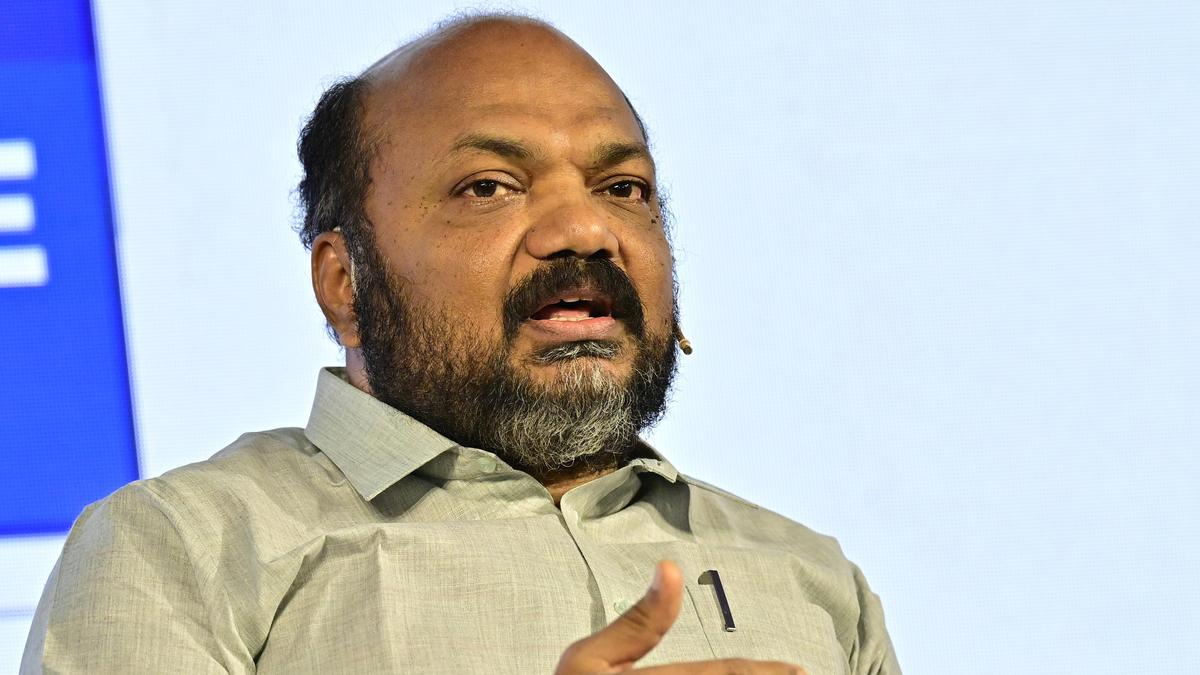
Sabarimala women’s entry: Kerala Law Minister says govt to seek ‘balance’ between religious practices, constitutional rights ahead of SC hearing
The Hindu
Kerala Law Minister P. Rajeeve emphasizes balancing religious practices and constitutional rights in the Sabarimala women's entry debate ahead of Supreme Court review.
Kerala Law Minister P. Rajeeve has said the State government would “strike an optimal balance” between essential religious practices central to faith and elemental Constitutional questions as it recalibrates the State’s position on allowing women of menstruating age to enter the Sabarimala Ayyappa temple ahead of the Supreme Court hearing review petitions in the case in April 2026.
The move assumes political significance against the backdrop of the Congress and the Bharatiya Janata Party (BJP) accusing the Kerala government of “betraying” Ayyappa devotees by failing to withdraw the Supreme Court affidavit supporting women’s entry. Both parties have sought to resurrect the Sabarimala issue in the crucial Assembly election year.
Mr. Rajeeve told a news conference on Monday that “vested political interests” had obfuscated the key element in the earlier, much-vilified affidavit. “The State had requested the Supreme Court to set up a commission comprising persons with deep knowledge in Hindu religious practices and socially progressive persons of high integrity to examine the issue of women’s entry into Sabarimala before reaching a settlement. However, the Supreme Court appointed an amicus curiae”, he said.
He said the Supreme Court has framed seven questions for the petitioners to consider. “A simple and summary withdrawal of the earlier affidavit as demanded by the Opposition will not suffice to protect devotees’ interests. For one, the petitioners, including the government, have to weigh the subtle interplay between Article 25 and Article 26 concerning women’s entry into Sabarimala as demanded by the Supreme Court”, he said.
Mr. Rajeeve noted that Article 25 states that the right to freedom of religion is subject to public order, morality, and fundamental rights. “Article 26 sets in stone the fundamental right of religious denominations to manage their own affairs in matters of religion. These questions will come into play when the Supreme Court reviews the 2018 decision, and Kerala cannot be caught unprepared,” he said.
Mr. Rajeeve said the Sabarimala women’s entry issue posed “complex legal conundrums”, which the State would address with devotees’ interests and temple custom in mind.


AILAJ claims a letter alleging a ₹50 lakh bribe to a judge is fake, urging action from the Madras High Court.

How Safdarjung Tomb Mughal garden is being reimagined for a hotter, drier Delhi

A study reveals brief intense exercise is more effective than standard care for treating panic disorder symptoms.

A study identifies 58 genetic variants influencing anxiety risk, highlighting genetic overlap with depression, PTSD, and related traits.

Papanasam Dam's water level reaches 93.30 feet, with inflow at 257 cusecs and discharge at 1,200 cusecs.

BJP secures Karimnagar Mayor’s post despite opposition efforts, says Bandi Sanjay.

Tamil Nadu's Planning Commission highlights urgent reforms needed in agriculture for sustainable growth and improved farmer livelihoods.

Karnataka RERA mandates builder to provide standard-sized parking slot to apartment owner in Mangaluru after complaint.

Shriram Properties Completes Acquisition of a Prime Land on Sarjapur Main Road to Strengthen Presence in South-East Bengaluru

Discover the best prop firms in India for trading your preferred financial markets. Learn about the challenges, profit splits, and payout systems so you can choose the right program.

CPI(M) West Bengal member Pratik Ur Rahaman resigns, citing misalignment with party leadership ahead of polls

IIMB’s EPGP ranks 34th globally and third in India in the Financial Times MBA Rankings 2026, highlighting exceptional achievements.

Anthropic USA representatives missed a court date in Belagavi over a brand name dispute with a local IT company.