Economic Survey | Several key areas of T.N.’s agri sector require immediate attention: Planning Commission
The Hindu
Tamil Nadu's Planning Commission highlights urgent reforms needed in agriculture for sustainable growth and improved farmer livelihoods.
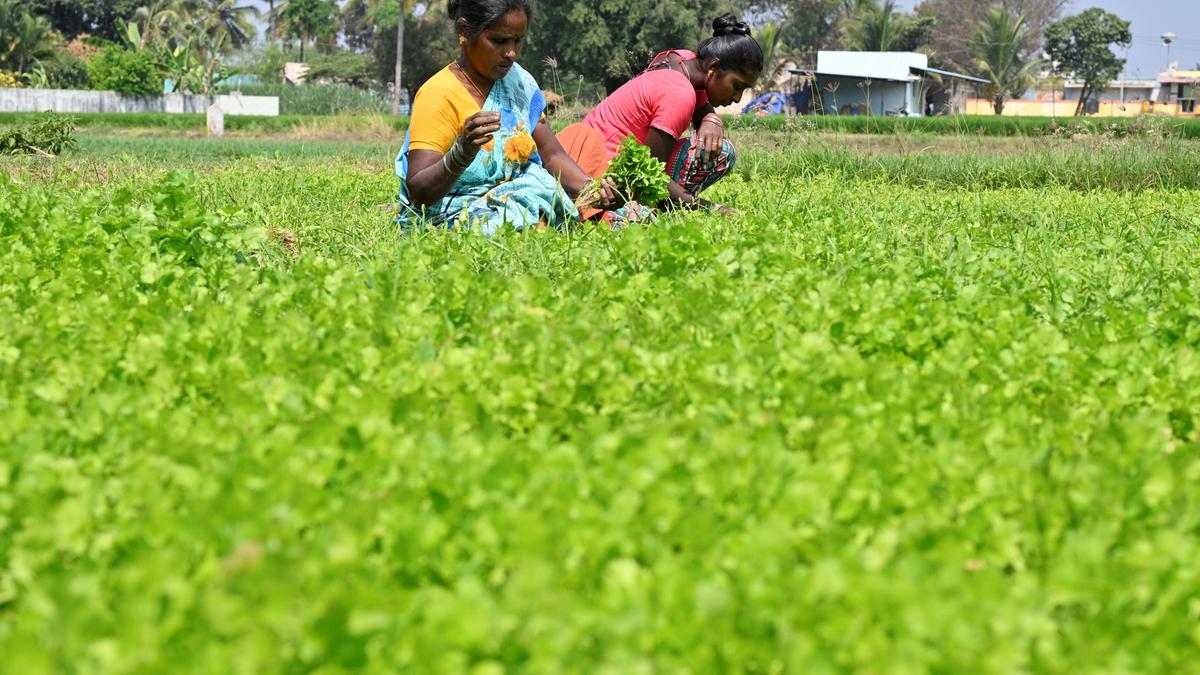
Several key areas in Tamil Nadu’s agricultural sector require immediate attention to ensure sustainable growth and resilience. This was categorically stated by the State Planning Commission (SPC) in the State’s Economic Survey 2025-26, which was released on Monday (February 16, 2026).
Stating that since 2001-02, Tamil Nadu lost approximately two lakh hectares of net sown area and witnessed a rise in fallow land, the SPC pointed to underutilised cultivable land, while emphasisng the need for policies to reclaim and optimise fallow lands. Referring to the decline in surface irrigation sources, such as canals and tanks, accompanied by stagnancy in net irrigated area, the panel called for promoting efficient groundwater management in view of wells, invariably used through electrified pumpsets, dominating the net irrigated area.
“Heavy dependence on local markets for inputs and outputs underscore the necessity for enhanced sustainable input systems and market infrastructure development. Stagnation in yields of key crops like paddy, pulses, and important fruits need [s] to be addressed to improve livelihoods of agricultural households, ” the Commission observed.
Lauding the livestock sector for showing “remarkable growth,” the SPC said this had emerged as a “key driver amid the declining fortunes” of the crop sub-sector. Its contribution to gross value added from agriculture, forestry, and fishing rose from 30% in 2011-12 to 53% in 2024-25. “This sector needs attention through cold storage infrastructure development State-wide to curb wastage in marketing perishable products like eggs, meat, milk, and fish, alongside strengthened support for sustainable practices and market linkages.”
Though paddy had retained its status as the dominant cereal crop of the State, maize cultivation went up significantly. Between 2001-02 and 2023-24, it grew a compound annual rate of 7.5% with the area under maize going up by 3.6 lakh hectares from less than one lakh hectare in 2001-02. This was “primarily because of its demand as poultry feed.” At the same time, all other cereal crops such as “cumbu ragi, kora, varagu, and samai have seen an absolute decline in area under cultivation over the period.”
Speaking of the awareness of farmers about the Minimum Support Price (MSP) for various crops, the Commission recorded the awareness level remained limited. “[The] Survey evidence from 2018-19 suggests that around 68% of agricultural households were unaware of the MSP for paddy and nearly 90% unaware of the MSP for maize, highlighting the need for improved information dissemination and assured procurement to mitigate market risk.” About 80% of households relied on local markets for both input procurement and output sales, underlining the centrality of these market spaces and the urgency of investments in storage, transport, grading, and trading infrastructure to enhance efficiency and farmer welfare.


AILAJ claims a letter alleging a ₹50 lakh bribe to a judge is fake, urging action from the Madras High Court.

How Safdarjung Tomb Mughal garden is being reimagined for a hotter, drier Delhi

A study reveals brief intense exercise is more effective than standard care for treating panic disorder symptoms.

A study identifies 58 genetic variants influencing anxiety risk, highlighting genetic overlap with depression, PTSD, and related traits.

Papanasam Dam's water level reaches 93.30 feet, with inflow at 257 cusecs and discharge at 1,200 cusecs.

BJP secures Karimnagar Mayor’s post despite opposition efforts, says Bandi Sanjay.

Tamil Nadu's Planning Commission highlights urgent reforms needed in agriculture for sustainable growth and improved farmer livelihoods.

Karnataka RERA mandates builder to provide standard-sized parking slot to apartment owner in Mangaluru after complaint.

Shriram Properties Completes Acquisition of a Prime Land on Sarjapur Main Road to Strengthen Presence in South-East Bengaluru

Discover the best prop firms in India for trading your preferred financial markets. Learn about the challenges, profit splits, and payout systems so you can choose the right program.

CPI(M) West Bengal member Pratik Ur Rahaman resigns, citing misalignment with party leadership ahead of polls

IIMB’s EPGP ranks 34th globally and third in India in the Financial Times MBA Rankings 2026, highlighting exceptional achievements.

Anthropic USA representatives missed a court date in Belagavi over a brand name dispute with a local IT company.