How Safdarjung Tomb’s Mughal garden is being reimagined for a hotter, drier Delhi
The Hindu
How Safdarjung Tomb Mughal garden is being reimagined for a hotter, drier Delhi
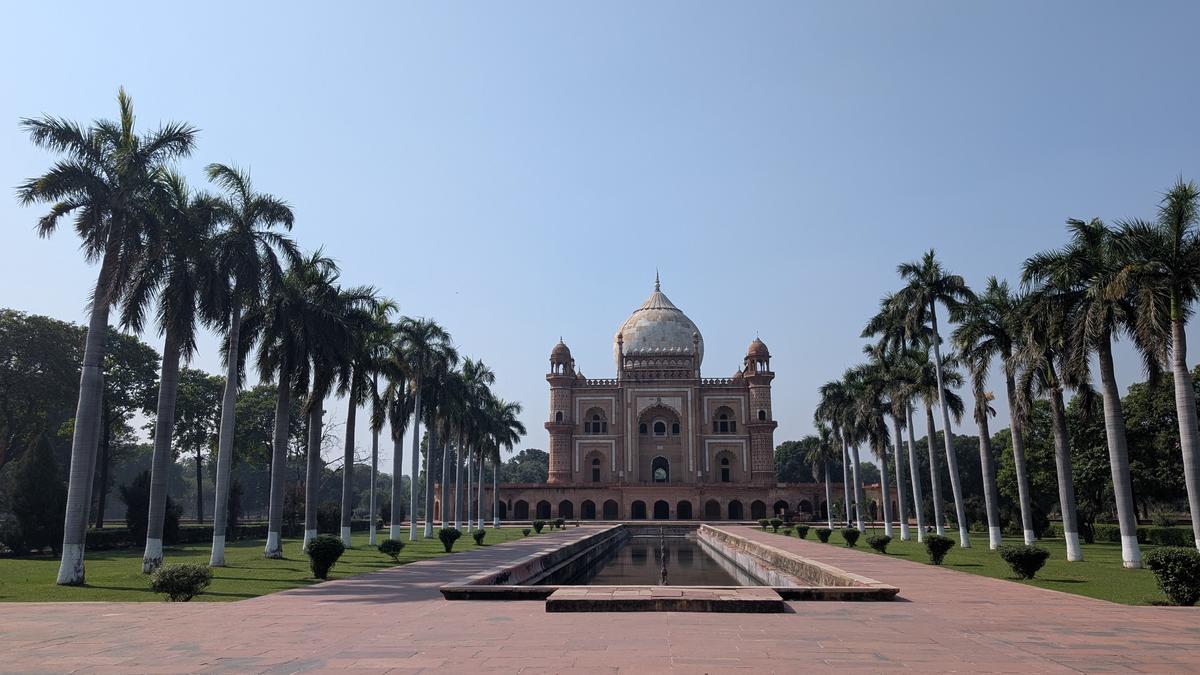
In Delhi, monuments are often spoken of as though they were statues — solid, inert, and even complete. Safdarjung Tomb resists that idea. Long before one looks up at the sandstone-and-marble mausoleum, one feels the space around it: the axial paths pulling the eye forward, the water channels that promise movement but rarely deliver it, and the broad openness of the charbagh that still holds, despite everything, a certain calm.
Built in 1754 for Mirza Muqim Abul Mansur Khan-Safdarjung, the Mughal governor of Awadh, the complex is usually described as the last of Delhi’s great Mughal garden tombs. It is also one of the city’s fully realised experiments in climate design before imperial confidence, and ecological balance, began to fray.
Archival image | Photo Credit: V&A
The garden was never meant to be ornamental alone. Like all Mughal charbaghs, it was an engineered landscape, designed to cool, irrigate, choreograph air and movement, and offer relief from the North Indian summer. Water once coursed through channels and fountains; trees were planted to calibrate shade and humidity; pathways slowed the body, easing both heat and haste. Paradise, in the Mughal imagination, was practical.
Archival image from 1979
Over time, Safdarjung Tomb has been conserved repeatedly, largely with an architectural lens. The Archaeological Survey of India (ASI), which protects the site as a national monument, has carried out periodic repairs to the mausoleum, boundary walls, walkways, and garden features. These interventions stabilised stone and surface alike. Yet the garden’s deeper systems slipped out of alignment. Groundwater levels across Delhi fell. Historic wells dried. Water features became symbolic rather than operative. Planting patterns shifted, often guided by maintenance convenience rather than environmental logic. The charbagh endured, but it stopped working.


Tensions escalate near Kalpakkam as clashes erupt between two fishing communities over a longstanding land dispute, resulting in injuries.

India's innovation must focus on scaling deep-tech startups through industry integration and private sector collaboration, says Ashish Pandey.

JD(S) to launch a membership enrollment drive in Mysuru district starting February 18, led by Nikhil Kumaraswamy.

Residents of Gurupura Kaikamba demand a flyover instead of a vehicular overpass to protect their community and commerce.

Mullaperiyar dam's water level is 119.30 feet, with inflow and discharge reported for both Mullaperiyar and Vaigai dams.

M M.K. Stalin inaugurates completed projects worth ₹7.32 crore and lays foundation for new works worth ₹5.51 crore in Salem.

Delhi HC grants bail to SDPI chief M.K. Faizy in money laundering case after 11 months of pre-trial detention.

Palakkad Division secures ₹15.26 crore from e-auction of passenger amenities, enhancing commuter convenience and station infrastructure.

Check your JEE Mains 2026 results and download your scorecard easily from the official website jeemain.nta.nic.in.

FKCCI and KASSIA urge Karnataka government to enhance industrial infrastructure, reserving land for micro industries and promoting growth.

Tiruvallur police arrest two Nigerians in a synthetic drug trafficking ring linked to Bengaluru and surrounding cities.

Historian Sajjad Shahid traces the Deccan's rich history, language and culture of coexistence during an enlightening talk in Hyderabad.

The sluice gates of Nagavathi dam in Dharmapuri was opened for irrigation, releasing 117.91 mcft to support local farming.