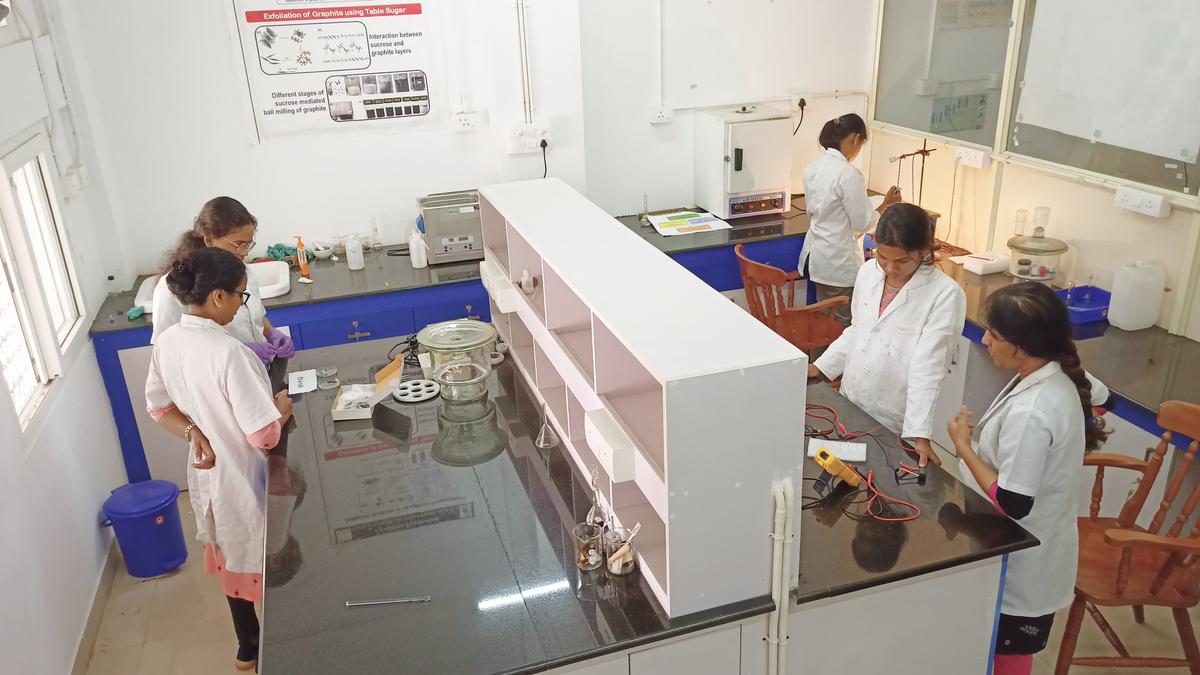
Researchers at Calicut varsity develop supercapacitors that can replace lithium-ion batteries
The Hindu
University of Calicut researchers develop graphene-based supercapacitor technology to replace batteries in electric vehicles, enhancing power density.
Researchers at the Green Graphene Laboratory of the Department of Chemistry, University of Calicut, have developed a supercapacitor technology, marking a significant achievement in the area of graphene research and development.
According to university sources, the research is aimed at developing an effective supercapacitor technology that can replace batteries, especially in electric vehicles. Supercapacitors have a high power density, the ability to provide energy quickly. Batteries have a high energy density, the ability to provide energy for longer hours. However, supercapacitors have a low energy density and batteries have a low power density, one of the researchers says.
Although batteries are the main source of energy in electric vehicles, supercapacitors are used while starting the vehicle to get more energy quickly. Supercapacitors can work more efficiently than batteries in situations where more power is needed in less time. The graphene-based supercapacitors developed at the university are capable of providing high power density with energy density not less than that of batteries. Lithium-ion batteries have an average charging cycle between 500 and 10,000. Supercapacitors and ultra-capacitors, however, have a lifespan ranging from 1,00,000 to a million charging cycles. The supercapacitor technology is eco-friendly and safe for use as well and they can replace batteries as an energy source, the researcher adds.
Graphene and its various nanocomposites, which are cheaply produced from graphite in an environmental friendly manner, have been used in the supercapacitor manufacturing at the lab. The team led by N.N. Binitha, Professor, Department of Chemistry, and research scholars K.S. Suvarna, V.P. Haritha, A.P. Chandni, V.C. Suchitra, S. Sumisha, and P. Divya have been working on it for the past one-and-a-half years at the lab, in tie-up with Electrivore, a Kozhikode-based company.
The technology was handed over to representatives of Electrivore on National Science Day, on February 28, on the university campus. E.K. Satheesh, Registrar, University of Calicut, and C.M. Arun, Chief Executive Officer, Electrivore, were present at the event along with Vice-Chancellor M.K. Jayaraj and Head of the Department of Chemistry Rajeev S. Menon.


Civil society urges Amit Shah to direct police vigilance against open threats of communal violence in Uttam Nagar, Delhi.

PMK leader Anbumani blames alcohol and drug abuse for rising suicides in Tamil Nadu, criticising government inaction.

Bifurcation of Dindigul district is a key election issue, promising focused development and administrative improvements.

Election awareness campaigns gather momentum

Pylontech Advances Southeast Asia Strategy with 150MWh Energy Storage Agreement in Vietnam

BJP announces second list of 111 candidates for West Bengal Assembly polls, including Priyanka Tiberewal and Sumana Sarkar.

Traders urge Election Commission to raise the ₹50,000 cash limit, citing inflation and practical challenges during Tamil Nadu elections.

Kerala CM Pinarayi Vijayan to file nomination from Dharmadam, seeking third term amid tough competition in 2026 polls.

Water level in Mullaperiyar dam was 114.05 feet

PM Modi discussed West Asia peace, condemned Oman's sovereignty violation, and emphasized safe navigation through the Strait of Hormuz.

Contact details of election observers in The Nilgiris released for submitting poll-related complaints during Assembly elections.

Collector directs return of seized cash upon valid document verification amid voter enrollment and election preparations in Erode district.

Telangana Deputy CM Bhatti Vikramarka to present 2026-27 budget on March 20, 2026 , likely to balance welfare, development amid huge fiscal and revenue deficits in the State.