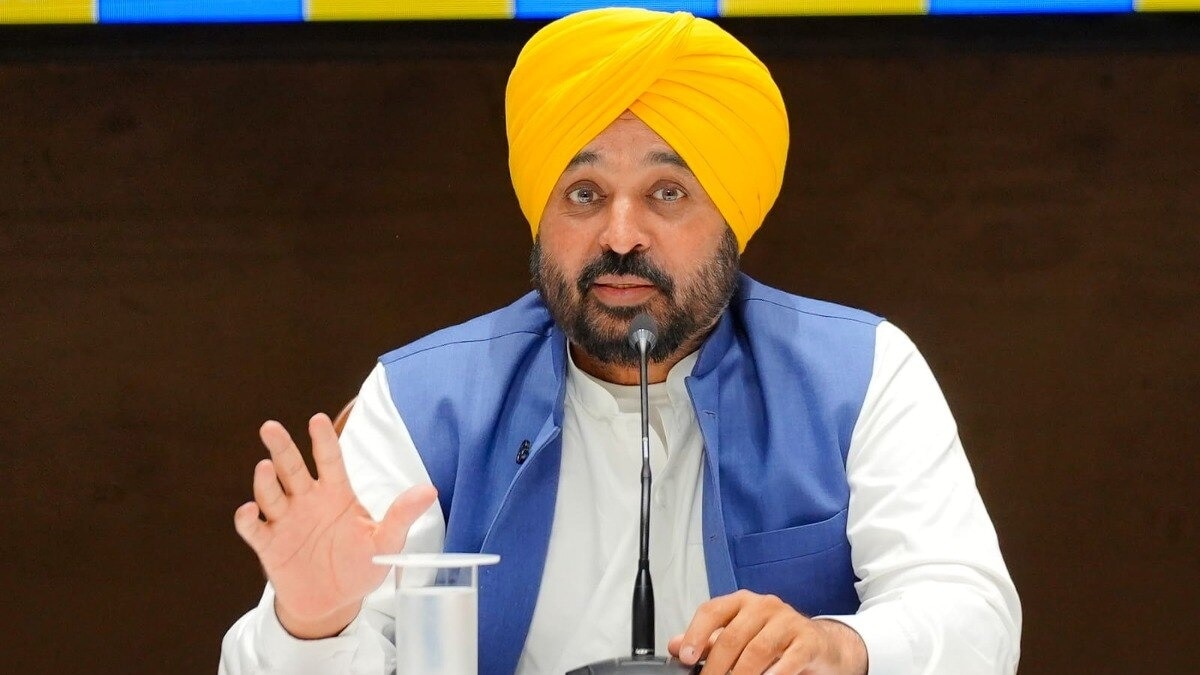
Punjab CM to amend law for stricter punishment for sacrilege of religious texts
India Today
The proposed law, drafted in consultation with the Sant Samaj and legal experts, will impose heavy fines, property confiscation, and cover offences through digital content, Bhagwant Mann said.
Punjab Chief Minister Bhagwant Mann on Saturday announced that his government will hold a special Assembly session on April 13 to amend the 2008 Jagt Jyot Sri Guru Granth Sahib Satkar Act, introducing stricter punishments for sacrilege of Guru Granth Sahib and other religious texts.
The proposed law, drafted in consultation with the Sant Samaj and legal experts, will impose heavy fines, property confiscation, and cover offences through digital content, Mann said.
The government affirmed a zero-tolerance stance, vowing that no one guilty of 'beadbi' (sacrilege) will be spared.
Speaking to religious leaders, Mann said, "The session will coincide with Khalsa Sajna Diwas and the Act will be shaped with input from Sant Samaj and top lawyers nationwide to ensure exemplary punishment".
Leaders of various sects, including Taksals, Nihang Singh groups, Udasi and Nirmala sects, Kar Seva groups, Ragis, and Kathavachaks, have been invited to witness the passage of the legislation.
Meanwhile, activist Gurjeet Singh Khalsa, who has been atop a 400-foot telecom tower in Samana since October 12, 2024, demanding stricter punishment for sacrilege, will be approached by Speaker Kultar Singh Sandhwan and MLA Inderbir Singh Nijjar to end his protest and attend the special session.


Gagandeep Singh Randhawa, who was posted as a District Manager in Amritsar, consumed a poisonous substance and died in hospital. Before his death, he recorded a video accusing Minister Laljit Singh Bhullar of pressurising, torturing and harassing him.

Union Minister Dr Jitendra Singh urged young doctors to contribute to diabetes research.

The cow vigilante was pursuing cow smugglers on a motorcycle when the incident took place. Locals apprehended a Muslim youth involved in the crime. However, three other perpetrators managed to flee.

As the Strait of Hormuz faces disruption, India is exploring costly alternative energy routes while ramping up naval deployments, raising concerns over supply security, rising costs and how long the crisis may last.

With no contractors stepping forward to clean the Mithi river and the monsoon fast approaching, Mumbai faces rising flood risks, exposing systemic failures, administrative gaps and public neglect that continue to leave the city vulnerable year after year.

The Voice of Hind Rajab, an Oscar-nominated film scheduled for release this week, has been blocked in India. The reason cited was that it could affect India's cordial ties with Israel amid the Iran war, as per a report. Why has the film stirred controversy? What is it about?

On the night of March 18, after completing his work at a factory, Ravi was speaking on the phone with his wife, Ritu, when a sudden explosion occurred. The call disconnected abruptly, and his phone went dead shortly after.

A quiet Rajasthan village is shaken after an elderly woman's brutal killing exposes chilling details of greed, betrayal and violence, as police trace how the crime unfolded and a neighbour emerged as the accused.

With hundreds of vessels anchored and crude flows stalled, two Indian LPG tankers prepare to sail through Hormuz.

The National Capital Region woke up to a dense fog on Saturday, as the temperature dipped following heavy rainfall on Friday.

Fear, influence and silence shape the unfolding Ashok Kharat abuse case in Maharashtra, as villagers, officials and even victims hesitate to speak, while investigators uncover disturbing evidence and a vast network of connections.

The move follows internal challenges faced by both leaders. Ramadoss, founder of the Pattali Makkal Katchi (PMK), has been at odds with his son Anbumani Ramadoss over control of the party. Despite being the founder, he has been unable to legally reclaim the party symbol or leadership post. Sasikala, a close aide of former Chief Minister J Jayalalithaa, has also struggled to regain influence within the AIADMK.

Former J&K DGP SP Vaid defended Dhurandhar as based on truth, while Congress criticised it as BJP propaganda, sparking a political row despite the film's strong box office performance.