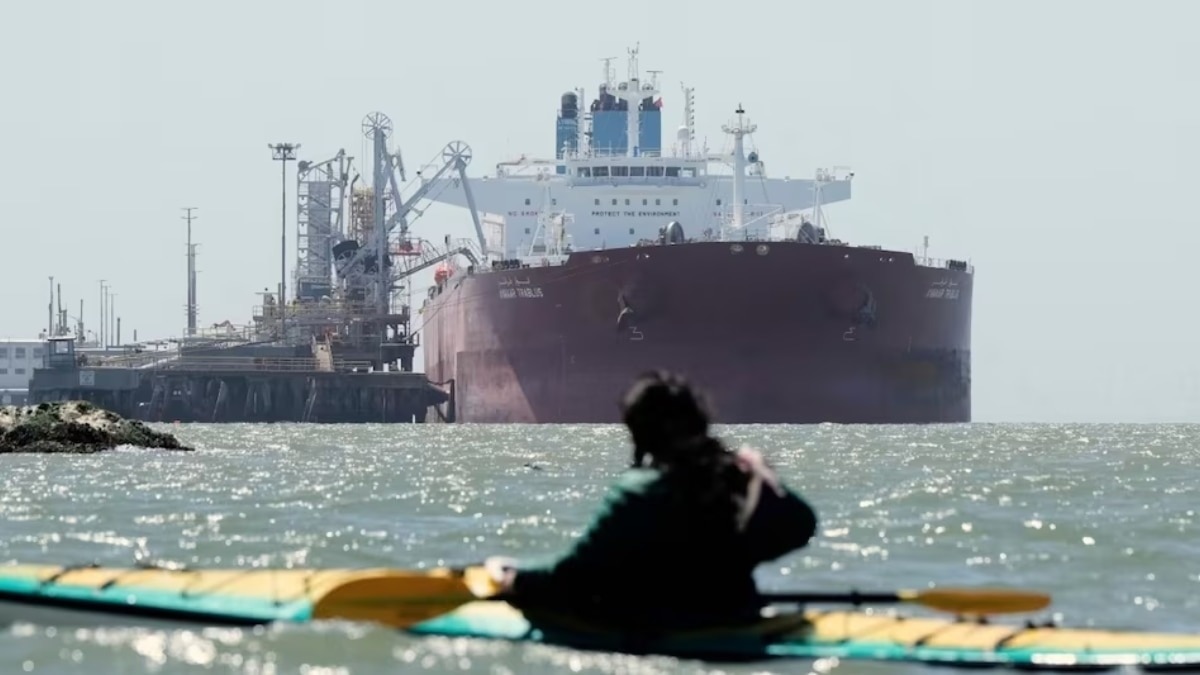
Amid Hormuz crisis, is India looking for costlier energy supply alternatives?
India Today
As the Strait of Hormuz faces disruption, India is exploring costly alternative energy routes while ramping up naval deployments, raising concerns over supply security, rising costs and how long the crisis may last.
With the Hormuz facing disruption amid the ongoing Iran-Israel-US conflict, India is working on parallel tracks. Securing its vessels at sea while preparing for costly alternatives to keep energy supplies steady.
Nearly 45 per cent of India’s energy needs depend on supplies passing through the Gulf, making the situation a direct challenge to the country’s energy security.The Indian Navy has expanded its deployment across the region, positioning additional warships in the Arabian Sea and the Gulf of Oman.
According to sources, around seven ships, including support vessels, are now being deployed. This is in addition to two task forces sent earlier to escort vessels from the North Arabian Sea to Indian ports.
These deployments build on Operation Sankalp, under which naval ships have been present in the Gulf of Oman and Gulf of Aden since 2019.
The aim is clear - ensure safe passage of ships carrying LPG and fuel, while remaining prepared for any escalation near the Persian Gulf.
Three Indian LPG carriers have already been escorted safely to Indian ports. However, more than 20 Indian merchant vessels remain west of the Strait of Hormuz, according to the Ministry of External Affairs.


UP government will distribute nursing officer appointment letters on March 22, ending months of delay and protests by candidates despite the recruitment process being completed earlier.

Bengaluru is planning to ban street vendors on main and sub-main roads, creating designated vending zones to ease pedestrian movement. DK Shivakumar also announced fines up to Rs 1 lakh for illegal flex banners and action against abandoned vehicles.


IndiGo, Air India and SpiceJet have opposed the government's move to make 60% of seats free for selection, warning it will hurt revenues. Airlines say the loss will likely be offset by higher ticket fares, impacting overall affordability for passengers.

Police said he manipulated a 35-year-old married woman through rituals and claims of divine powers, drugged her with intoxicants, hypnotised her, and repeatedly assaulted her.

Vishnu Yadav was beaten to death by his father-in-law, mother-in-law, and four sisters-in-law as his wife watched in horror, unable to help him or cry out as her limbs were tied and mouth gagged.

The Strait of Hormuz's critical role in global energy faces severe strain amid escalating conflict.

Fourteen people were arrested after a video purportedly showed a group of people holding an Iftar gathering on a boat in the Ganga and consuming chicken biryani. Asaduddin Owaisi questioned the arrest of 14 Muslims over the incident.

In just a few whirlwind days, Laura Loomer, the hard critic, has become a self-proclaimed India lover, proving that sometimes all it takes is a proper dose of reality to flip the script.

India's High Commissioner to the UK, Vikram Doraiswami, underscored that targeting commercial vessels and endangering civilian crews cannot be justified under any circumstances.

The Indian embassy in Saudi Arabia cited 'recent developments' on March 18 as the cause behind the death of the Indian national. On that day, Saudi Arabia downed four ballistic missiles targeting Riyadh. However, some debris fell near a refinery south of the city.

An Air India flight from Delhi to VancAir India's Delhi–Vancouver AI 185 flight returned to Delhi after over seven hours in air due to an unspecified operational issue, making a U-turn over Chinese airspace.

Shashi Tharoor again deviated from the Congress line to praise PM Modi's diplomatic approach to the Middle East turmoil. The MP asserted that the government's 'restraint' reflected strength, not weakness.