Protecting the freedom of speech of MPs Premium
The Hindu
That the freedom of speech of MPs is subject to the rules of the Houses seems to have created the wrong impression that the provisions of the rules can override constitutional rights
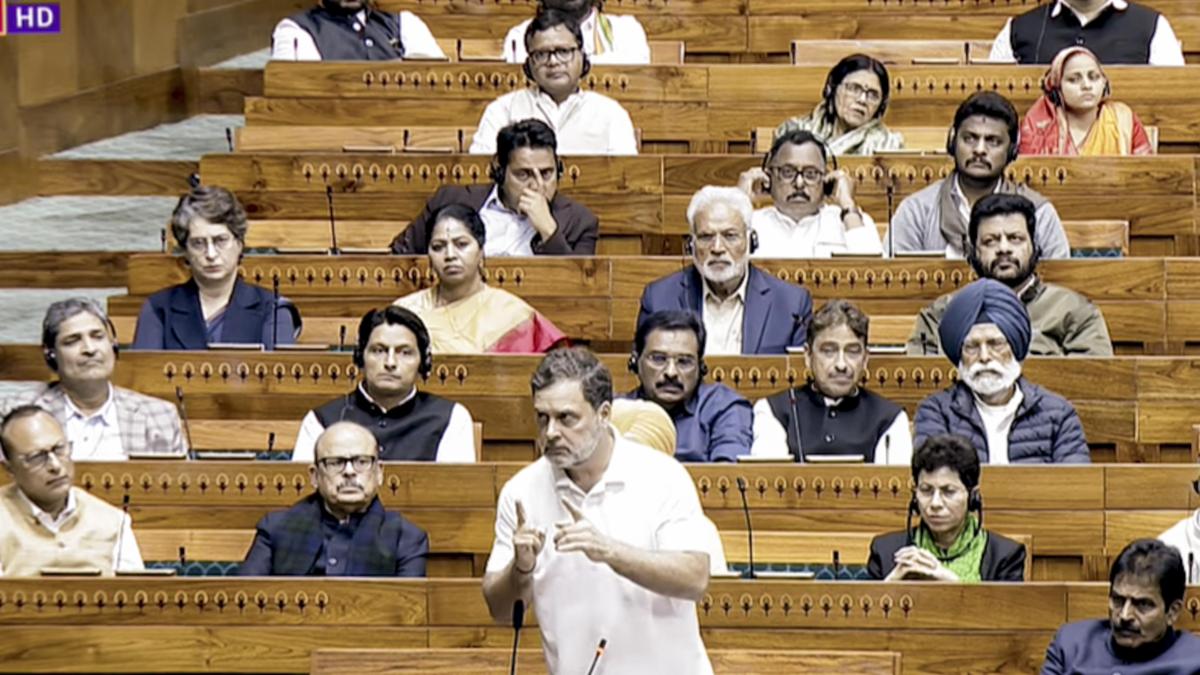
Recent happenings in Parliament have brought into sharp focus the issue of freedom of speech in the Houses, guaranteed by Article 105 of the Constitution. Of course, this is subject to other provisions of the Constitution and the rules of the Houses. That the freedom of speech of MPs is subject to the rules of the Houses seems to have created the wrong impression that the provisions of the rules can in a way override constitutional rights. The root of the problem which the leaders of the Opposition face in Parliament lies in this erroneous impression. The Supreme Court has clarified on many occasions that the restrictions on the rights of citizens should not be such that they eclipse those very rights. This principle would apply to the freedom of speech of MPs in the Houses as well. The rules of the Houses are meant to regulate the conduct of the proceedings in accordance with the Constitution.
Also Read | Blot on democracy: Rahul Gandhi lodges protest with Lok Sabha Speaker for not being allowed to speak
The question which has arisen in the first part of the Budget Session of Parliament is whether there were too many restrictions imposed on the freedom of speech of the members of the Houses, in particular, the leaders of the Opposition. The Leader of the Opposition in the Rajya Sabha, Mallikarjun Kharge, reportedly wrote to the Chairman about the expunction of many portions of his speech and requested him to restore what was cut. His complaint is that after these cuts, his speeches made little sense.
An MP has the right to speak freely in the House and to have their remarks entered into the official records of the House. If the speech is not recorded, is partially recorded, or if many portions are arbitrarily deleted, the MP’s right under Article 105 is infringed. Of course, Rule 380 permits the Speaker to expunge words if they are unparliamentary, defamatory, indecent, or undignified. But it permits the Speaker to expunge only the offending word and not sentences or paragraphs from the speech. Naturally, in a civilised debate in the Legislature, there should be no place for offending words which destroy the sanctity of debates and lower the dignity of the House. That is why rules confer the right on the presiding officers of the Houses to remove them from the records. But while exercising this right, the officers are duty-bound to ensure that the freedom of speech of MPs in the Houses is not diminished.
Also Read | Dramatic protests in Lok Sabha prevent PM’s reply to the motion of thanks
The Constitution adopted freedom of speech as the main privilege of MPs. As Erskine May, an authority on parliamentary system, says, these are special rights which are indispensable for members, for the smooth functioning of the legislature. Only the free, frank, and fearless expression of members’ views enables the Legislature to perform its role effectively. If the rule on expunction is applied mindlessly to speeches made in the House, it will stifle the freedom of speech.


Three killed in road accident near Mandapam

RTI activist Snehamayi Krishna faces a fresh FIR for alleged defamation and intimidation, following previous questioning by authorities.

Delhi CM Rekha Gupta criticizes Trinamool Congress for stalling safety measures and alleges failures in addressing women's security in West Bengal.

Calcutta HC sets up committee to shift urgent matters to other courts, focus on final touches to SIR
Calcutta HC forms committee to expedite urgent court matters and finalize electoral rolls for upcoming West Bengal elections.

AIADMK's Palaniswami claims DMK's ₹5,000 aid was due to political pressure, criticizing Stalin's leadership and promoting dynasty politics.

Sena (UBT) claims the Rajya Sabha seat, asserting its right as the largest party in the opposition MVA alliance.

Prime Minister Modi announced replacing Lutyens' statue with Rajagopalachari's at Rashtrapati Bhavan, honoring Indian heroes and culture.

K.C. Venugopal meets CM Stalin to discuss Congress's seat-sharing expectations for the upcoming Tamil Nadu Assembly polls.

NGOs and residents urge authorities to decongest Vyttila Junction and SA Road by developing a link road and widening key areas.

After a gap of more than three months, safari operations resumed at Bandipur forest, near here, on Sunday.

SKM urges President Murmu to dismiss Piyush Goyal for betraying farmers' interests in a U.S. trade agreement.

CM Revanth Reddy emphasizes commitment to complete the Devadula Project, criticizing neglect of other irrigation projects in Telangana.

Margaretta, trained by Pesi Shroff, triumphs in the Poonawalla Breeders’ Multi-Million, showcasing impressive racing skill.