Patriarchy, the Matilda effect, and the erasure of women in STEM Premium
The Hindu
Explore the impact of patriarchy and the Matilda effect on women's contributions to STEM, highlighting Rosalind Franklin's overlooked legacy.
While the death of James Watson on November 6, 2025, closed a famous chapter in the history of DNA, it also opened a necessary conversation about who we choose to remember, how, and why. The discovery of the double helix structure of the DNA remains a scientific triumph but it’s also a cautionary tale of how the Matilda effect allowed male colleagues to co-opt the analytical work of Rosalind Franklin. To truly champion women in STEM now, we must first dismantle the patriarchal narratives that came before.
Watson and Francis Crick are widely credited with defining the structure of life itself. Their 1953 model was a scientific breakthrough of the highest order — but the Nobel Prize they received in 1962 erased Franklin’s contributions. This wasn’t an isolated incident but the product of a system designed to exploit the labour of women scientists.
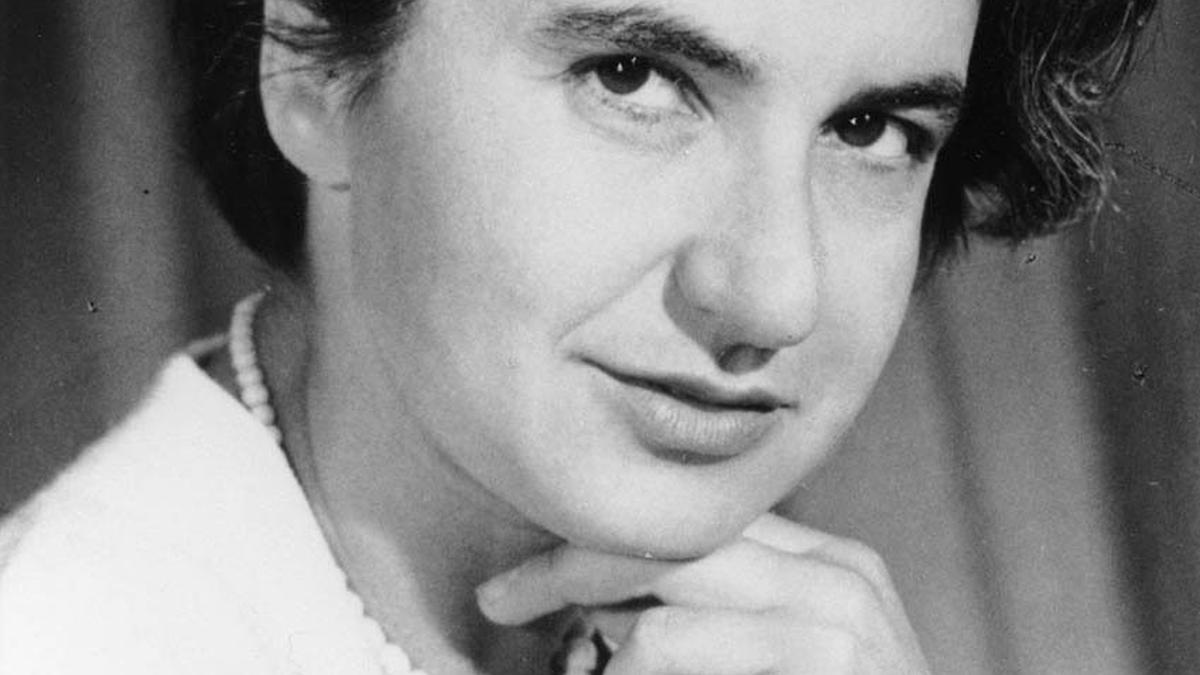
Franklin was a brilliant physical chemist and X-ray crystallographer at King’s College London and the experimentalist who produced the clinching evidence. Her work yielded two forms of the DNA molecule, ‘A’ and ‘B’. Traditional lore holds that the decisive moment came when Watson saw a particular image (numbered 51), that gave away the double helix structure. The injustice however wasn’t the mere viewing of the photograph but the disregard for Franklin’s entire contribution. Her unpublished analytical data, which contained specific measurements relevant to the structure of DNA, was the confirmation the Cambridge model needed, and which established her as an equal contributor to the discovery.
Watson’s 1968 memoir, The Double Helix, cemented the historical narrative by offering a disparaging, even gossipy portrayal of Franklin, casting her as difficult and resistant to collaboration. Such caricatures are the mechanisms by which patriarchal systems invalidate female expertise. By focusing on her personality rather than her science, Watson ignored her true intellectual contributions: Franklin was the first to clearly differentiate the ‘A’ and ‘B’ forms of DNA, and she independently deduced that its structure had antiparallel strands.
Her tragedy ultimately was that she was working in a hostile environment where her status was ambiguous and her work didn’t receive the same respect as that of her male colleagues. Thus one man’s brash hypothesis won more weight than a woman’s exhaustive, foundational data.
Her story is one chapter in a longer, systemic history of erasure. Lise Meitner, whose physical explanation of nuclear fission provided the theoretical basis for the 1944 chemistry Nobel Prize, was omitted in favour of her male collaborator, Otto Hahn. Nettie Stevens performed the fundamental work on sex determination yet her male peer Edmund Beecher Wilson has often received more historical credit for the discovery. Then of course are Jocelyn Bell Burnell, who as a graduate student discovered the first pulsars, and Chien-Shiung Wu, whose experiment proved that our universe doesn’t conserve parity. All these stories embody the Matilda effect, whereby the achievements of female scientists are systematically overlooked or co-opted by and credited to their male colleagues. Franklin wasn’t simply one “wronged heroine” but a representative figure.


The boundaries between clinical care, data science, and tech are fast dissolving, making way for a new blueprint for healthcare education

Marilyne Andersen emphasises the need for scientists and diplomats to collaborate on governance frameworks for emerging quantum computing technologies.

American-Italian restaurant chain, operated by Gourmet Investments in India, Olive Garden opens in Delhi NCR in April, bringing its signature pastas, breadsticks and casual dining format to the region

The Audi A8L Security turns a luxury limousine into a rolling fortress. With advanced ballistic protection, specialised safety systems and the comfort of Audi’s flagship sedan, it is engineered to keep its occupants secure without compromising on performance or refinement.

On the captivating wonders of the natural universe beyond human narratives in science journalism.

Explore how fungi can transform carrot waste into nutritious edible products, enhancing sustainability and food security.

Inside the Arctic cabin of Hilde Fålun Strøm — 19 months, 104 polar bears, and a call to save the planet

From artsy laneways to top-class culinary hotspots; here is what makes Melbourne ideal for the opening round of the 2026 F1 World Championship

Test your knowledge with a quiz on historical 'heretics' who challenged beliefs and changed the world.

West Asia flight disruptions: Stranded Indians in Dubai, Doha and Jordan share stories of uncertainty and support

IISc and Pratiksha Trust launch a groundbreaking project to develop AI-powered brain co-processors for stroke rehabilitation.

India must revamp its PhD programs to prioritize practical innovation and societal relevance over traditional publication metrics.

India must revamp its PhD programs to prioritize practical innovation and societal relevance over traditional publication metrics.