India’s Project Cheetah must stop importing big cats, say scientists Premium
The Hindu
Scientists urge India to halt importing African cheetahs due to habitat shortages and conservation concerns amid Project Cheetah's challenges.
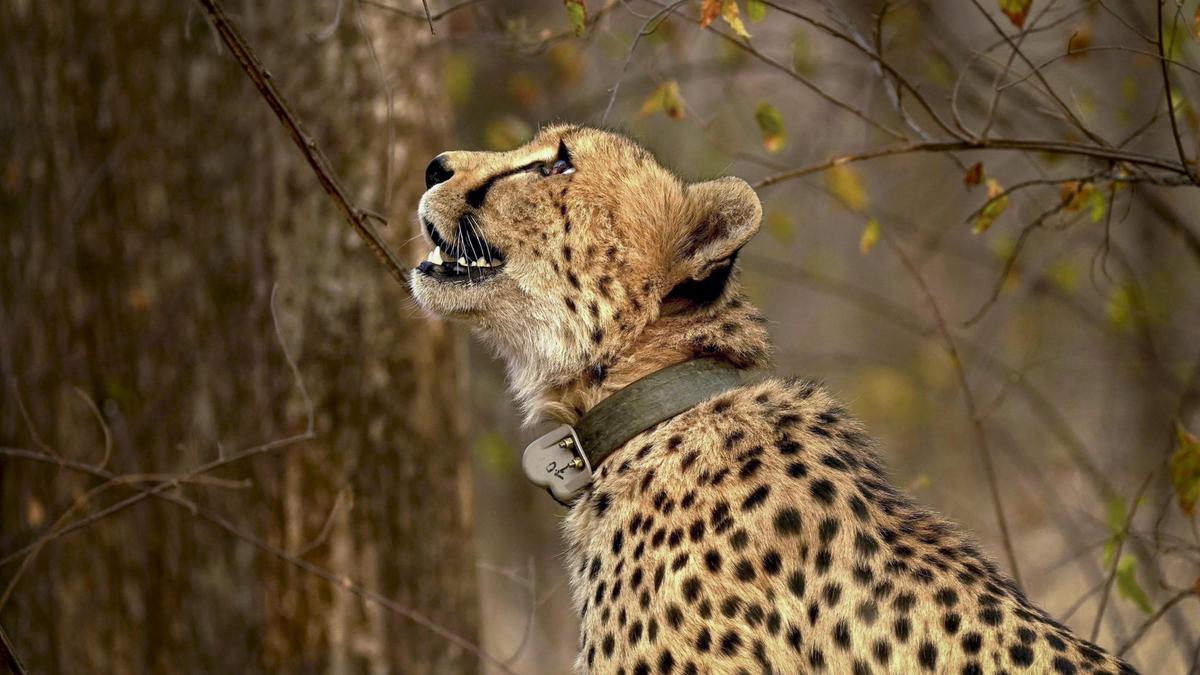
Last week, nine wild African cheetahs were tranquilised in Botswana’s savannah, quarantined for a few weeks in the country, and then taken on a 10-hour flight over the Indian Ocean by the Indian Air Force to Gwalior. From here, the big cats were flown in helicopters to large quarantine enclosures in Kuno National Park in Madhya Pradesh.
This was part of the controversial multi-crore Project Cheetah, flagged off in 2022 by Prime Minister Narendra Modi (on his birthday, September 17). The aim was to introduce African cheetahs to India — Asiatic cheetahs were hunted to extinction in the country in 1952 — to help with the “global conservation” of the big cat and re-establish the cheetah within its “historical range”.
“Here, the cheetah will serve as a flagship to save not only its prey-base, but also other endangered species [such as the great Indian bustard and the Indian wolf] of the grassland and semi-arid ecosystems,” the National Tiger Conservation Authority had said.
The scheme also hopes to improve livelihood options for local communities through ecotourism.
With this new batch, India now has 53 cheetahs, 33 of which are cubs born here and 20 are adults brought from Namibia in 2022, and South Africa in 2023, and, now, nine from Botswana. Jwala gave birth to five cubs on March 9, her third litter in three years.
Last week, Gamini, a cheetah from South Africa, gave birth to four cubs in Kuno National Park to much applause.


The boundaries between clinical care, data science, and tech are fast dissolving, making way for a new blueprint for healthcare education

Marilyne Andersen emphasises the need for scientists and diplomats to collaborate on governance frameworks for emerging quantum computing technologies.

American-Italian restaurant chain, operated by Gourmet Investments in India, Olive Garden opens in Delhi NCR in April, bringing its signature pastas, breadsticks and casual dining format to the region

The Audi A8L Security turns a luxury limousine into a rolling fortress. With advanced ballistic protection, specialised safety systems and the comfort of Audi’s flagship sedan, it is engineered to keep its occupants secure without compromising on performance or refinement.

On the captivating wonders of the natural universe beyond human narratives in science journalism.

Explore how fungi can transform carrot waste into nutritious edible products, enhancing sustainability and food security.

Inside the Arctic cabin of Hilde Fålun Strøm — 19 months, 104 polar bears, and a call to save the planet

From artsy laneways to top-class culinary hotspots; here is what makes Melbourne ideal for the opening round of the 2026 F1 World Championship

Test your knowledge with a quiz on historical 'heretics' who challenged beliefs and changed the world.

West Asia flight disruptions: Stranded Indians in Dubai, Doha and Jordan share stories of uncertainty and support

IISc and Pratiksha Trust launch a groundbreaking project to develop AI-powered brain co-processors for stroke rehabilitation.

India must revamp its PhD programs to prioritize practical innovation and societal relevance over traditional publication metrics.

India must revamp its PhD programs to prioritize practical innovation and societal relevance over traditional publication metrics.