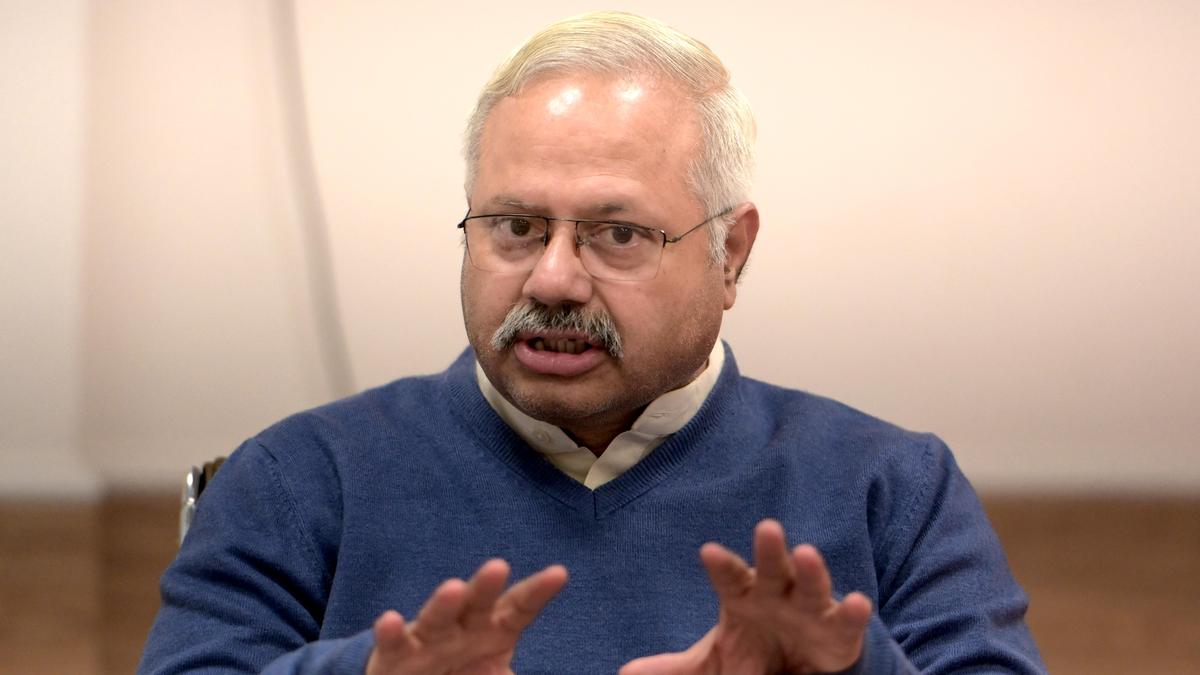
Organisational changes are being made to reach every part of India, says Sunil Ambekar of RSS Premium
The Hindu
Sunil Ambekar of RSS discusses organisational changes and initiatives to unify India and address social challenges in an exclusive interview.
From defending BJP ruled State’s restrictions on Namaz on roads to supporting the idea of allowing only Hindus to enter the Char Dham temples, RSS national publicity in-charge Sunil Ambekar in an exclusive interview to Ishita Mishra spoke at length on topics like demographic change and population imbalance and Gen Z protest in Nepal and Bangladesh. He also defended Narendra Modi’s government on ongoing West Asia conflict and appointment of Naitin Anbin as BJP chief.
Visual story | The Saffron Empire: Mapping the RSS network
It’s been 100 years since the RSS was founded in 1925. How does the Sangh define its core ideology, and how has it changed over these 100 years?
The founding vision of the Sangh was clear from the very beginning: to guide the nation toward a state of the highest prosperity and glory. The most essential requirement to achieve this goal is having unity among Hindus and unity within society as a whole. For this purpose, individuals fully dedicated to this mission were needed. With such people and these objectives in mind, the work of the Sangh began.
The core idea has always been that this is a Hindu nation, where Hindutva is understood as a way of life. This way of life is not opposed to anyone, nor is it meant to eliminate or harm others; rather, it is intended for the welfare of all. Therefore, its establishment is beneficial not only for India but for the entire world and all of humanity. It was with this pure and selfless spirit that the Rashtriya Swayamsevak Sangh was founded.
This foundational thought has remained unchanged over time. However, as time, circumstances, and societal needs evolve, and as the number of workers grows, the Sangh engages with a wider range of issues. While doing so, it continues to express its ideas based on its original principles. The nation remains supreme in its thinking, and this reflects in its approach to national security, development, and unity. The core vision remains consistent and continues to guide its path.


Horses shone at Auroville's 2026 event, showcasing equestrian talent through dressage, derby, and show jumping competitions.

Telangana Governor Shiv Pratap Shukla attends Bihar Foundation Day celebrations in Hyderabad, honoring Bihar's historical and cultural contributions.

Samsung workers protest for the reinstatement of 27 suspended employees, citing unfulfilled promises from the Labour Minister.

The Vice-Chancellor of Rajiv Gandhi University of Health Sciences (RGUHS) B. C. Bhagavan said on Sunday that the university will soon open a research centre on Yoga and Naturopathy on 60-acre land in Bengaluru.

UT Matters: Construction of Uppar drain road overbridge in Puducherry to be completed in four months, amid traffic regulations.

Union Minister Dharmendra Pradhan highlights Bharat Innovates' aim to elevate Indian deep-tech startups to the global stage.

In an exclusive interview, DMK MLA Ezhilan discusses Tamil Nadu's 2026 elections, party structure, and local governance challenges.

Minister Satish Jarkiholi asserts confidence in retaining Davangere and Bagalkot seats in upcoming bypolls amid addressing internal discontent.

Sunil Ambekar of RSS emphasizes national unity, defending road prayer restrictions and promoting awareness of shared ancestry in India.

Opposition MPs and activists voice strong concerns against proposed amendments to the Transgender Persons Act at a Delhi hearing.

Four Assam police commandos injured in an extremist attack during a gunfight in Tinsukia district, officials report.

Campaigning intensifies in Ernakulam district as candidates engage voters ahead of the crucial Assembly polls.

Lord Rama rides Hanumantha Vahanam on sixth day of Brahmotsavams in Tirupati