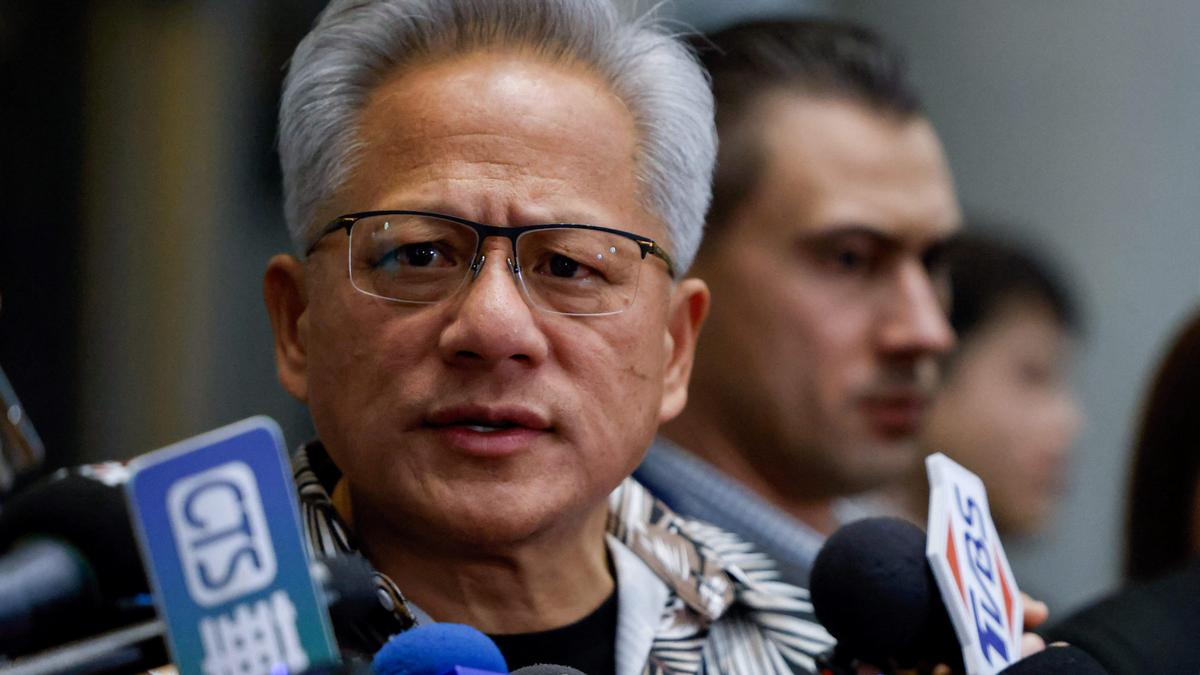
Nvidia CEO Jensen Huang dismisses fears AI will replace software tools as stock selloff deepens
The Hindu
Nvidia CEO Jensen Huang dismissed fears that artificial intelligence will replace software and related tools, calling the idea “illogical”
Nvidia CEO Jensen Huang dismissed fears that artificial intelligence will replace software and related tools, calling the idea “illogical”, after a significant selloff in global software stocks on Tuesday.
The selloff, partly sparked by AI developer Anthropic’s updated chatbot release last week that heightened fears of AI-driven disruption in the data and professional services industry, broadened on Wednesday, hitting software stocks in India, Japan and China.
Speaking at an artificial intelligence conference in San Francisco hosted by Cisco Systems Huang said worries that AI will make software companies less relevant are misguided and AI will continue to rely on existing software rather than rebuild basic tools from scratch.
“There’s this notion that the tool in the software industry is in decline, and will be replaced by AI ... It is the most illogical thing in the world, and time will prove itself,” Huang said.
“If you were a human or robot, artificial, general robotics, would you use tools or reinvent tools? The answer, obviously, is to use tools ... That’s why the latest breakthroughs in AI are about tool use, because the tools are designed to be explicit.”
Shares of Indian IT exporters slumped 6.3% on Wednesday, tracking losses in global software stocks. Tech services firm Infosys was among the biggest losers, plunging 7.3%.


The U.S. has launched two investigations under Section 301 of the Trade Act of 1974 against India and other economies to examine practices that may be ‘unreasonable or discriminatory and burden or restrict U.S. commerce’. One probe examines whether countries, including India, are using excess manufacturing capacity to export to the U.S. in a manner that hurts American businesses, while another looks at whether countries have taken ‘sufficient steps’ to prohibit imports of goods produced with forced labour.

NHAI raises annual pass fee to ₹3,075 from April 1, 2026, streamlining toll payments for FASTag users.

The U.S. probes forced labour in global supply chains, scrutinizing China and India's exports, warns the Global Trade Research Initiative.

The Hindu collection of images of the LPG crisis: War lights a kitchen fire

The company, which launched its IPO in 2020, is now listed on the National Stock Exchange as well as the Bombay Stock Exchange.

Explore the Essential Commodities Act's role in addressing India's gas crisis and its impact on various sectors.

Star Health Insurance plans to boost AI-driven claim settlements from 20% to 50% within two years, investing heavily in technology.

The iron ore production has increased by nearly two-thirds since 2015

Benchmark indices fell 2% as high crude oil prices and FII selling pressures impacted market sentiment on March 14, 2026.

Follow The Hindu LIVE for updates on LPG crisis and crude oil prices due to the escalating Iran-Israel war in West Asia.

ICRA projects integrated sugar mills will see 5-8% revenue growth in FY26 due to improved cane supply and stable prices.

Benchmark indices fell 2% as high crude oil prices and FII selling pressures impacted market sentiment on March 14, 2026.

Tecumseh Products plans to introduce new compressor platforms in India, targeting significant growth and enhanced energy efficiency in refrigeration.