No more hand-carried samples; TIMS Sanathnagar to use air-powered tube system to transport blood samples across departments
The Hindu
TIMS Sanathnagar introduces an air-powered tube system for efficient blood sample transport, enhancing infection control and workflow.
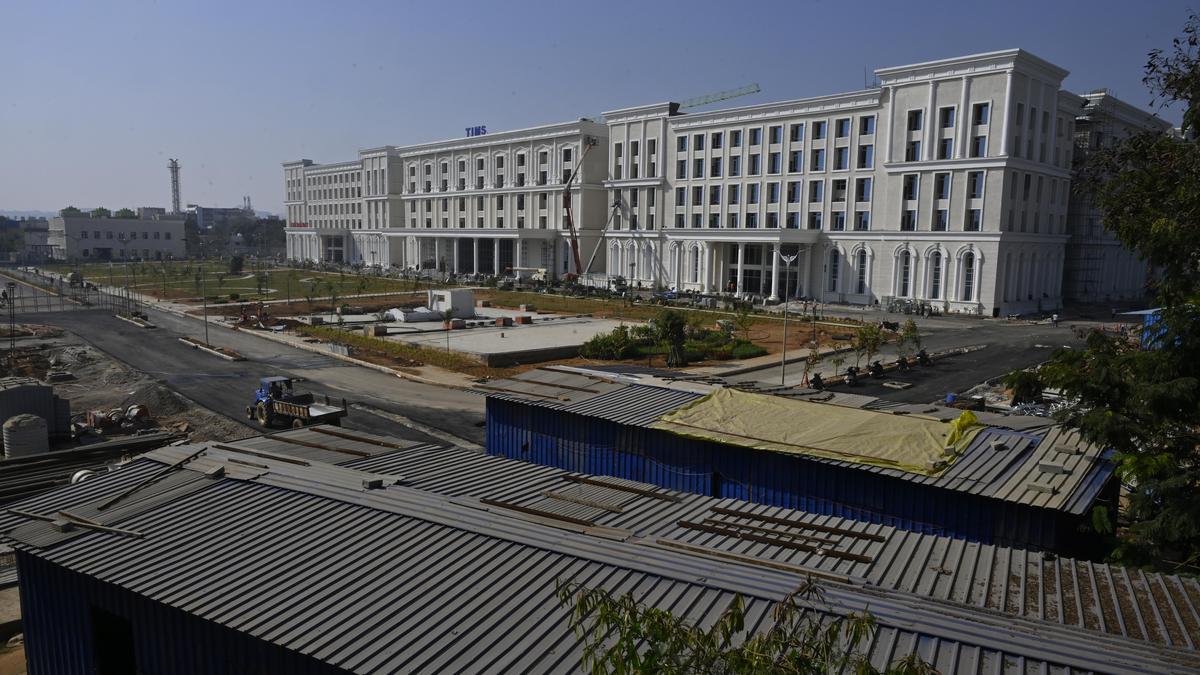
Moving blood samples across hospital departments through sealed air-powered tube system instead of hand-carried trays, and transporting biomedical waste through dedicated corridors away from patient areas are among the features being introduced at the soon-to-be-inaugurated Telangana Institute of Medical Sciences (TIMS) at Sanathnagar here.
The 1,000-bed hospital, as announced by the Health department, is scheduled for inauguration on Ugadi, March 19. The facility is being designed with infrastructure typically seen in large private hospitals, with the aim of improving infection control and streamlining hospital workflow, said Director of Medical Education (DME) A. Narendra Kumar.
One of the key features planned at TIMS Sanathnagar is a pneumatic chute system that will allow the movement of blood samples and other materials between departments without the need for manual transport. A pneumatic chute system is an air-powered tube system used in hospitals to quickly send small items such as blood samples, medicines or documents between different departments. The item is placed inside a small sealed container and inserted into a tube station, after which air pressure pushes the container through a network of tubes installed within the building to the required department.
“The system, commonly used in private hospitals, is rarely found in government institutions. The hospital design includes multiple chute systems, with separate channels planned for blood samples and pharmacy supplies, enabling quicker and more efficient movement of materials across departments,” said Dr. Kumar.
Another design feature is the creation of dedicated ‘dirty corridors’ within the operation theatre complexes. In many government hospitals, soiled linen and biomedical waste generated from operation theatres often pass through the same corridors used by hospital staff and patients, raising concerns about hygiene and infection control.
“Under the new design, waste and used materials will be transported through separate corridors located on the outer side of the operation theatre blocks. This will reduce the risk of contamination in common areas and improve overall infection control standards within the hospital,” the DME added.


Telangana Students gain hands-on experience in agriculture by cultivating and selling vegetables at Sangareddy Collectorate as part of AELP.

Class 9 student Anisha Arol D’Souza wins gold at National Open Youth Games and will represent India in Nepal.

Join the 168th birth anniversary celebrations of Sri Nrisimha Bharati in Tirupati from March 11-14, 2026.

Karnataka may legally challenge Kerala's Malayalam Bhasha Bill, citing concerns for Kannada-speaking residents in Kasaragod district.

MDA allocates ₹460 crore for new residential layouts in its surplus ₹220.72 crore budget to meet long-standing site demand.

SIPCOT contract workers demand salary increases based on experience during a petition to the District Revenue Officer in Tirunelveli.

Civil Aviation Minister K. Rammohan Naidu told the Rajya Sabha that the investigation into the fatal Air India AI171 crash in Ahmedabad is progressing at a “very good pace” and the report will be released very soon. The probe is being conducted by the Aircraft Accident Investigation Bureau with full government support.

TTD honors 32 women employees with Padmavathi Awards for dedicated service during International Women’s Day celebrations in Tirupati.

Anbumani blames the DMK government for worsening law and order in Tamil Nadu, citing recent violent incidents and murders.

TVK chief Vijay requests a 15-day extension to appear before the CBI in the ongoing Karur stampede investigation.

MLC raises concerns over high student-lecturer ratios in PU colleges, seeking government action on surplus lecturer posts.

City hospital AINU's campaign warns against high salt intake, promoting kidney health and offering free screenings for those over 30.

TVK chief Vijay requests a 15-day extension to appear before the CBI in the ongoing Karur stampede investigation.