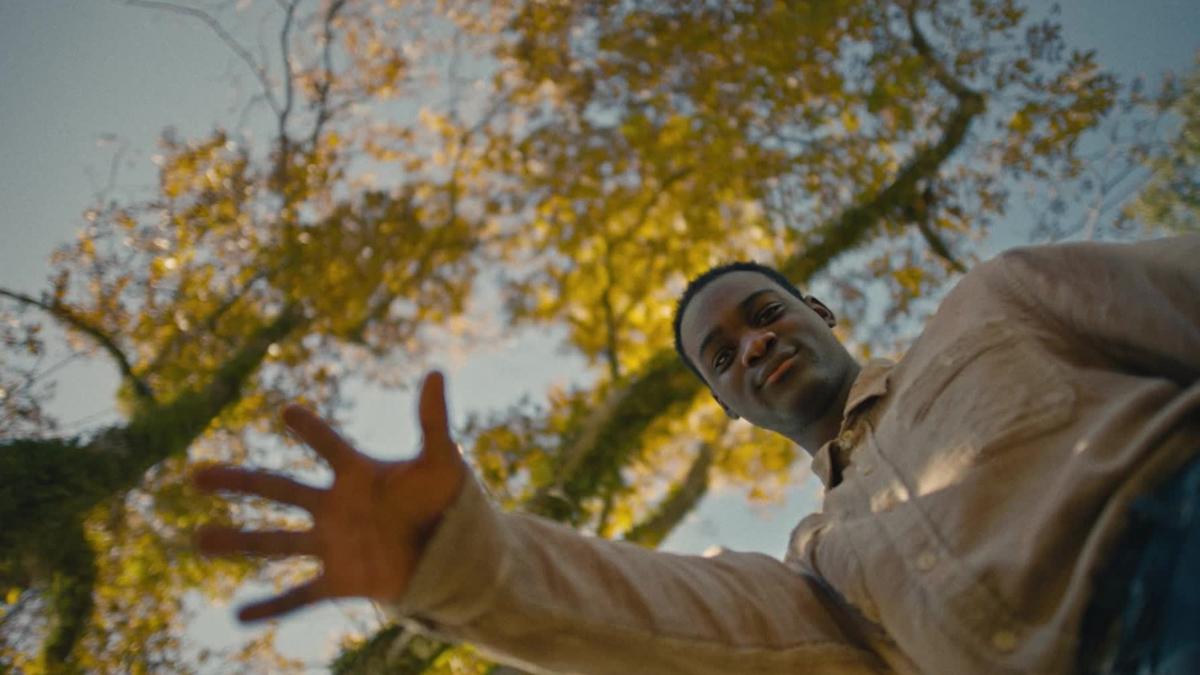
‘Nickel Boys’ movie review: In another life, RaMell Ross’s devastating adaptation would win Best Picture
The Hindu
In another life, RaMell Ross’s Nickel Boys would have made for one of the most inspired Best Picture winners of this decade
RaMell Ross has been trying to reshape our understanding of what storytelling can be. His debut, Hale County This Morning, This Evening, turned everyday Black life into something lyrical and ineffable, demonstrating how cinema could hold time gently and reverently, before it slips away. Now, with Nickel Boys, his adaptation of Colson Whitehead’s Pulitzer-winning novel, he has done something even more audacious. His reimagining of the novel wrestles with the weight of history in a reckoning that lingers in the body, mind, and in spaces that were never meant to be remembered.
Most filmmakers would approach a novel as precise and devastating as Whitehead’s with a kind of solemn fidelity, ensuring that every plot point is accounted for. Ross breaks the story open and lets its spirit breathe, unearthing something inside that feels even more elemental. He understands that trauma is how it is felt, rather than merely a retelling of how it happened, and the film unfolds not as a sequence of conclusive events but as elliptical and sensory, and as fractured as memory itself.
The film tells the story of Elwood Curtis (Ethan Herisse), a bookish Black teenager in Jim Crow- era Florida. He is studious, hopeful, the kind of kid who absorbs Dr. King’s words like scripture and assumes that if he walks the righteous path, the world will walk with him. But America has never been kind to children like Elwood, and a cruel twist of fate sees him thrown into a brutal reform school for wayward boys — the titular Nickel Academy. There, he meets the streetwise and world-weary Turner (Brandon Wilson), and their friendship and tenuous hope forms the film’s emotional core.
Ross’s decision to shoot Nickel Boys in first-person feels at once radical and deeply empathetic (although admittedly disorienting at first). Stories like these conventionally offer observation, but this one demands immersion. Ross reclaims the trick to mimic the sensation of a video game or a found-footage thriller as something deeper — a way of dissolving the barrier between audience and subject and stripping away the safety of detachment. There is no looking away because there is no “other” to look at; there is only us, trapped in the body of a boy whose fate pulses beneath our skin.
The infamous White House, where boys are taken to be abused, is filmed with an almost abstracted malice and its terror is only amplified by the unbearable sounds of a whirring industrial fan, meant to drown out the screams but failing to do so. Cinematographer Jomo Fray captures these moments with a disturbing detachment, letting shadows stretch and encroach, suffocating the frame as the school’s buried horrors make themselves felt.
His camera lingers on the textures of the world — dust catching in the air, the dull shine of sweat on a boy’s temple, the sweltering sun above a field where unspeakable things have happened. Ross even understands the story as a history of unnerving sensations — the sickening lurch in your stomach when you realize the world doesn’t see you as a child but as a problem. The sound of footsteps in a hallway, the knowledge that someone will be taken, and it might be you.
But he’s uninterested in suffering for suffering’s sake. The film embeds us so deeply in Elwood’s interiority that his pain, and his small, stubborn joys, feel like our own. Both Elwood and Turner are still just boys, in all the ways boys are — restless, curious, alive. The world has tried to steal that from them, but Ross refuses to let it.


This year, Bharatnatyam artistes will present the Tyagaraja Aradhane as a dance performance

This year, Bharatnatyam artistes will present the Tyagaraja Aradhane as a dance performance

The actor, along with director Sushant Shah, speak about their upcoming series ‘Chiraiya’, Divya’s process of working on the dialect, Sushant’s approach to telling a story about women, and more

An independent video, ‘Feel the Spark’ by Raleigh Rajan with vocals by Ciera Dumas that celebrates Tamil literary giants, garnered 1.4 million views in less than 36 hours.

In ‘Jack Ryan: Ghost War’, John Krasinski is back as the savvy CIA analyst, diving headfirst into a high-stakes mission that unravels a deadly conspiracy and pits him against a rogue black-ops unit

Shriram Bharatiya Kala Kendra’s Shankarlal festival showcased rare ragas, radiant artistry, and inclusive performances, from Pt Madhup Mudgal’s serene morning ragas to Ramana Balachandran’s Saraswati veena.

Explore "Threads that Bind: The Kantha Project," an exhibition in Delhi reimagining kantha as a medium of repair and renewal.

Sean Penn skips the Oscars to meet Ukraine's Zelenskyy, who praises him as a "true friend" amid the war.

The teaser of Tamil star Suriya’s much-awaited film with director Venky Atluri, titled Vishwanath and Sons, was unveiled by the makers on Monday

A 'Golden' moment for a K-pop track at the Oscars.

Parvathi Nayar’s new exhibition, The Primordial, in Mumbai, traces oceans, pepper and climate change
Opened on March 12, the exhibition marks the artist’s first solo show in Mumbai in nearly two decades. Known for her intricate graphite drawings and multidisciplinary practice spanning installation, photography, video, and climate change, her artistic journey has long engaged with the themes of ecology, climate change and the natural world. In this ongoing exhibition, these strands converge through a series of works centred on water, salt, and pepper — materials that carry natural and historic weight across centuries.

Explore the highlights and key winners of the 98th Academy Awards, featuring memorable moments and historic achievements from Oscars 2026.

Spring season celebrated at Ramakrishna Mission Institute, Kolkata, with ‘Evening of Basant’