New NMC norms: generic drug prescriptions will shift balance between physicians and pharmacists, say doctors
The Hindu
While generic medicines are not opposed, concerns over their bioavailability, efficacy, and overall effectiveness in treating diseases remain.
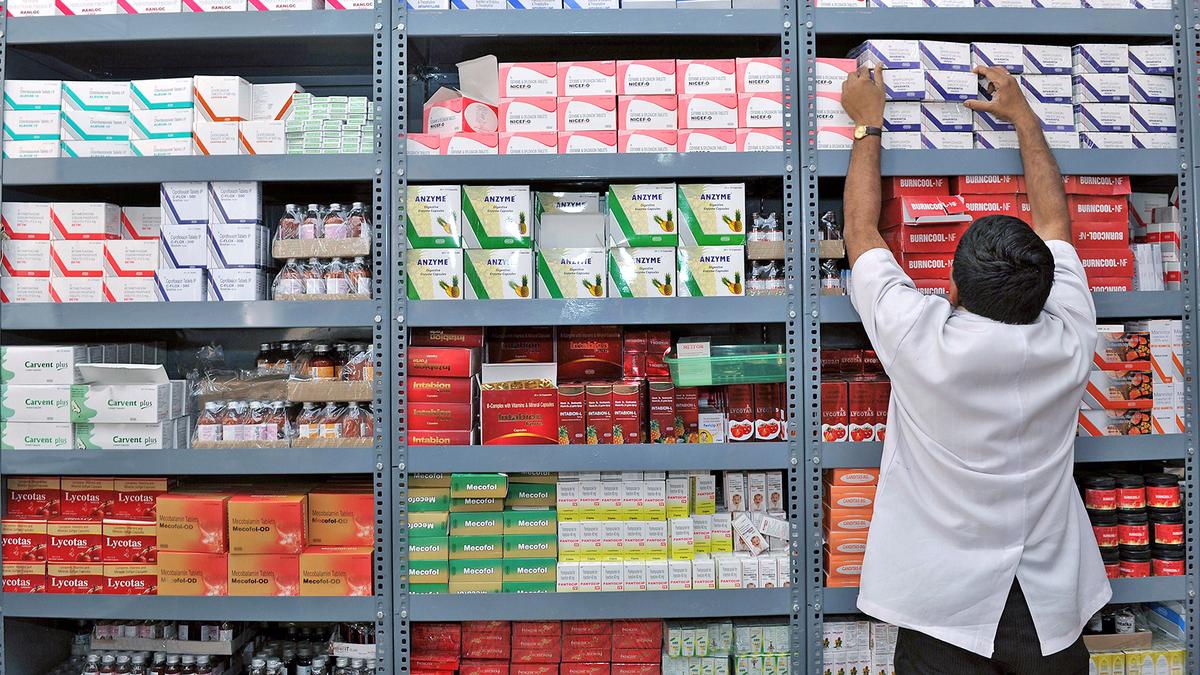
“The doctor asked me to get the medicine prescribed here and not what you have given,” said a customer at a medical store adjacent to Hyderabad’s Nizam’s Institute of Medical Sciences (NIMS) on Wednesday. At the heart of the conversation was the issue of generic drugs and branded drugs. The mix-up involved Itragee-100 Itraconazole capsules instead of the prescribed Candiforce-200 tablet, both of which share the same chemical composition for treating fungal infections but belong to different brands.
While such occurrences are not uncommon for those who frequent medical shops, a potential change is on the horizon. Medical professionals express varying opinions with the new guidelines released by the National Medical Commission (NMC) on August 3 emphasising that all Registered Medical Practitioners (RMPs) must prescribe medications using generic names in a legible and clear manner. Some doctors believe the power balance will shift from physicians to pharmacists.
The guidelines further underscore the importance of rational drug prescription, discouraging the unnecessary use of medications and irrational combinations of fixed-dose tablets. To ensure transparency and accuracy, prescriptions provided by RMPs and medications dispensed by pharmacies should explicitly state the drug’s generic name, according to the NMC directive. The rationale behind these directives, according to the NMC, is to reduce healthcare costs for the population by advocating the use of generic drugs, which are often 30 to 80% cheaper than branded counterparts.
However, the Indian Medical Association (IMA) said the notification is unfair. “It is an injustice to doctors who always hold the interest of their patients as non-negotiable,” said a statement issued by IMA in Delhi.
The owner of the medical shop noted that his establishment operates along the main road, incurring substantial rent costs. He pointed out that if the option arose to provide medicines based on generic names, the shop might prioritise providing those with higher profit margins. Branded medicines yield a 20% margin, while generics could offer margins of 30 to 40%. Despite the financial aspect, both types maintain the same chemical composition and quality, the owner added.
The customer, who regularly purchases medication for his father, mentioned that shifting to generic medicines in recent months has significantly reduced his expenses. Formerly spending ₹5,000 monthly, his costs have come down to ₹2,000.
While generic medicines are not opposed, concerns over their bioavailability, efficacy, and overall effectiveness in treating diseases remain. President of the Indian Medical Association’s Telangana State chapter B.N. Rao emphasised that beyond cost, the potential side effects of generics must be considered. He also voiced concerns about the lack of accountability associated with these medications.


Explore the 2021 West Bengal elections' outcomes and the evolving political landscape ahead of the crucial 2026 assembly elections.

T.O. Mohanan is likely the UDF candidate from Kannur after K. Sudhakaran’s exclusion in Kerala Assembly polls 2026.

Kerala CM Pinarayi Vijayan to file nomination from Dharmadam, seeking third term amid tough competition in 2026 polls.

World Happiness Report 2026 reveals heavy social media use lowers youth wellbeing, especially among girls in English-speaking countries.

Barcelona scores 7 against Newcastle, Liverpool and Bayern advance, setting up Champions League quarterfinal clashes with Real Madrid and PSG.

Explore India's frog conservation efforts through citizen science and sanctuaries, highlighting their critical ecological role on World Frog Day.

Assembly polls 2026: Follow updates from The Hindu on the upcoming elections in five States, on March 19, 2026

Forest, Ecology and Environment Minister Eshwar Khandre on Wednesday instructed forest department officials to ensure maintenance of elephant trenches and hanging solar fences, which have been installed in Kodagu district to control human-elephant conflict.

Indian wolf Geetha at Pilikula zoo gives birth to seven healthy pups, marking a first in captivity at the park.

Passengers on an Air India Express flight from Dehradun to Bengaluru were stranded in Chennai for over two hours due to diversion.

Explore India's missed opportunity in establishing a national gas grid amid the ongoing West Asia war's impact on energy supplies.

Maharashtra government plans to ban plastic flowers to protect local floriculture farmers and support sustainable practices.

Join Alva’s Samskrutika Vaibhava on March 21 in Mangaluru for a vibrant cultural showcase featuring over 500 student-artists.