NCTP members oppose transgender Act amendments, say not consulted
The Hindu
NCTP members oppose amendments to the Transgender Persons Act, citing lack of consultation and potential harm to transgender rights.
Members of the National Council for Transgender Persons (NCTP) on Tuesday (March 17, 2026) stated that the council was neither consulted nor informed about the Transgender Persons (Protection of Rights) Amendment Bill 2026 introduced in Parliament on Friday (March 13).
They said that they are in the process of issuing a joint statement to register their objections to the Bill that seeks to amend the Transgender Persons (Protection of Rights) Act, 2019.
Some of these members have already started holding meetings and are trying to seek an appointment with the Social Justice Minister to explain why transgender communities are opposing the Bill.
The Bill, introduced by Union Minister for Social Justice and Empowerment Virendra Kumar, proposed to withdraw transgender people’s right to a self-perceived gender identity and redefine who a “transgender person” is. The proposed amendments also grant discretionary powers to the District Magistrate and mandate medical institutions performing sex-reassignment surgeries or interventions to report to the government.
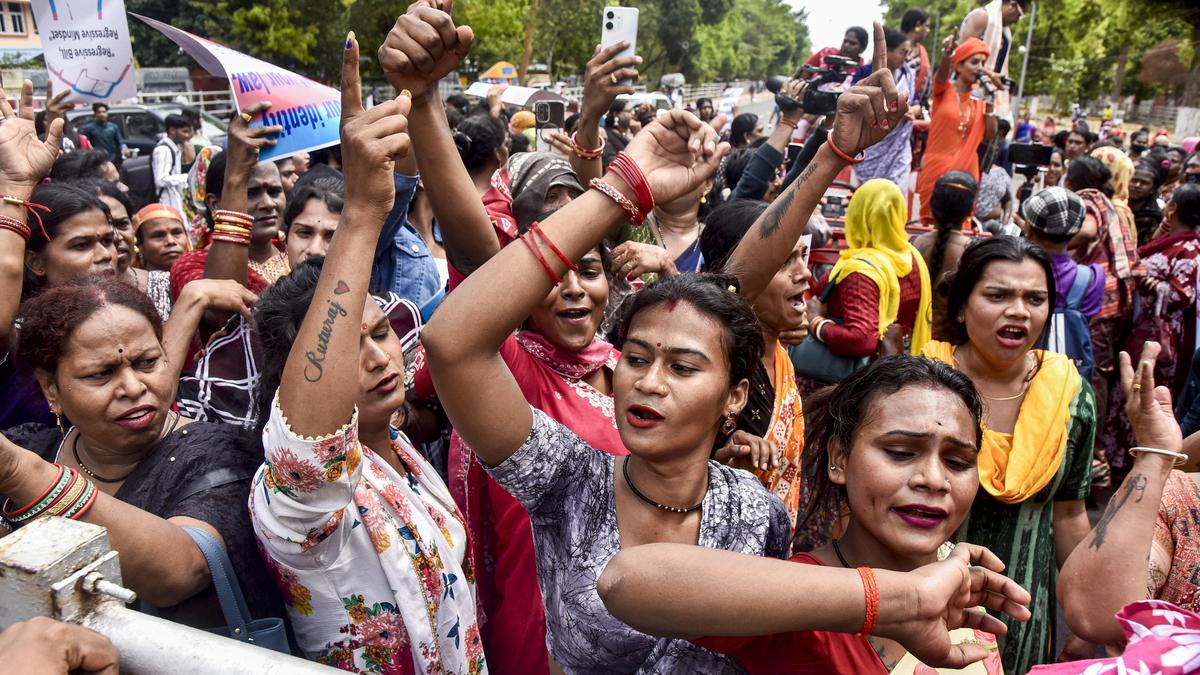
The amendments have triggered protests and mobilisation among transgender communities across the country, with many demanding their withdrawal.
On Tuesday, the National Human Rights Commission’s Special Monitor for transgender ights, Gopi Shankar Madurai, issued a statement “rejecting” the Bill, saying that it was “a deeply flawed, unscientific and culturally regressive legislation that perpetuates discrimination rather than protecting the rights and dignity of diverse GIESC (Gender Identity/Expression and Sex Characteristics) communities, including intersex persons and gender non-conforming children in India”.


K. Annamalai criticizes CM M.K. Stalin as a 'reels' leader, highlighting rising violence and inadequate government response in Tamil Nadu.

SEC urges live webcasting from all polling booths for Bengaluru elections, but Finance Department limits it to select locations.

Telangana government launches natural farming on 61,125 acres, training farmers and supporting sustainable practices with a ₹42 crore investment.

SSTs told to intensify vehicle check: Commissioner of Police

House site pattas for Balimela martyrs' families finally handed over after 18 years, fulfilling a long-awaited promise.

Railway Minister Ashwini Vaishnaw reports ₹6,000 crore savings from electric power switch and highlights Railways' cargo success.

The initiative was flagged off at the Thrissur Archdiocese premises by Archbishop Mar Andrews Thazhath

A 75-year-old man was found burnt to death in a shed behind a defunct theatre on KRS Road in Mysuru on Tuesday.

Minister Narayana inspects Garbage Transfer Station, promising action amid residents' demands for its relocation due to health concerns.

Claims by Congress and BRS on Musi river development are challenged, revealing significant discrepancies in funding and expenditure.

Madras High Court quashes criminal case against Leela Samson, Bharatanatyam dancer and former director of Kalakshetra Foundation, after she settles matter by paying ₹8 lakh to the complainant, a female dance intern, whom she had described as the “mistress” of a male faculty member in her Facebook post.

MoEFCC approves KFDC to continue tree felling of exotic species, boosting eco-restoration efforts across Kerala's forests.

BJP's H. Vishwanath criticizes Karnataka's government for excessive spending on CM's travel and security, urging fiscal responsibility.