Morning Digest: Nirmala Sitharaman presents Budget structured along three ‘duties’; files expose alleged links between Epstein, Anil Ambani and Delhi ‘leadership’, and more
The Hindu
The Hindu Morning Digest gives a select list of stories to start the day. Read the top news today on February 2, 2026
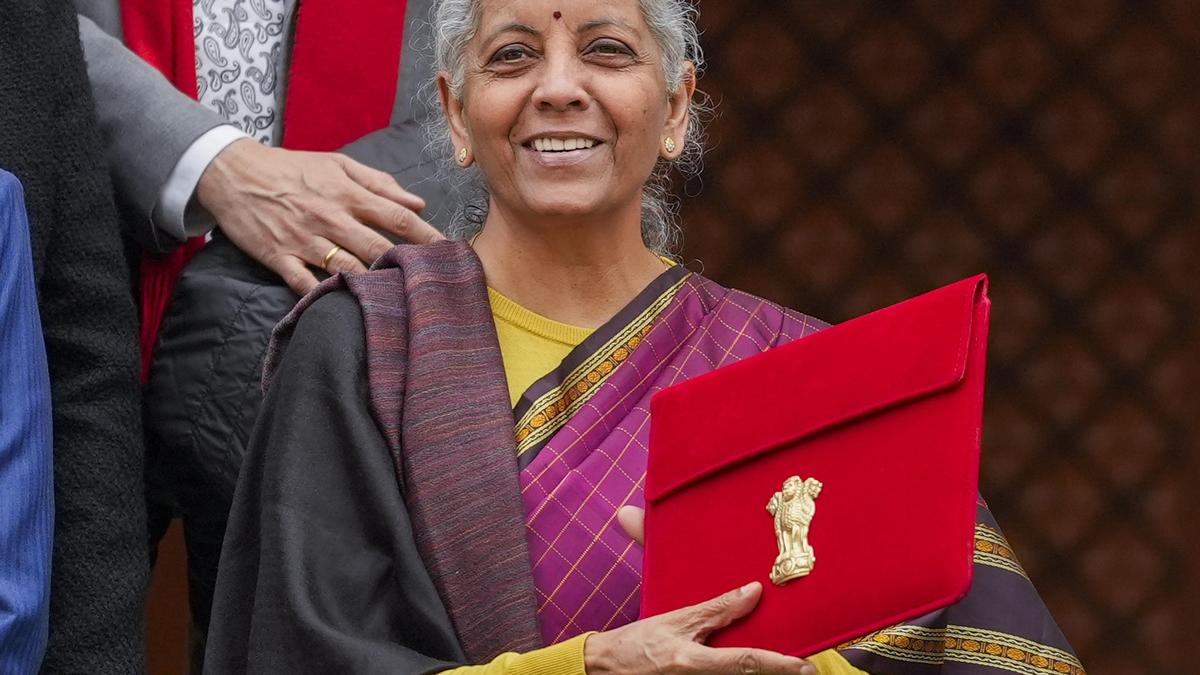
While acknowledging the strains created by the external global environment, Union Finance Minister Nirmala Sitharaman on Sunday (February 1, 2026) presented Budget 2026, with the aim to increase productivity across sectors and ensure employment generation. The Finance Minister said the Budget was structured along three kartavyas or duties: to accelerate and sustain economic growth, by enhancing productivity and competitiveness, and building resilience to volatile global dynamics; to fulfil the aspirations of the Indian people and build their capacity; and to ensure that every family, community, region and sector has access to resources, amenities and opportunities for meaningful participation.
Opposition parties on Sunday (February 1, 2026) described the Union Budget 2026 as “anti-poor” and “detached” from the country’s economic realities. Left leaders said it offered no relief to workers, farmers or the unemployed while continuing to prioritise big corporate interests. Trinamool Congress National General Secretary Abhishek Banerjee said the Finance Minister failed to mention West Bengal even once.
Union Finance Minister Nirmala Sitharaman has laid out customs duties and import tariffs changes for the upcoming fiscal year. These changes make some items costlier and others cheaper as the relevant tariff rates increase or decrease.
In the Union Budget 2026 tabled today (February 1, 2026), the Central schemes make up around 43.4% of the total expenditure through the budget which stood at ₹53,47,314.81 crore, a 5.56% increase over the budget estimates presented in the last budget (and a 7.7% increase over the revised estimates presented today). These central schemes are further classified into ‘Centrally Sponsored Schemes’ and ‘Central Sector Schemes’.
A total outlay of over ₹50 lakh crore for all Ministries was given in the 2026-27 Union Budget presented by Union Finance Minister Nirmala Sitharaman in Parliament today. Here is how each Ministry’s allocations shaped up.
The budget for rural employment schemes saw a 43% hike, with allocation of ₹95,692.31 crore to the new rural employment scheme under the Viksit Bharat-Guarantee for Rozgar and Ajeevika Mission (Gramin) (VB–G RAM G) Act, 2025 and ₹30,000 crore for the Mahatma Gandhi National Rural Employment Guarantee Scheme (MGNREGS). Together, the allocation for both rural employment schemes stands at ₹1,25,692.31 crore, compared with the Revised Estimate of ₹88,000 crore for the MGNREGA in 2025-26. However according to activists, the allocation is not expected to meet the government’s own target of providing 125 workdays to all workers enrolled under the MGNREGS. Calculations show that to meet this commitment, the government would need to allocate ₹2.30 lakh crore.


The Madras Canine Club's dog show celebrated its Golden Jubilee with a grand finale featuring diverse breeds and prestigious awards.

Union Budget 2026 leaves low-income families like A. Nagaraj's grappling with rising costs and stagnant earnings, seeking relief.

Coimbatore MSMEs welcome the budget's focus but express disappointment over unaddressed raw material challenges and rising operational costs.

Srinagar youth share their aspirations and challenges in a PDP initiative, inspiring hope amid silence and despair, says Mehbooba Mufti.

State Highways Dept. begins ₹17.65-crore bridge project over Viruthasiri river, benefiting 28 villages in Ranipet district.

National Fibre scheme to integrate various schemes for natural and man-made fibres under Textiles Ministry

Mamata Banerjee is set to meet CEC Gyanesh Kumar to discuss concerns over the controversial Special Intensive Revision in West Bengal.

The Union Budget 2026-27 skips specificities and maintains continuity over short-term policy stimuli

Kerala CM Pinarayi Vijayan urges society to resist unscientific practices and promote rational thinking at the 38th Kerala Science Congress.

German innovation enhances Auroville's water supply with Atmosbox, a groundbreaking system extracting clean water from air.

Delhi Capitals secure playoff spot by defeating UP Warriorz, while Mumbai Indians are eliminated from the tournament.

BRS leaders criticize the Union Budget 2026-27 as unjust, claiming Telangana continues to be neglected by the central government.

Kerala urged to enhance neuro-inclusive travel through community support, certification, and resources for families with special needs.