Union Budget 2026: Low-income families contend with low earnings and high spending
The Hindu
Union Budget 2026 leaves low-income families like A. Nagaraj's grappling with rising costs and stagnant earnings, seeking relief.
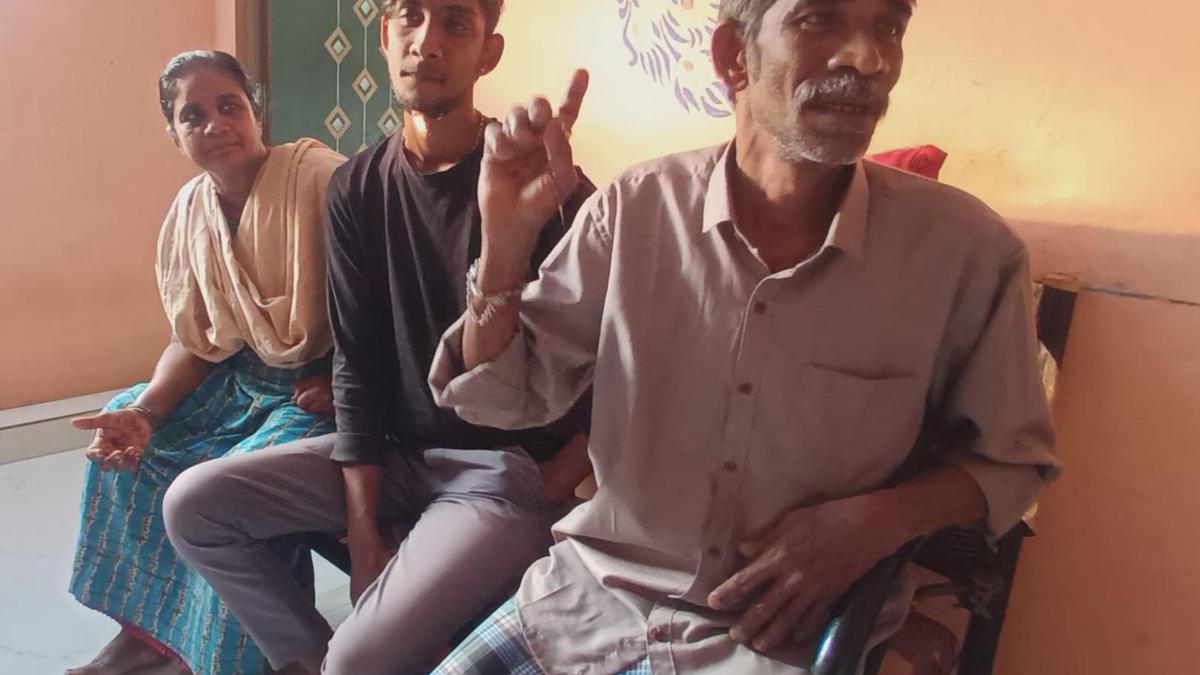
A. Nagaraj, private college housekeeping staff
Annual income: ₹1.8 lakh
Family members: three
The word ‘moderate inflation’ in the Budget speech on Sunday failed to elicit a response from Chennai resident A. Nagaraj, 52, who is struggling to make ends meet. He has overcome all odds, and successfully educated his son, who has completed his Masters in Economics in pursuit of a career in government services. “Earnings are low, while spending remains high. I depend on loans,” he said. He said that in 2026, he had been paying a rent of ₹12,000 for a one-bedroom house, which he rented for ₹4,500 four years ago. As the State government schemes with the Centre’s funding for affordable housing has not been beneficial for families with earnings similar to Mr. Nagaraj’s, He said his wife’s monthly wages of ₹7000 were used to meet monthly expenses. Essential commodities and medicine for his mother led to an increase in expenditure last year. As the Finance Minister proposed to exempt basic customs duty for 17 drugs or medicines for cancer patients, Mr. Nagaraj said he could not afford medical treatment for his 72-year-old mother who had a fractured leg. “My mother passed away recently,” Mr. Nagaraj added. My wife has to spend money on medicine for blood pressure and diabetes. Is there a proposal to provide relief for low-income people who spend money on such medicines?” he asks. “Even tea, which is a staple in our home, is expensive these days. My son spends ₹150 per day on petrol. I pay a bus fare of ₹42 per day. The commodities we get from the ration shop have to be improved with better support from both the Central and State governments. The interest rate for personal loans is high for people like me. I pay an EMI of ₹3,000. This affects us. Will the Budget ever address some of our concerns,” he wondered. While the Budget does not offer direct monetary benefits to low-income families, it aims to reduce essential costs, improve employment opportunities, and support income stability.


HCLTech named as one of the World’s Most Ethical Companies® by Ethisphere for third consecutive year
HCLTech named as one of the World’s Most Ethical Companies® by Ethisphere for third consecutive year

Rahul Gandhi urges Uttam Nagar residents to maintain peace, blaming BJP for inciting violence and communal tension in Delhi.

West Asia tensions disrupt GCC coconut exports, causing local price drops and surplus for Tamil Nadu farmers.

DMK urges the Election Commission to align Puducherry elections with Tamil Nadu's April 23 polling date for logistical efficiency.

NHAI plans DPR for four-lane Tiruchi-Karur-Coimbatore greenfield highway and northern Tiruchi bypass to improve safety.

Defence Minister Rajnath Singh urges India to achieve self-reliance in drone manufacturing amid global conflict lessons.

Artists learn banana stem paper making at Visakhapatnam workshop

Mumbai will experience mainly clear skies with temperatures around 32°C and possible light rain early Thursday morning.

Thunderstorms with lightning and gusty winds expected in 14 Telangana districts on March 20, 2026

Thoothukudi police arrest suspect in Class 12 girl’s murder after investigation and community protests demanding justice.

BJP announces first list of 88 Assam poll candidates, including CM Himanta Biswa Sarma from Jalukbari and recent Congress joiners

SBI Foundation Conclave 2026 focused on conserving urban ecosystems through air, water, and green space resilience against climate change.

Understand the causes of EV battery fires, safety risks, and precautions after the deadly Indore fire tragedy.