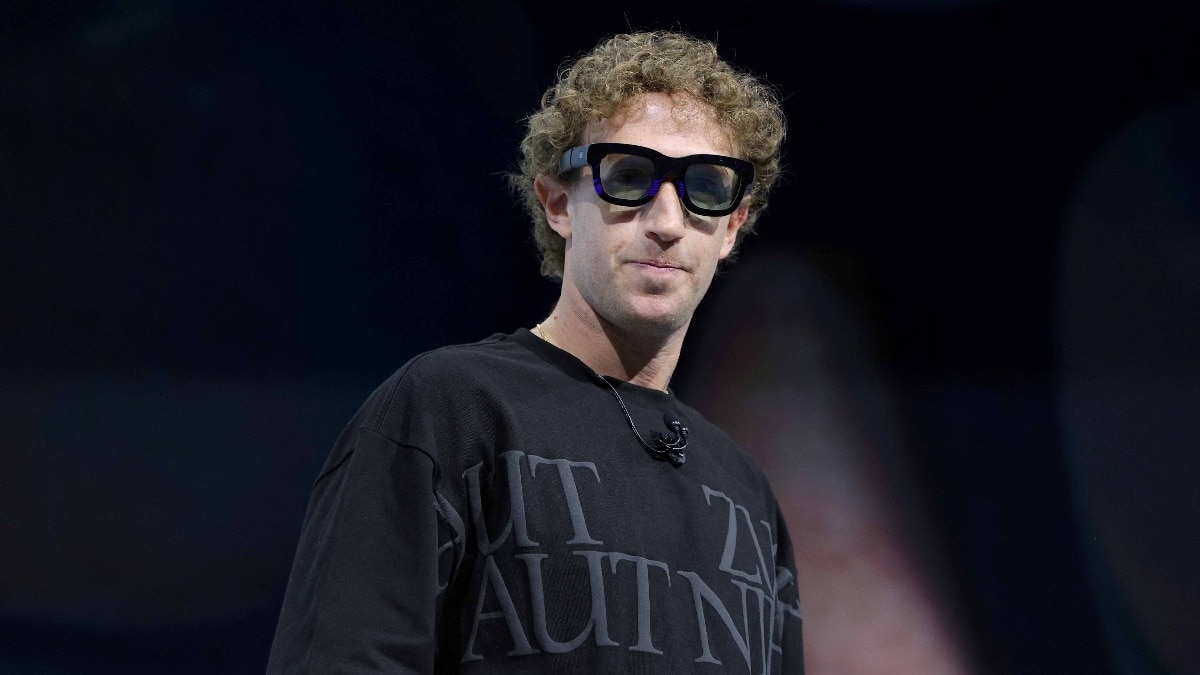
Metaverse creator slams Meta glasses as creepy, says users do not trust them
India Today
Neal Stephenson, who coined the term Metaverse, says the idea isn't dead, but Meta's headset-first approach made it hard for people to accept. He argues smart glasses and VR devices feel "creepy" to users, and the real future of the Metaverse lies in games and platforms people already use.
Neal Stephenson, the science-fiction author who coined the term “Metaverse” in his 1992 novel Snow Crash, has criticised Meta’s push towards face-worn computing devices. In a recent blog post, Stephenson said the company’s attempts to popularise smart glasses and VR headsets, including Meta’s devices, feel “creepy” to many users and are unlikely to become mainstream. He added that the Metaverse concept itself is not dead, but Meta focused too heavily on head-mounted hardware, which made the idea harder for people to accept.
His comments come as Meta has scaled back parts of its Metaverse ambitions after spending tens of billions of dollars on the project. The pullback has raised fresh questions about why the idea struggled to take off despite years of investment. According to Stephenson, the problem was not the concept itself, but the way companies tried to build it.
In the blog post, he said the Metaverse was always meant to be a shared virtual space on the internet, but many technology companies, especially Meta, treated it as something that required goggles or glasses to exist. He argued that this narrow approach created unnecessary barriers for users.
“Once you have computers that can show graphics, and an Internet, the notion of creating a virtual online space is sort of obvious,” he wrote, suggesting the idea of Metaverse does not depend on headsets.
According to Stephenson the biggest mistake companies like Meta and Google made was assuming people would be comfortable wearing computers on their faces for long periods of time. However he suggests that face-worn devices can make people uneasy because others cannot tell what the wearer is doing. “When someone’s wearing a head-mounted display, you don’t know whether they are looking at you or not that’s creepy,” he wrote.
Further drawing from his own experience working with augmented-reality company Magic Leap, Stephenson said he once believed people would eventually stop staring at phones. He now admits that prediction was wrong. “Twenty years from now, everyone is still going to be staring at little rectangles in their hands,” he wrote, arguing that smartphones and flat screens remain the most practical way for people to access digital worlds.


Anthropic has added a new auto mode for Claude Code. Now, the AI will be able to do tasks by itself without having to ask for your permission. However, unlike the "dangerously-skip-permissions" command, the auto mode comes with some safeguards that can help avoid potential disaster.

If you've been wondering about the claimed fuel efficiency of the Tata Sierra, an RTI enquiry has finally revealed its ARAI-certified mileage figures, months after its market debut.

OnePlus has announced the launch date of the OnePlus Nord 6. The smartphone will be powered by the Snapdragon 8s Gen 4 chipset and will be available in three colour options.

Priyanka Chopra Jonas looked stunning in a mermaid-silhouette strapless black gown for an event she attended in Milan.

OnePlus 15T has launched in China with a 7,500mAh battery, 165Hz AMOLED display, Snapdragon chipset, and ColorOS 16 based on Android 16. Check price, specifications, and features.

The Mumbai school controversy went viral after students were stopped from writing exams over haircut rules, triggering outrage among parents and on social media. The incident has raised concerns over strict school discipline and its impact on students' academic futures.

Oppo is gearing up to launch its next camera flagship — the Find X9 Ultra — in April. The device will support a teleconverter paired with Hasselblad optics.

Anthropic is testing a new "Phone Use" feature for Claude AI that could allow the assistant to make calls, send messages, and perform tasks on your smartphone while also controlling apps on your computer.

The Delhi government announced a major push for education in its 2026–27 Budget allocating Rs 19,148 to the sector. From infrastructure upgrades to student incentives, the plan aims to expand access and modernise learning.

Meta has hired the team behind the agentic AI startup Dreamer. The startup was founded by former Google executives Hugo Barra, David Singleton, and Nicholas Jitkoff, who will now work on Meta's agentic AI plans. This announcement comes after Mark Zuckerberg acquired the AI social media platform Moltbook to bolster agentic AI development.

OpenAI is offering big incentives to private equity firms in a bid to raise more funds. The ChatGPT-maker is offering a minimum return rate of 17.5 per cent, as well as early access to its new AI models. As per reports, the Sam Altman-led firm is hoping to secure a stronger footing in the enterprise market following Anthropic's lead.

The Centre said UPSC will release provisional answer keys shortly after prelims from 2026. The move follows a Supreme Court judgement and aims to improve transparency.

Claude can now control computer like a human, Anthropic says soon you won't need your laptop anymore
Claude can now get full access to your computer, do tasks by itself Anthropic has launched a new feature for Claude that allows the AI to get complete access to your computer. The AI can then complete tasks on your behalf while you are away. This feature comes just days after the company launched "Dispatch" which allows you to control Claude via your phone.