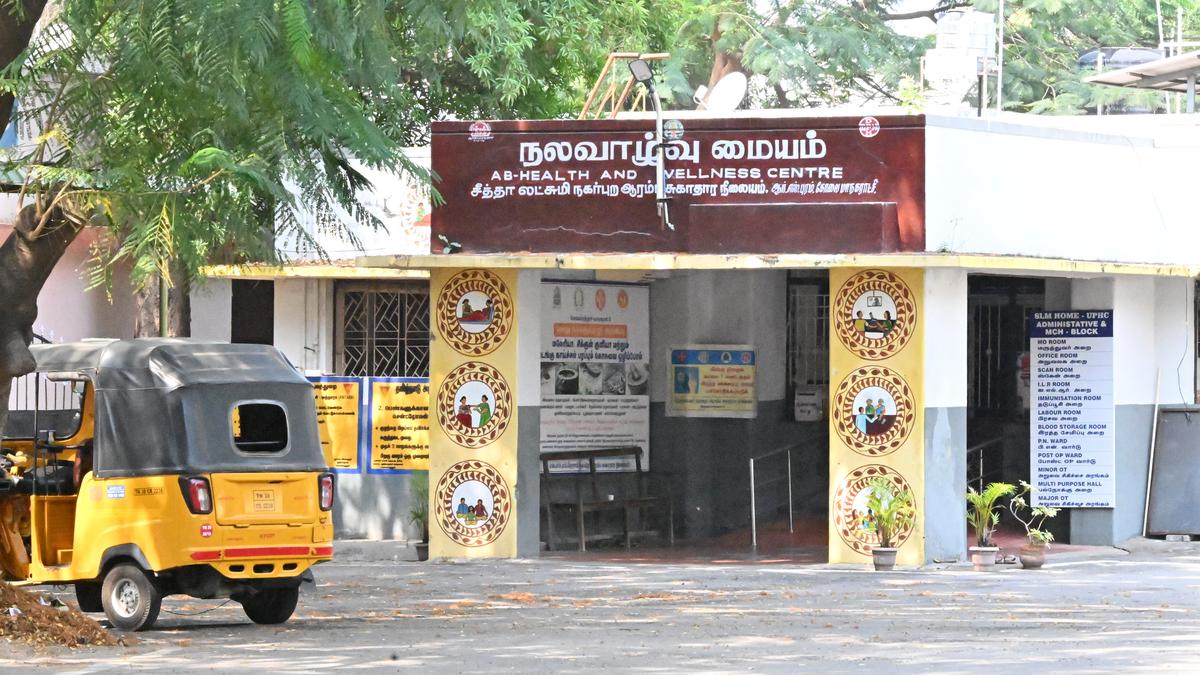
Making primary health visible, offering accessible and affordable health care Premium
The Hindu
India's evolving public health system faces modern challenges, requiring a comprehensive approach to improve health outcomes and trust.
Change is inevitable and is health any exception to that? The nature of public health has changed globally in conjunction with the ever-expanding economy and modern lifestyles. A few modern public health challenges include - antimicrobial resistance, chronic non-communicable diseases (NCDs), zoonotic diseases, and mental health illnesses. NCDs continue to account for more than 60% of global deaths and are estimated to increase by 17% in the next decade. These challenges are complex, multifaceted and require a new public health system that comprehensively understands health, one that extends beyond the absence of diseases. This new system needs to see public health as a product of ongoing interactions between the environment, socioeconomic determinants, and people’s health-seeking behavior.
The government of India introduced the ‘Ayushman Bharat’ scheme in its 2018 budget (approx. US $ 8.4 billion) as an ambitious project to transform and strengthen India’s public health system., including through public funding for healthcare of disadvantage groups. This nationally-funded scheme incorporates three major components: Pradhan Mantri - Jan Arogya Yojana (PM-JAY), Ayushman Arogya Mandir (AAM) and Pradhan Mantri Ayushman Bharat Health Infrastructure Mission (PM-ABHIM).
PM-JAY, being the largest publicly funded health insurance, provides financial coverage of ₹5 lakh to BPL cardholders and senior citizens. On the other hand, Ayushman Arogya Mandir aims to transform and strengthen primary health care through its Health and Wellness Centres (HWCs) holistically. The delivery of public health services through these centers is anchored around the concept of continuous comprehensive (preventive, promotive, curative, rehabilitative and palliative) care. This brings services related to non-communicable diseases (hypertension, diabetes and high priority cancers), ENT, mental health, oral health, geriatric and palliative care, health promotion and wellness activities closer to the general community. The PM-ABHIM component (with an outlay of ₹64,180 crore), was launched in October 2021 to equip India’s comprehensive care system with required health infrastructure to deliver and maintain high quality services within the country.
Public-funded programmes like these are designed to improve survival and well-being, while safeguarding the community from catastrophic healthcare expenditure (CHO). The World Health Organization defines CHO as ‘out-of-pocket payments greater than 40% of the capacity to pay for health care.’
As per the latest report from the Union Ministry of Health and Family Welfare, as of November 2024, a total of 1,75,338 AAMs have been established and operationalised with a footfall of 350 crore consultations. If we closely examine the National Health Accounts report 2021–2022, we can see how the Health Ministry has marginally increased healthcare expenditure in recent years. The report also shows a decreasing trend of per capita out-of-pocket health expenditure (OOPHE) (2013-14: 64.2%; 2014-15: 62.6%; 2015-16: 60.6%; 2016-17: 58.7%; 2017-18: 48.8%; 2018-19: 48.2%; 2019-20: 47.1%; 2020-21: 44.4%; 2021-22: 39.4%) in the country. Along with dedicated budgets from respective States, the Central government additionally complements a State’s public health infrastructure through schemes like the National Health Mission and Ayushman Bharat. With the help of this substantial funding, India was able to improve the average lifespan of its population and improve health outcomes. The true question is, however, to what extent is our public health system VISIBLE to our people?
In India, there exist a few blind spots in the public health system such as user experience, and people’s trust and confidence in the system. People’s ‘trust’ in public health or healthcare has always been ambiguous; however, this has been linked with many health outcomes such as health-seeking behavior, healthcare utilisation and continuity of care and self-satisfaction. ‘Trust in healthcare’ is defined as ‘an optimistic acceptance of a helpless situation where the trustee (patients) believes that the trustor (doctors) will care for their concern or interest’. Many lower- and middle-income nations, including India, still struggle to foster people’s trust in their public health systems.
Every country’s public health system plays a crucial role in health service delivery and trust brings people closer to the publicly-funded system and safeguards the community against catastrophic health expenditure from the private sector. The private healthcare sector in India still holds a lion’s share of health spending, the OOPHE percentages mentioned earlier highlights how the government has managed to reduce the per capita OOPHE over the years. However, when we look at absolute numbers rather than percentages, it tells a different story all together. As per the same report, the OOPHE in India has been steadily increasing (2017-18: ₹2,097; 2018-19: ₹2,155; 2019-20: ₹2,289; 2020-21: ₹2,415; 2021-22: ₹2,600) annually.


MLC Kishore Kumar Puttur criticizes the State for poor implementation of the Centre's health scheme for senior citizens.

Karnataka's Health Minister announces redeployment of specialists to taluk hospitals to reduce neonatal mortality rates effectively.

Celebrate IPL's start and Polly Umrigar's legacy, reflecting on cricket's evolution and the enduring impact of its pioneers.

BJP accuses Congress and Rahul Gandhi of endorsing an ‘anti-India’ USCIRF report undermining India's global image.

Education Ministry proposes UGC-like funding under Shiksha Adhishthan, raising concerns about centralization and public university financing.

Shivraj Singh Chouhan defends the new rural jobs Act, dismissing opposition protests as ineffective and highlighting increased funding and worker protections.

Supreme Court questions why heirs can't access unclaimed funds of deceased depositors, urging government to develop a disclosure policy.

Karnataka High Court demands LPG supply details amid state restrictions, threatening Bengaluru's restaurants and livelihoods.

Shorts News:UN body investigating deadly strike on Iranian girls school

Moodbidri police inspector suspended pending inquiry over allegations of misbehaviour and inappropriate conduct towards women.

The State currently hosts more than 880 GCCs, up from around 500 GCCs in 2021.

Transgender and intersex activists march to Lok Bhavan, protesting the regressive Transgender Persons Bill and demanding its withdrawal.

Hyderabad's LGBTQIA+ community opposes the Transgender Amendment Bill, stressing dignity over identity verification and highlighting economic and medical concerns.