Loneliness epidemic | How new India is making friends
The Hindu
Discover how running clubs and activity-based communities are combating loneliness and fostering wellness in urban India.
On weekdays, Shahnil Samantara and Manraj Singh work as a product manager and software engineer, respectively. But on Sundays, they compete in marathons with members of the running club they co-founded last year. Running has been a long-time hobby for both but it was only last June that Samantara, 26, and Singh, 27, decided to build a community in New Delhi around their shared passion.
“I’d make plenty of WhatsApp groups with different friend circles seeking fellow runners, but nobody would come except Manraj. So we started the Delhi Run Collective with the aim of getting people of all ages together, and gaining the motivation and company to go running as well,” says Samantara, who catches up with us on a sweltering Sunday morning. It is 7 a.m. and he is warming up for his weekly ritual with the Collective in South Delhi’s Sanjay Van park. About 35 people, from software engineers to Army personnel to journalists and more, have turned up. Some have mutual friends, others are complete strangers to one another. At least four of the people I spoke to were first-timers, while two were professional marathon runners.
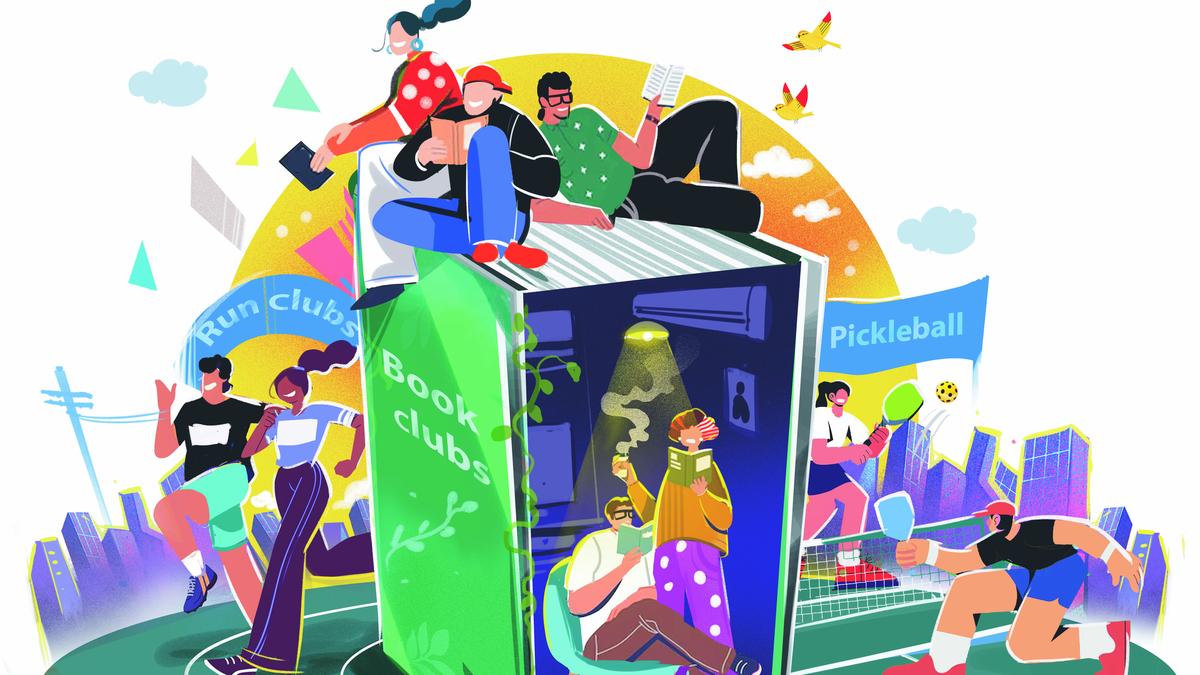
The Delhi Run Collective (DRC) is one among at least 15 formal running clubs that have come up across Delhi, Mumbai and Bengaluru alone after the COVID-19 pandemic. And it’s not just running clubs. There’s an overall uptick in activities designed to forge community, and foster a larger culture of wellness amongst a generation usually associated with labels such as ‘brainrot’ and ‘doomscrolling’.
As per a 2021 global survey by market research and consulting firm Ipsos, four out of 10 urban Indians reported feeling lonely and friendless at most times, especially after the COVID-19 pandemic. Urban isolation is notable in metropolitan cities such as Mumbai, where about 18% respondents reported feeling isolated “always”, and 37% “often”. The issue came into the spotlight in 2023, when the World Health Organization declared loneliness a pressing global health threat. Its health impact has been likened to smoking 15 cigarettes a day, or a feeling of hunger or thirst “the body sends us when something we need for survival is missing”. What does this have to do with the rise of third places?
In his 1989 book The Great Good Place, sociologist Ray Oldenburg first introduces the concept of a “third place” or third space as an informal gathering place that serves as “anchors of community life”. The disappearance of “addas” (loitering spots near chai stalls), public parks, and other community spaces that once served as outlets to meet people and exchange conversation and ideas, is increasingly evident at a time when interactions and exchange of ideas are mediated online rather than in-person. That is where initiatives like running clubs and pickleball groups are stepping in to offer a solution to the loneliness epidemic.
Mumbai-based Aayushi Pathak agrees. The 20-year-old student of Commerce recently started ‘Hobby Hoarders’ as one such community for young girls and women — strangers to each other — to meet up and engage in activities such as “junk journaling” together, making postcards and bookmarks, crocheting and more.
“People really craved a girls-only community. Where they can share ideas and engage in hobbies without the pressure of perfectionism,” she says. The meet-ups take place at a pre-booked venue, anywhere between Andheri and Bandra, with the participants paying a fee to cover the costs, says Pathak. She hopes to expand the community and organise gatherings in other cities soon, since the group also has members from Delhi, Hyderabad and Bengaluru.


CPI-M accepts DMK's five-seat offer for Tamil Nadu Assembly elections, prioritizing INDIA bloc unity over seat demands.

Ricky Rai, son of former underworld operative Muthappa Rai, on Monday appeared before the Bengaluru Traffic Police for questioning in connection with a case involving a Lamborghini performing dangerous stunts at Anil Kumble Circle on March 21.

The Dispur election heats up as 'CongBJP' defections shape a high-stakes contest between veteran candidates from BJP and Congress.

Bengaluru's M. Chinnaswamy Stadium conducts readiness drill ahead of IPL 2026, ensuring upgrades and technical preparations are complete.

First-level randomisation of EVMs completed in Nagapattinam for upcoming elections, ensuring transparency and security.

A district-level committee in Krishnagiri has been formed to assess and verify seizure claims of goods and cash.

Minister Anam Ramanarayana Reddy pledges government support for local fishermen and farmers facing challenges in Andhra Pradesh.

MP M. Sribharat urges collective efforts to revive Visakhapatnam Steel Plant, highlighting key reforms for crucial recovery and growth.

141 candidates have filed nominations for Kozhikode's Assembly elections, with scrutiny on March 24 and campaigning intensifying.

BJP's Vijayendra accuses Congress of using money to influence Bagalkot bypolls, urging voters to reject their tactics.

First randomization of electronic voting machines completed in Tirunelveli and Tenkasi districts for upcoming Assembly elections.

RPF seizes 10.12 kg of unclaimed cannabis worth ₹5.06 lakh from a train in Mangaluru.

Kolar's groundwater levels rise to 50-100 ft due to the K.C. Valley project, ensuring clean water and improved health outcomes.