Killed for looking different Premium
The Hindu
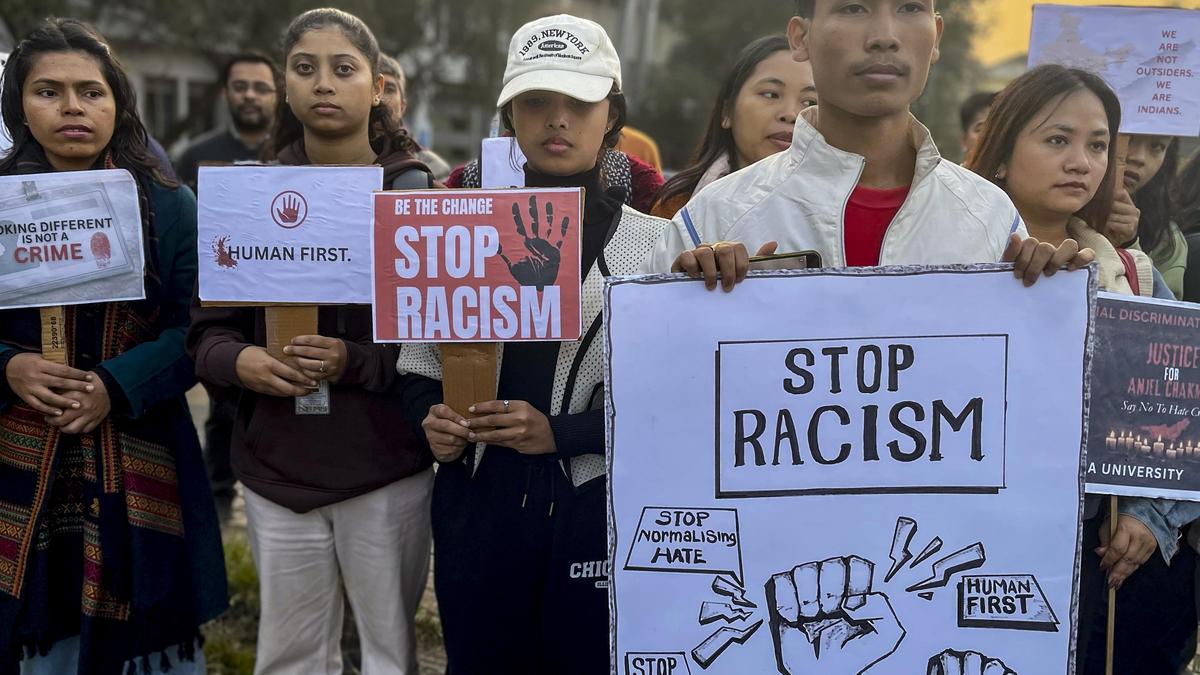
Anjel Chakma's tragic death highlights society's failure to embrace diversity and confront deep-rooted discrimination in India.
Anjel Chakma was not asking for justice. He was asking to be recognised.
“I am not Chinese… I am an Indian.” These words, spoken by a 24-year-old student from Tripura while being brutally assaulted in Dehradun, should haunt us for a long time. Not because they were dramatic, but because they were necessary. Necessary in a country that claims unity in diversity, yet repeatedly forces some of its citizens to prove that they belong.
Anjel had stepped out to buy household items. Like thousands of students from the Northeast who travel across India for education, he was spending nothing more than an ordinary day and an ordinary life. What followed was extraordinary cruelty — verbal abuse, caste-based slurs, rods, knives, and finally, silence. After battling for life for 16 days, Anjel died on December 25. A young life ended, not by accident, but by hatred sharpened through ignorance.
This was not just a murder. It was a failure of society.
For people from Northeast India, discrimination is not new. It is embedded in everyday interactions — the stares, the jokes, the “you don’t look Indian” remarks, the casual racism that many choose to excuse as harmless. These experiences rarely make headlines because they are endured quietly. Angel’s death exposes the extreme end of this spectrum — when prejudice turns fatal.
The debate now revolves around investigations, FIR timelines, and whether racial remarks can be “proven”. But the larger truth does not depend on legal phrasing. When a citizen feels compelled to assert his nationality in the face of violence, the problem is not procedural — it is moral. No Indian should have to explain their face, their origin, or their accent to survive.


The DMK and Congress finalize a crucial seat-sharing deal thanks to key negotiations by Kharge, Chidambaram, Kanimozhi, and Karti.

Justice Swaminathan allows time for the Thirupparankundram temple trustees to respond to his suggestion regarding Karthigai Deepam prayers.

New Zealand secures a dominant T20 World Cup final spot, led by Finn Allen's explosive century against South Africa.

Central government allocates ₹64 crore for PM Ekta Mall project in Puducherry, promoting local artisans and crafts.

Farmers demand NAFED procurement of maize to secure Minimum Support Price amid declining market rates.

Four workers fainted from toxic gas exposure at a Ranipet effluent treatment plant; all are now stable after treatment.

Textiles Minister inaugurates ₹35 crore Bypass Road in Ranipet, enhancing traffic flow and connecting key highways for efficient travel.

P. Sibin takes charge as the new Superintendent of Police for Ranipet, succeeding Ayman Jamal.

Jagriti Theatre brings the sixth edition of their annual Morning Raag concert series back to the city this weekend

Karur inaugurates a new ₹2.4 crore swimming pool at Government Higher Secondary School, enhancing local sports infrastructure for aspiring swimmers.

Protests in West Bengal escalate over electoral roll issues, prompting Chief Minister Mamata Banerjee to plan a dharna against the SIR.

Palestinian envoy criticizes military dominance in Iran-U.S. conflict, calling it "jungle law" that undermines future for vulnerable nations.

AIADMK renominates veteran Thambi Durai for Rajya Sabha; PMK receives an additional Upper House seat allocation.